
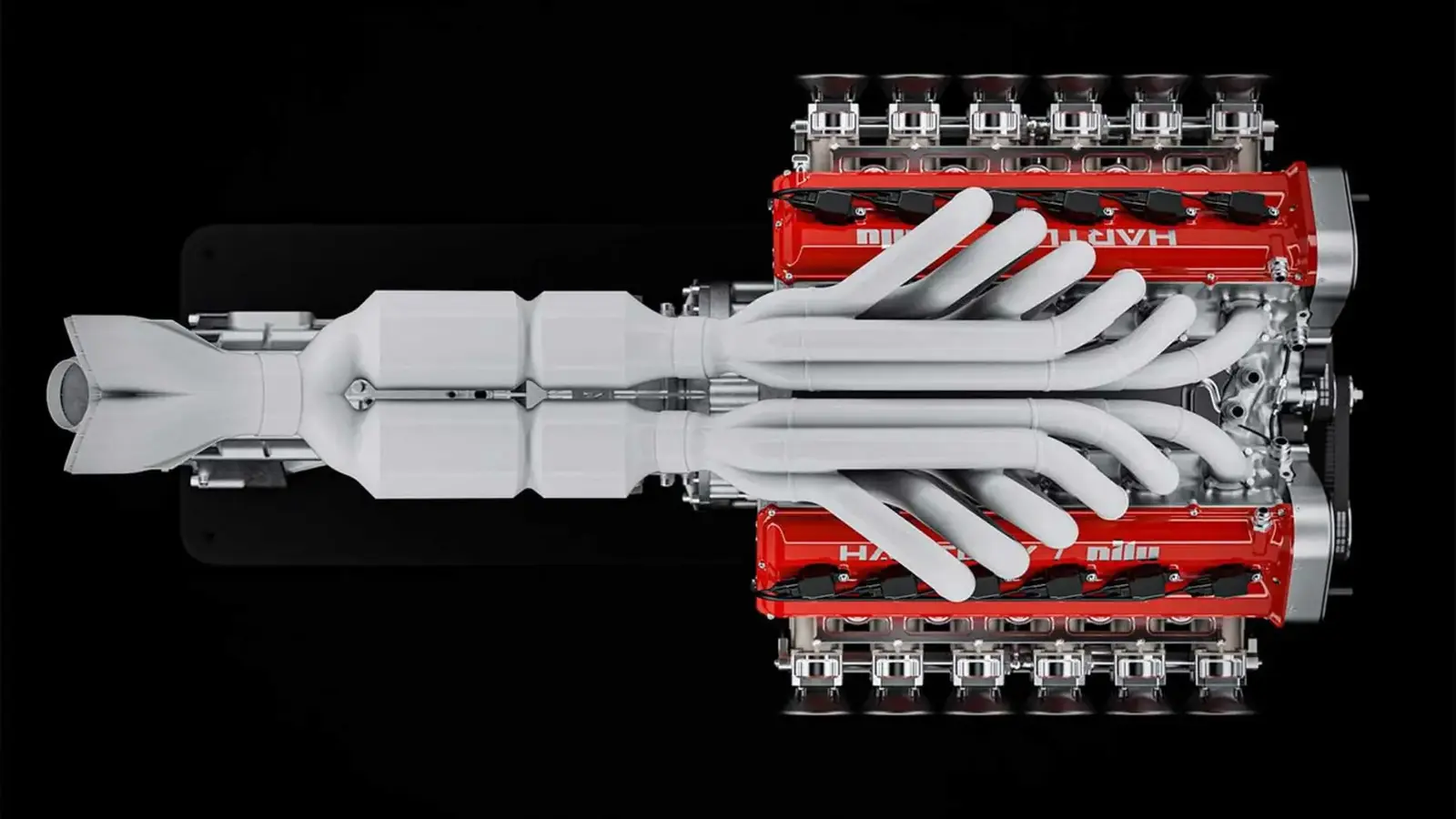
There are moments when an engine start feels less like machinery waking up and more like a manifesto. In a workshop in New Zealand this week, technicians coaxed a new 6.5-liter V12 into life and let it climb to 11,000 rpm. It didn’t purr. It screamed. And that sound says everything about Niloo27’s intent.
Built to be driven, not programmed
Niloo27 is not chasing digital vanity metrics. No drive-mode menus. No steering-wheel clusters of buttons. Designer Sasha Selipanov, who cut his teeth at Lamborghini, Bugatti and Koenigsegg, set out to make an analog hypercar that places the driver back at the center of the experience. The result feels like a deliberate step away from modern convenience and toward raw engagement.

The heart of the car is a bespoke, naturally aspirated V12 developed with Hartley in New Zealand, a shop known for extracting performance from Toyota and Nissan motors. It’s an 80-degree V12 with a Hot V layout, which tucks exhaust manifolds between the cylinder banks so heat and gases can be expelled cleanly from an open rear engine bay. The headline figure is 1,070 horsepower, but the first fire-up hinted the engine may have appetite beyond that target. It will rev all the way to 11,000 rpm and is designed to mate to a seven-speed manual transmission, sending torque through Michelin Pilot Sport Cup 2 R tires.

At its core this project is tactile. Levers are knurled metal. Switches are mechanical. Even pedal box adjustments and mirrors use physical linkages. One small screen exists only to show the rear camera. Everything else demands the driver’s hands and attention.
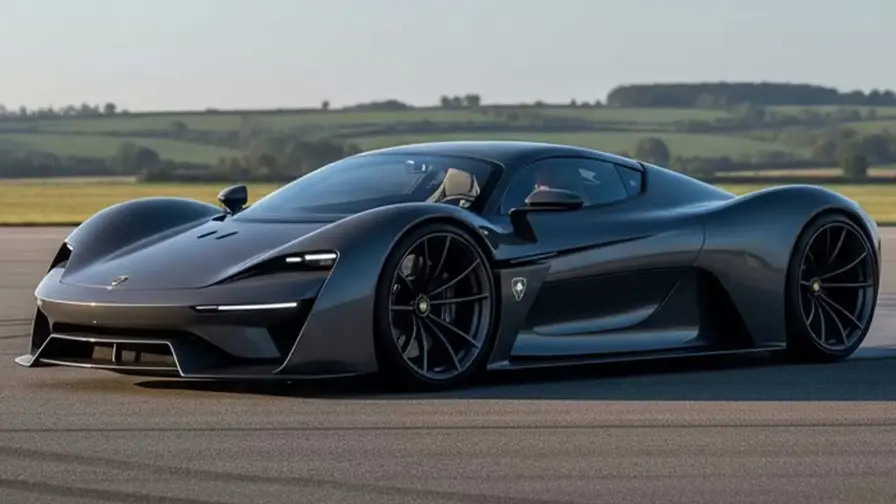
The engine is still undergoing final calibration in New Zealand. Once signed off it will be shipped to Lahr, Germany, where the first rolling prototype chassis will receive it. That chassis combines a carbon-fiber monocoque with aluminium tubular subframes. The styling reads like an improbable mash-up: Formula 1 aerodynamics meet 1960s Le Mans silhouettes, American muscle proportions, and a splash of drift-car theatrics. Expect very low height, exaggerated curves and gullwing doors that amplify the theatricality.

Niloo27 was conceived primarily as a track-focused machine. The initial plan is to build just 15 examples of this dedicated track variant. Still, the company has signaled ambition for broader reach: a run of 54 road-legal cars is reportedly under consideration, to be built at Aria Group facilities in California. Pricing has not been set officially, but an estimate for such a hand-crafted hypercar lands at around €2.8 million.

This is a throwback with modern engineering: an analog driving ethos powered by a cutting-edge, high-revving V12.
Beyond its own cars, Niloo27 and Hartley are planning a joint venture to produce high-performance, road-legal engines for third parties. That means the V12’s life could extend beyond a handful of hypercars and into custom projects where a naturally aspirated, high-rev unit is desired.

For enthusiasts tired of electrons between them and the road, Niloo27’s announcement is a small rebellion. It’s a reminder that engineering can still be audacious and that, sometimes, the simplest promise — a manual gearbox, a screaming V12, and nothing else — is enough to spark real excitement.

“Cars are evolving faster than ever. I cover electric vehicles, smart mobility, and the future of transportation worldwide.”

Discussion
Leave a Comment
Comments (2)
neat engineering flex, but is that Hot V layout gonna fry sensors or headers? skeptical about longterm reliability, maintenance costs, and noise regs... also 54 road cars??
holy crap that V12 screaming to 11,000 rpm? give me a manual and an open track, i'm sold. feels like analog rebellion, messy but glorious. price tho??