
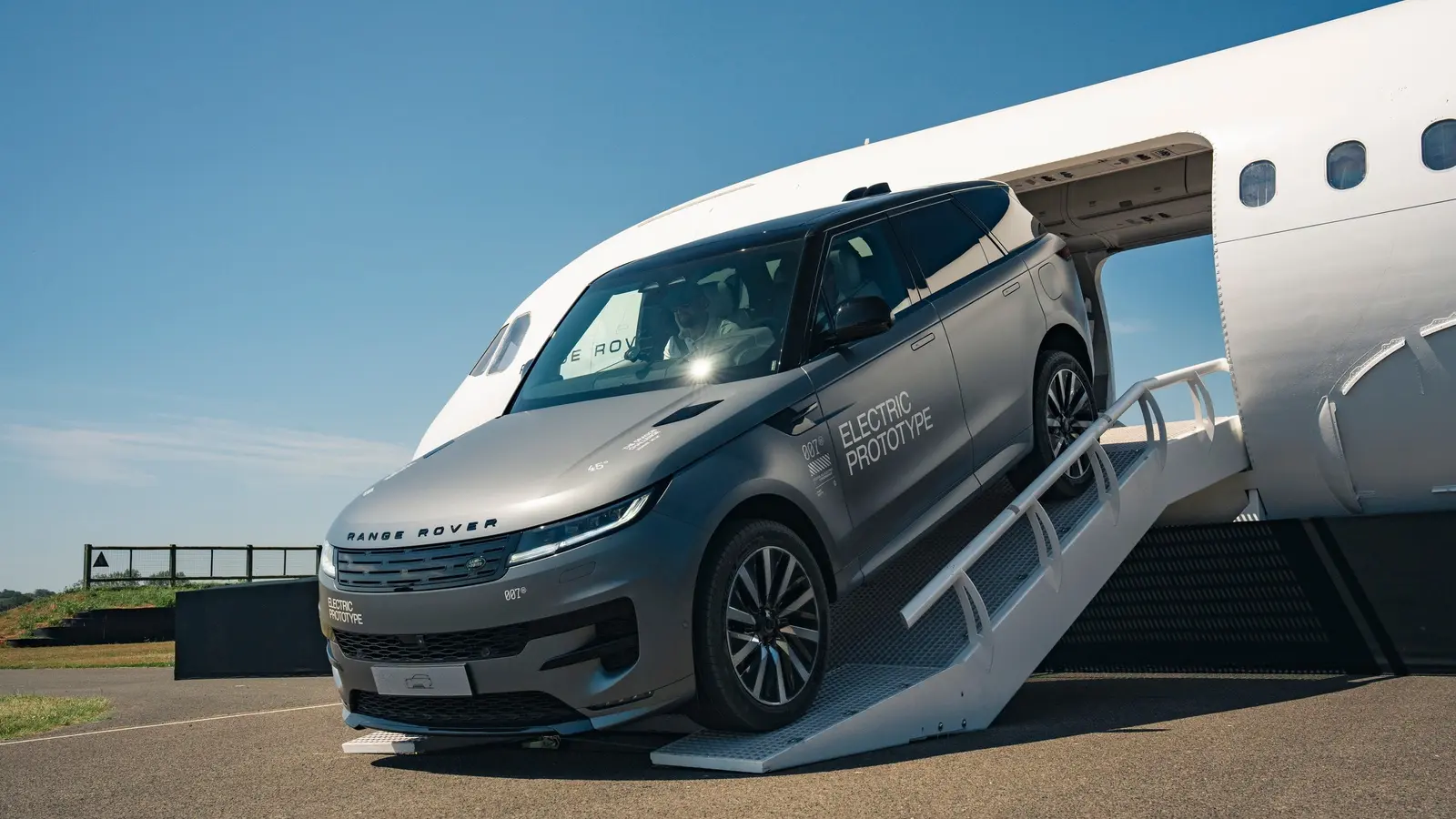
The sun was low over Goodwood when the Range Rover Sport Electric rolled out, looking every bit like a familiar friend who'd quietly reinvented itself. It did not shout. It did not need to. People still turned their heads.
That quiet is the point. Land Rover teased its full-size electric Range Rover for months, yet the mid-size Sport arrives first. Strange? Not really. Some launches happen behind closed doors, at curated summer events where journalists and buyers mingle and where the brand frames the story on its own terms. The public reveal at Goodwood feels like the moment everyone else is invited in.

Performance with a steady hand
At the festival the Sport Electric tackled the motor circuit, not as a headline-hungry stunt but as a measured preview of what the model will be. Martin Limpert, Range Rover managing director, summed it up plainly: electric drive sharpens the Sport's character while keeping the refinement buyers expect. That voice matters. It tells you this is evolution, not revolution.
Design-wise Land Rover chose restraint. The Sport Electric mirrors its combustion sibling in silhouette and presence. You will notice the closed grille and the absence of tailpipes. Beyond those cues, the goal was familiarity, a design that helps owners transition to electric without losing Range Rover identity.
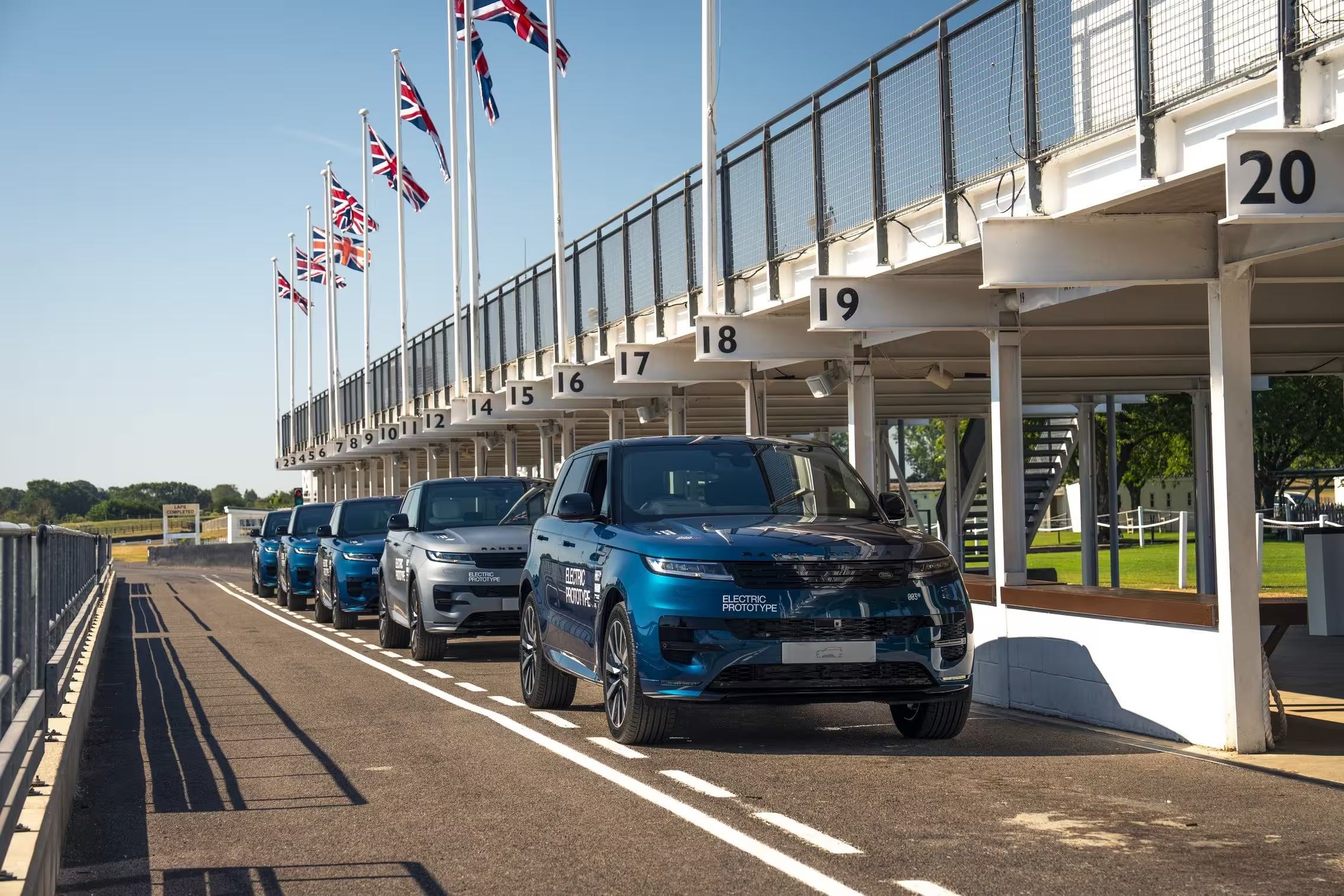
Under the skin the Sport Electric rides on the Modular Longitudinal Architecture, the same flexible backbone used across the Range Rover lineup. That platform was engineered to accept both internal combustion and electric powertrains so the Sport can feel like an honest Range Rover while gaining the instant response of electric motors.
What numbers have leaked so far? Expect twin-motor setups offering two power tiers roughly around 444 and 542 horsepower, which translates to about 331 kW and 404 kW, depending on the version. Peak torque sits near 627 lb-ft, that is about 850 Nm, and the battery is said to be a substantial 118.5 kWh pack. Identical motors front and rear could allow a near 50:50 torque distribution for balanced handling and traction.

That specification sketch points to an SUV that wants to be both rapid and composed. Instant torque for launches, a heavy battery for low center of gravity, and architecture tuned to preserve the brand's composure on any road.
Why this order of arrival matters beyond marketing? Bringing the Sport Electric out first lets Land Rover refine the electric experience on a vehicle that bridges everyday usability and driver engagement. It is a strategic step: prove the tech where it makes sense, then scale up to the full-size flagship.
Expect further details and full specifications later this year when Land Rover opens the global curtain. Until then the Sport Electric is a hint at the brand's future: familiar shapes, quieter propulsion, and the old Range Rover values translated into volts and software.

“I cover automotive innovation, electric vehicles, and the future of mobility — where technology meets sustainability.”

Discussion
Leave a Comment
Comments (2)
Makes sense to test EV tech on the Sport first. Keeps the Range Rover vibe, less shock for buyers. Quiet, restrained - imo classy
Wait, 627 lb-ft and a 118.5 kWh pack? If thats real then how bad is the kerb weight hit, and the range numbers... sounds optimistic tho