
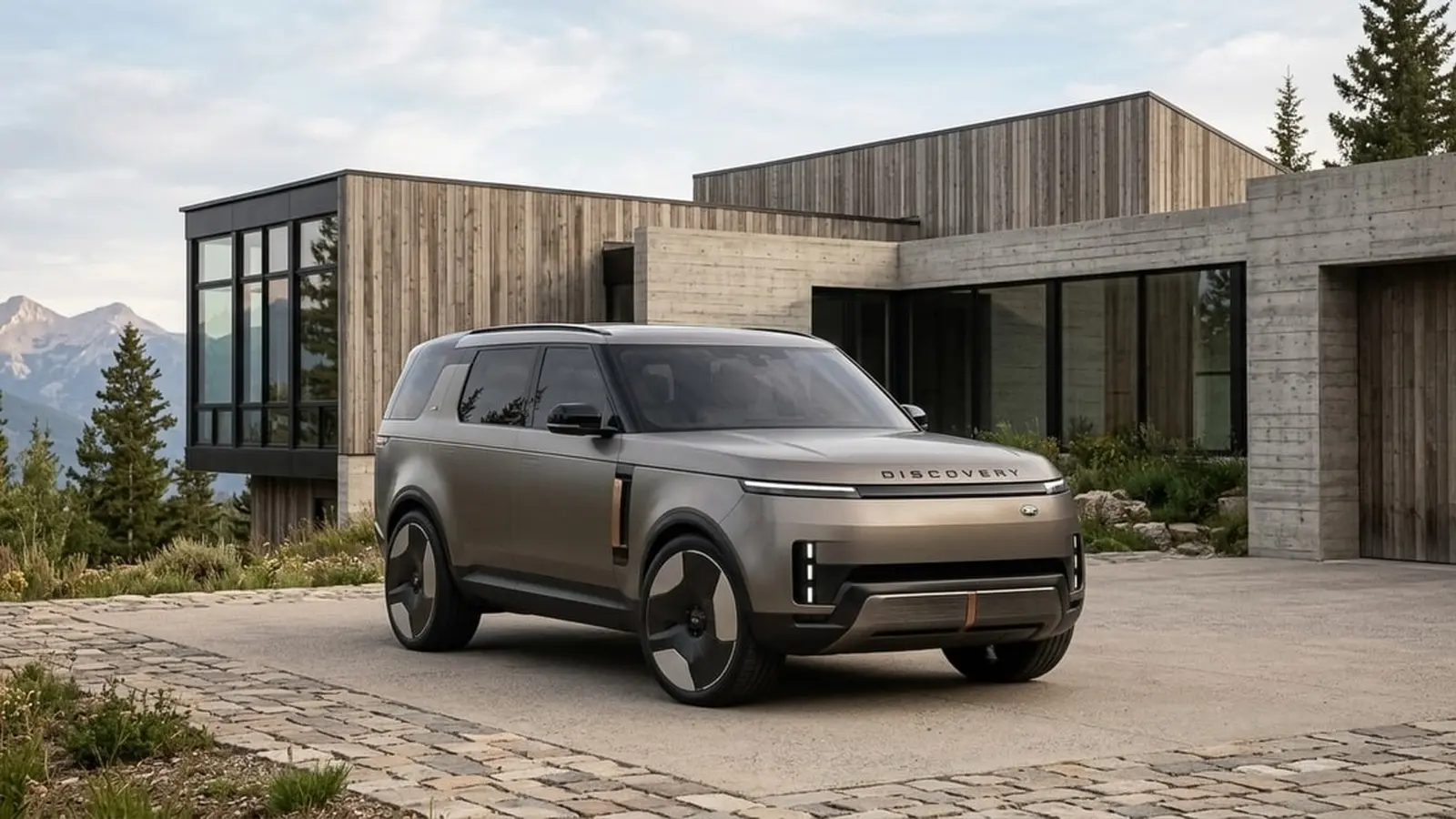
Close your eyes and picture a Discovery you already know, but sharper, quieter, and wearing richer chrome. That snapshot is where Turkey-based illustrator Uygar, known online as uygarspots, starts his thought experiment: take a familiar family SUV and nudge it toward something a little more premium without erasing its DNA.
Design daydreams that actually make sense
He isn't chasing shock value. He refines. The render keeps the Discovery's tall stance and practical proportions, yet softens corners, tightens the front end, and stretches the rear with slimmer, vertically oriented LED taillights that graze the fender. Little details matter. A more upscale grille. Cleaner, more sculpted wheel arches. Subtle cues that read as evolution, not reinvention.

Why does that matter now? Land Rover has been under a bright spotlight this summer. A surprise manufacturing tie-up with Stellantis in North America suddenly reshapes production logic and could help the brand dodge higher import tariffs. That’s a strategic pivot you can almost see reflected in these renders: a Discovery that looks like it wants to compete in crowded global markets, not just on the family driveway.
There are sharper reasons for a refresh, too. A recent recall affecting roughly 250000 SUVs over possible airbag problems has put product quality back on the agenda. The Defender also lost about 100 horsepower from its BMW V8 in some markets to meet new emissions rules, proving that engineering trade-offs are coming faster than marketing cycles. Against that noisy backdrop, a carefully updated Discovery could be the kind of steady, sensible offering buyers trust.
The Discovery's story matters. Born in 1989 as a practical five- or seven-seat family SUV, it blended everyday comfort with genuine off-road capability. The current fifth generation, the L462, debuted in 2016 and went on sale in 2017. It has served well, but time moves on—its tenth anniversary looms this year—so speculation about a next-generation model feels reasonable, not reckless.

Uygar’s imagined sixth-generation Discovery reads like a preview because it follows a familiar Land Rover playbook: keep the silhouette, lift the finish. Think of it as the same car in a smarter suit. For fans who feared a radical departure—the kind whispers suggest might hit the Range Rover or the Velar—this quieter approach looks like a strategic compromise that preserves capability while polishing perception.
Render work like this does more than decorate social feeds. It starts conversations. It surfaces expectations. It hints at how designers might balance emissions targets, buyer tastes, and production realities tied to partnerships like the one with Stellantis. Reality will differ. Details will shift. Still, if Land Rover wants a Discovery that feels fresh without alienating its audience, these sketches point the way.

Practical questions remain. How will electrification factor in? Will the new Discovery keep its ladder-frame robustness or lean further into monocoque refinement for weight savings? For now, we have imagination and a plausible design direction that feels honest: evolution, not excess. And sometimes, that is exactly the story a brand needs.

“Cars are evolving faster than ever. I cover electric vehicles, smart mobility, and the future of transportation worldwide.”

Discussion
Leave a Comment
Comments (2)
Is this even feasible with the Stellantis tie-up and new emissions rules? Feels like PR art more than reality, no?
Wow didnt expect a softened Discovery, looks posh but still practical. If that's real then... pretty tempting, hmm