
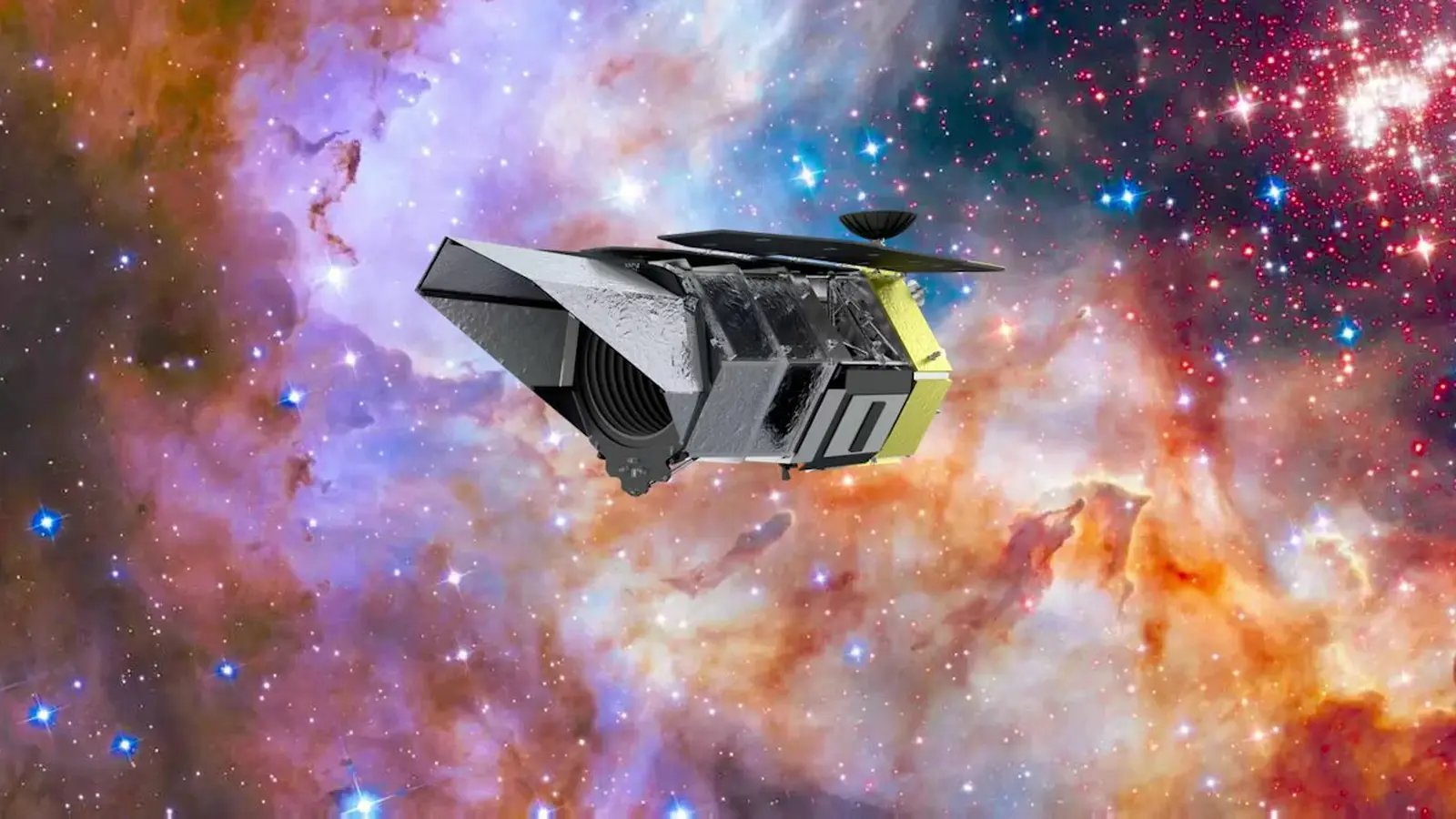
The hum of generators, a team in coveralls leaning over checklists, and a spacecraft cradled inside a protective shell. That scene at Kennedy Space Center just became real in a decisive way: NASA’s Nancy Grace Roman Space Telescope has passed its Flight Readiness Review and is now moving into final launch preparations.
Final steps before liftoff
Mission and SpaceX engineers reviewed the spacecraft, the Falcon Heavy rocket, ground systems, and the full array of mission procedures. After comprehensive briefings, managers certified Roman to proceed. The observatory will be encapsulated inside Falcon Heavy’s payload fairing, carried to SpaceX’s hangar at Launch Complex 39A, and then mated to the rocket. Once assembled, the stack will roll out to the pad for the last prelaunch checks.
NASA and SpaceX have set a target launch window no earlier than 7:26 a.m. EDT on Sunday, August 30. That timing is provisional, depending on weather and final readiness milestones. Flight Readiness Reviews are among the final major gates a mission crosses. They do not guarantee a launch date, but they do mean the vehicle, the observatory, and the teams are aligned and ready to proceed to the operational countdown.

What Roman is built to do
Roman is not a replacement for Hubble or Webb. It is a different kind of eye. Designed to map vast swaths of sky with sharp infrared imaging, Roman combines a large field of view with Hubble-like image quality. The goal is to study how structure in the cosmos grew over cosmic time and to probe the puzzling acceleration of the universe’s expansion, often attributed to dark energy.
Roman will also survey for exoplanets using wide-field observations, finding populations of planets across diverse star systems. By measuring subtle distortions in the shapes of distant galaxies, and by cataloging microlensing events that reveal planets around faraway stars, Roman will supply statistical power that smaller, narrower telescopes cannot achieve.
Why does that matter? Because understanding dark energy and exoplanet demographics are complementary problems. One addresses the fate and history of the universe, the other reveals the diversity of worlds where chemistry and perhaps life might unfold. Roman helps connect the large-scale and the local, the cosmic web and the putative planets that orbit neighboring suns.
Technologies on Roman build on decades of space-telescope engineering. Its detectors, optical systems, and onboard data handling are tuned for wide-field infrared surveys. The mission is a platform for community-driven science; observing programs will include both large survey campaigns and targeted investigations proposed by researchers around the world.
Mission teams emphasize caution and thoroughness at this stage. Passing the Flight Readiness Review is a green light for the next set of operations, not the finish line. Over the coming days the observatory will travel under cover and be connected to the Falcon Heavy, a sequence of hands-on work that requires precision and care.
Conclusion
If the timeline holds, Roman will liftoff at the end of August and begin a new chapter in wide-field astronomy. It promises datasets that could reshape our statistical understanding of planets and sharpen our portrait of the universe’s expansion. For scientists and the public alike, Roman is a telescope built to look broadly, and to ask big questions with better statistics and wider coverage than ever before.

“The cosmos has always fascinated me. I write about space missions, astronomy, and the technologies pushing humanity beyond Earth.”

Discussion
Leave a Comment
Comments (2)
So they passed FRR but that doesn't mean no delays right? Weather, payload checks, last minute snags... anyone else skeptical?
holy wow, Roman cleared Flight Readiness? chills. The scale of those surveys… mind blown. Hope weather holds!