
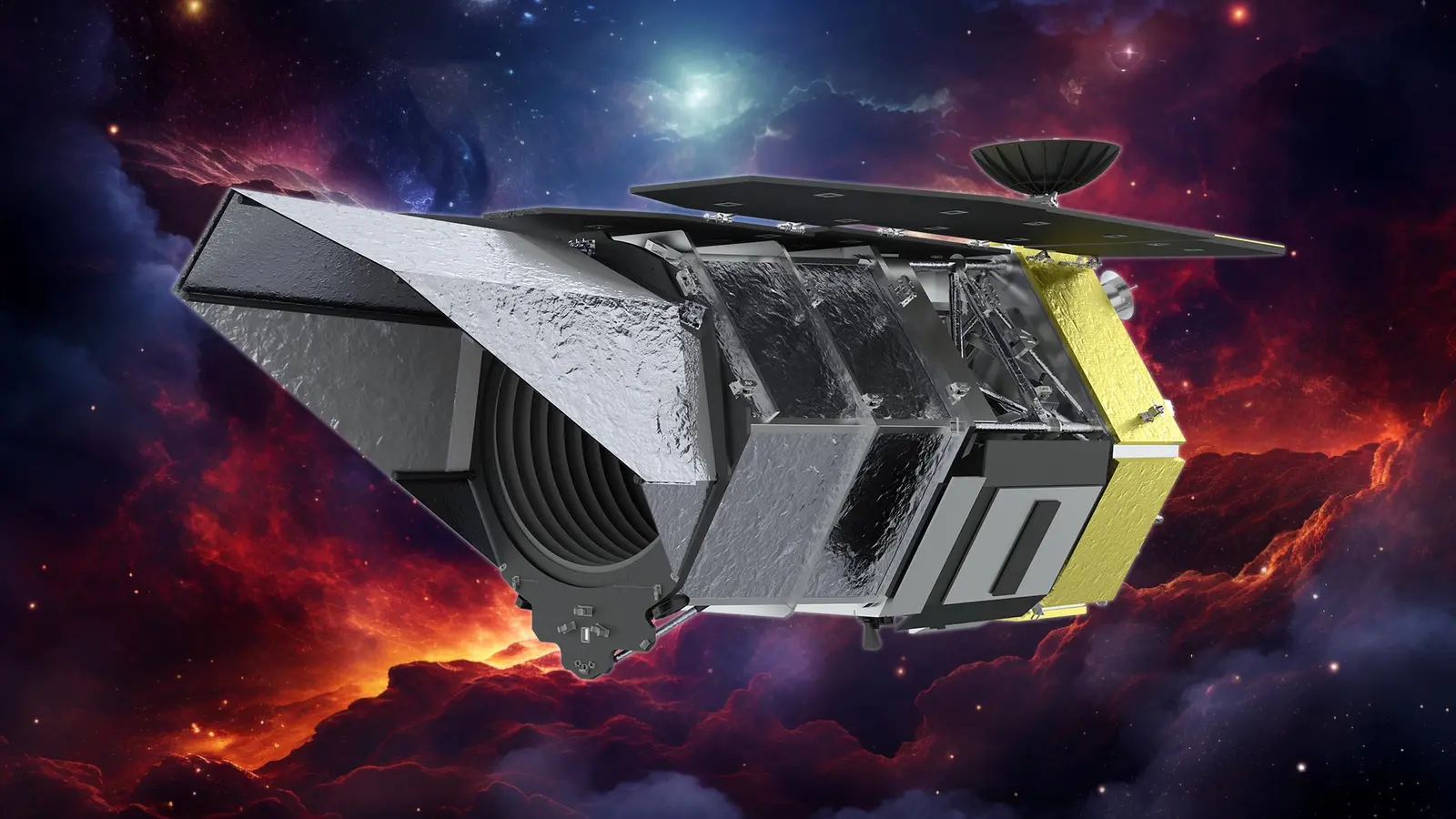
Picture a flagship space observatory that arrives at its orbit with far more fuel than engineers expected. That is precisely what happened with NASA’s Nancy Grace Roman Space Telescope, and the consequences could reshape how long we harvest science from deep space.
Precision, lighter mass, and compound savings
Shortly after launch, Roman executed a mid-course correction so exact that it used only a sliver of the propellant engineers had conservatively budgeted. The burn consumed roughly 40 pounds (18 kilograms) of propellant rather than the 441 pounds (200 kilograms) that had been allocated. That single maneuver, by itself, translates into several extra years of possible operations.
The fuel advantage did not arise from one lucky calculation. It arrived as the product of three factors working together: a precise launch, a spacecraft lighter than the conservative mass used during planning, and stellar execution by the orbital operations team. Roman’s actual launch mass was about 17,760 pounds (8,056 kilograms), significantly below the conservative upper bound of 21,605 pounds (9,800 kilograms) used to size the propellant budget. The lighter mass required less delta-v for course corrections and left room in the tanks to carry more fuel than the minimum needed for a 10-year mission.
What the numbers mean for mission life
- First mid-course correction: ~40 lb (18 kg) consumed versus 441 lb (200 kg) budgeted — equivalent to roughly four additional years of potential operations.
- Lower launch mass allowed fuller fuel tanks at liftoff — another roughly four years.
- Projected efficiencies in the second correction and orbital insertion could add about four more years.
Taken together, these savings increase the observatory’s potential operational lifetime well beyond its original 10-year design, with current projections suggesting at least 22 years of science may be attainable.
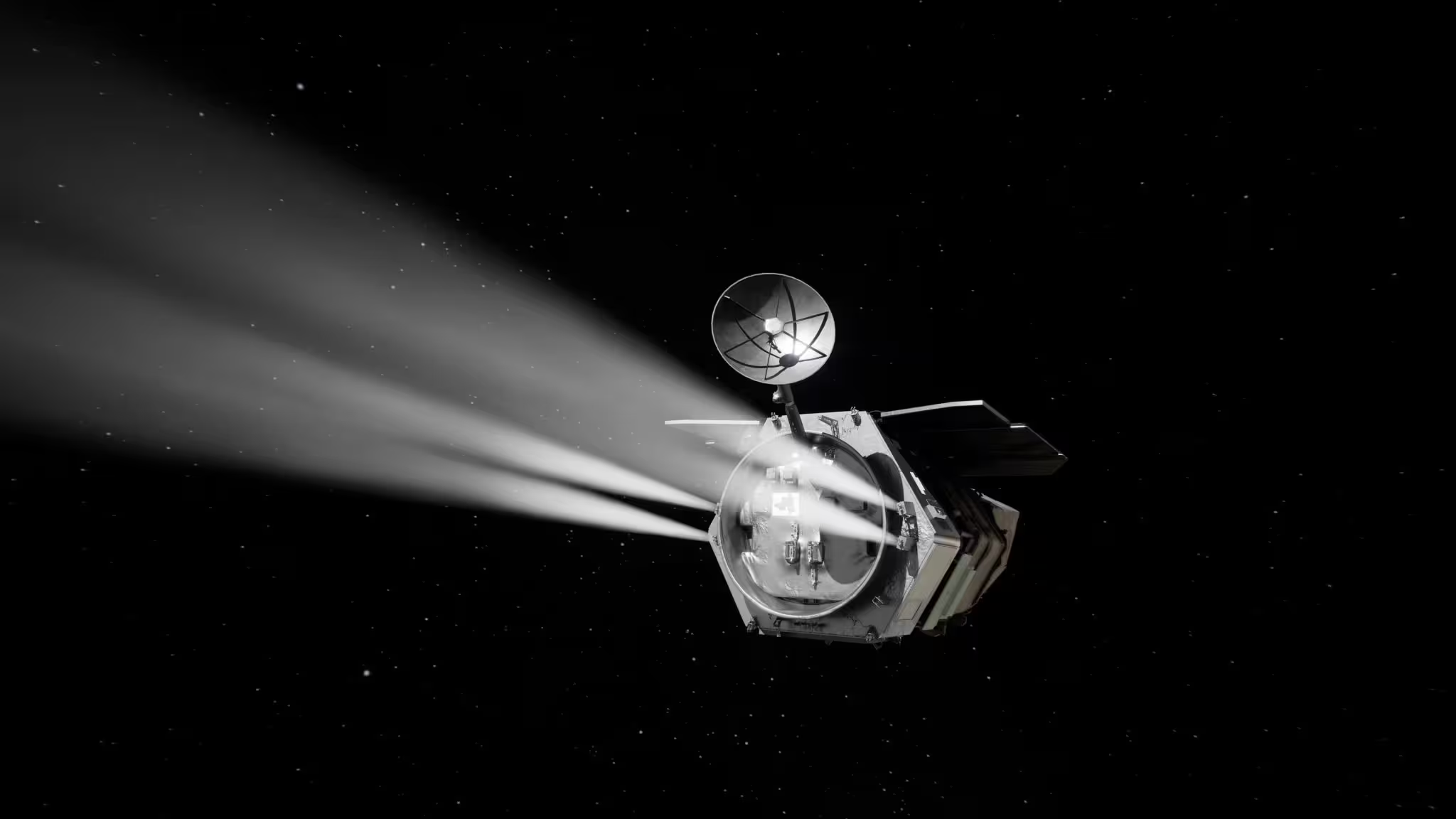
At 12:02 p.m. EDT on August 31, Roman began an approximately 3-minute mid-course correction burn to adjust its trajectory toward its final orbit.
How orbital mechanics and station-keeping factor in
Roman will operate from a halo orbit near the Sun-Earth L2 point, a gravitationally balanced region about 1.5 million kilometers from Earth. Getting there efficiently matters because propellant is the spacecraft’s main consumable. After insertion into the L2 halo orbit, Roman’s propulsion needs fall to modest station-keeping maneuvers, typically performed about once every 28 days to maintain the precise orbital trajectory.
Why does that matter? Because every kilogram of propellant saved during trajectory corrections or an efficient launch cascade into extended science time. Less fuel spent on major maneuvers now means more remains for attitude control, pointing, and station-keeping operations that directly enable observations over the mission’s lifetime.
Operationally, the team can now delay the second mid-course burn and perform it more gently. That reduces not only the immediate propellant draw but also lowers cumulative uncertainty in the spacecraft’s trajectory, which improves long-term fuel forecasting. The orbital insertion burn that places Roman into its final L2 halo orbit is likewise expected to consume less propellant than planned, further stacking savings.
Scientific payoff and mission flexibility
Roman’s science goals include wide-field infrared surveys to study dark energy, exoplanet demographics through microlensing, and deep-field imaging that complements missions like JWST. More years in operation expand each of these programs, enabling repeated surveys, time-domain studies of transient phenomena, and larger statistical samples for cosmology.
Longer operational life also increases the telescope’s value as a platform for unexpected discoveries. History shows that extended missions often return their most surprising results after the primary objectives are complete. Think of long-running Earth-observing and planetary missions that discovered new moons, dust dynamics, or transient events years into extended phases. Roman could follow that pattern.
Expert Insight
"Fuel margins are mission margins," says Dr. Elena Martínez, a propulsion systems analyst formerly with a major U.S. space center. "What Roman’s team achieved is not just a one-off saving. It demonstrates how conservative planning, coupled with careful execution, can multiply scientific return. Twenty-two years of potential observations transforms mission planning: it allows follow-up programs, cross-mission coordination, and longer baselines for cosmology and exoplanet statistics."
Her point highlights a practical truth: extended lifetime is not merely extra time. It is extra capability — the chance to adapt science programs, pursue serendipitous targets, and coordinate with ground and space observatories that come online in the decades ahead.
Operational and technological context
Roman carries a large, wide-field infrared instrument designed to map huge swaths of the sky far faster than previous space telescopes. That capability makes it uniquely suited for surveys that need both area and depth. The spacecraft’s propulsion system, thermal control, and attitude control subsystems must all remain healthy to realize a multi-decade mission. Fuel is the bottleneck among consumables, but other systems will also influence how long Roman can keep delivering data.
Engineering teams routinely design with margins for a reason. Conservatism in mass and propellant budgeting reduces mission risk. In Roman’s case, conservative early estimates left room for the mission to come in under weight and to fill tanks more completely. Then, precise burns and favorable trajectory geometry produced compounding benefits.
Conclusion
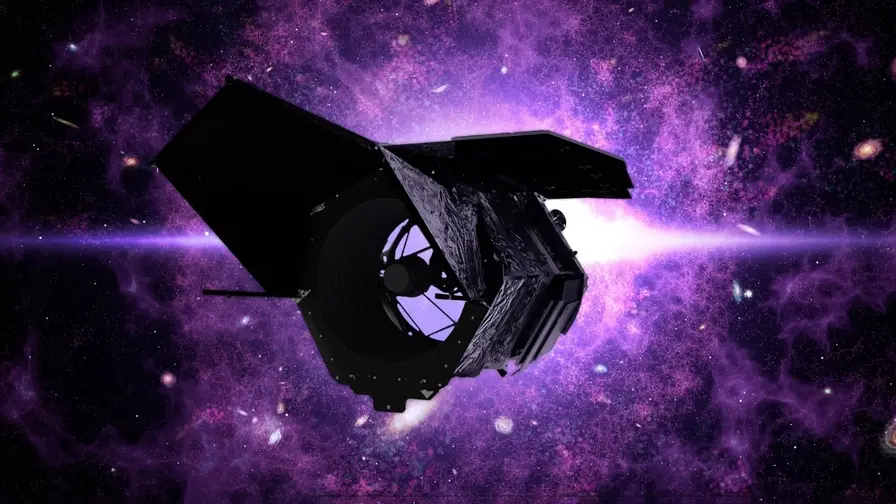
Roman’s prospects illustrate a broader lesson in space mission design: meticulous planning and mission discipline can yield returns far beyond initial expectations. If Roman sustains efficient propellant use and its subsystems remain healthy, the telescope could provide more than two decades of infrared sky surveys, changing how we study dark energy, exoplanets, and the evolving universe.

“My work centers on sustainability, energy, and environmental science — examining how innovation can lead to a greener future.”

Discussion
Leave a Comment
Comments
No comments yet. Be the first.