
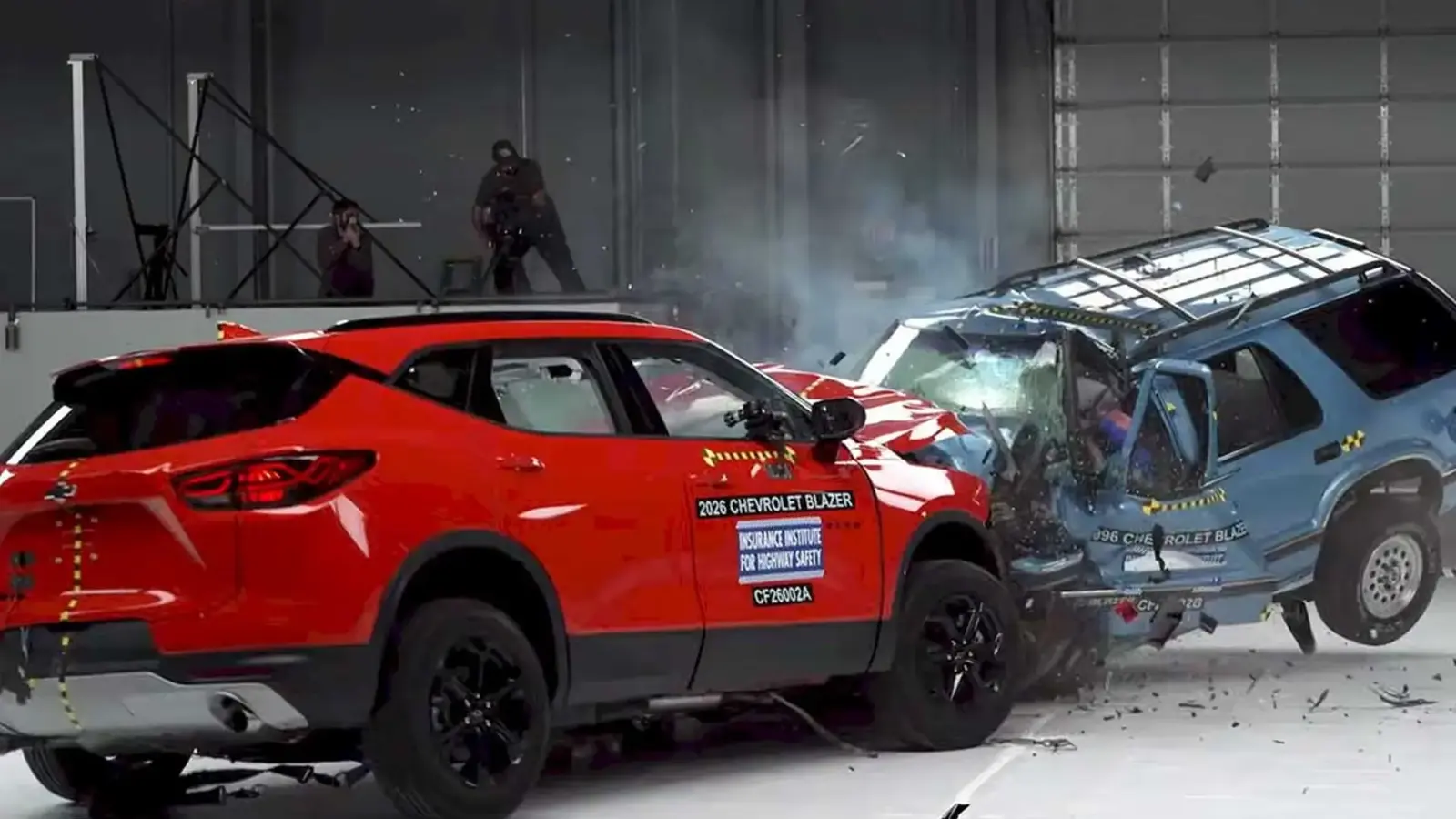
Picture two Chevrolet Blazers barreling toward the same steel barrier, thirty years apart. One creaks and groans. The other barely flinches. That was the scene IIHS staged to show how far car safety has come.
A blunt lesson in three decades of progress
The Insurance Institute for Highway Safety ran a frontal overlap crash that pitted a 1996 Blazer against the 2026 model. The results were brutal and unmistakable. The modern Blazer kept the passenger compartment intact. Dummy readings suggested low risk of serious injury. The 1996 truck told a different story. Its cabin collapsed inward. The dashboard and steering column intruded into the occupant space and struck the dummy's legs. The airbag inflated, but after it deployed the dummy's chin slammed backward toward the glass.

Short sentences here to drive the point home. Old cars used heavier steel, yes. They did not have the high-strength multi-phase steels, crush zones, or advanced restraint systems we take for granted today. Engineers redesigned structures so impact energy is absorbed and routed away from people. The math and materials add up to lives saved.
IIHS has a track record, not just a headline. Since starting its crash testing program in 1995, and more specifically between 1999 and 2024, the institute estimates its work helped prevent 48,532 fatalities. That translates to roughly €495 billion in societal cost savings, against roughly €552 million that insurers contributed to testing over the same period. Those figures make a very clear case: safety research delivers outsized returns.

This is not the first dramatic comparison. Back in 2009 IIHS paired a 1959 Chevrolet with a 2009 Malibu and found the older car offered almost no protection. These experiments are blunt evidence that improvements in crash dynamics, structure, and restraint systems are among the most consequential advances in the auto industry in recent decades.

So what should drivers take away? If you love classic cars for their style and history, that is understandable. Just don’t assume nostalgia equals safety. Modern vehicles use lighter materials in smarter ways. They are built to manage crash forces and shield occupants. That matters in real, measurable ways.
Engineering and testing have turned modern cars into lifesaving machines; the difference can be the line between a minor injury and a fatal outcome.

“I cover automotive innovation, electric vehicles, and the future of mobility — where technology meets sustainability.”

Discussion
Leave a Comment
Comments
No comments yet. Be the first.