

Unofficial reports circulating ahead of Samsung's expected spring 2027 launch say the Galaxy S27 Ultra will cost about 100 dollars more than its predecessor, while the base and Plus models may keep current pricing. The details come from multiple unconfirmed leaks and follow recent renders of the S27 Ultra published by a prominent leaker.
The leak suggests only the Ultra will be notably more expensive, with the Pro potentially matching last generation's Ultra base price.
Pricing expectations for the S27 lineup
According to the report, the S27 series will likely keep the base Galaxy S27 at 899 dollars and the S27 Plus at 1099 dollars, matching the launch prices introduced for the S26 base and Plus after last generation's price increase. The leak indicates Samsung does not currently plan to raise those two models despite rising production costs.
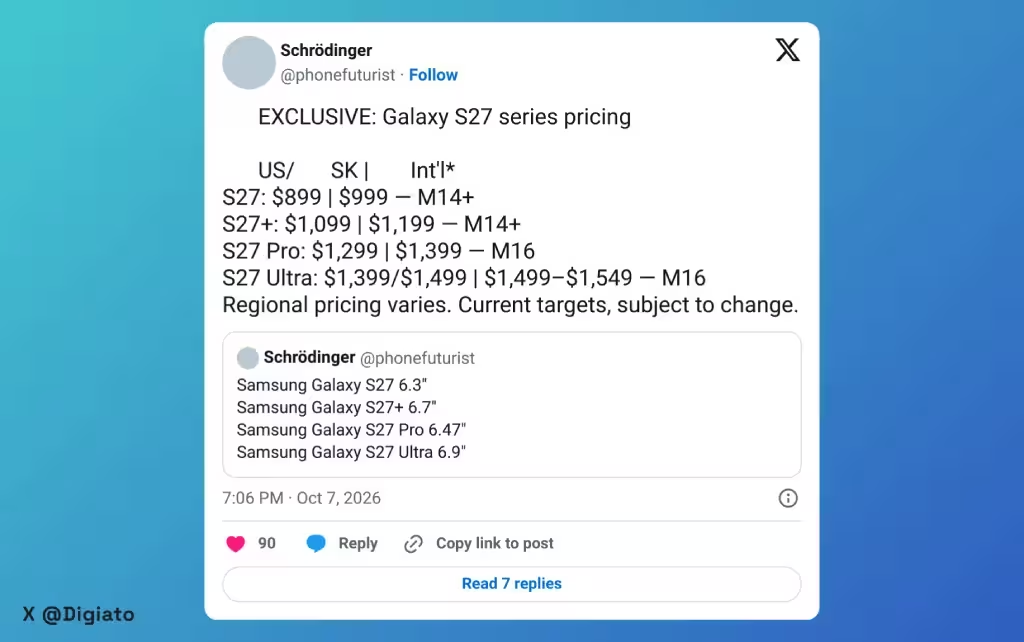
- Galaxy S27 (base): 899 dollars (expected)
- Galaxy S27 Plus: 1099 dollars (expected)
- Galaxy S27 Pro: 1299 dollars (reported base price)
- Galaxy S27 Ultra: 1399 dollars (reported base price, +100 dollars)
The source adds uncertainty about configuration options, noting it is not yet clear whether each model will ship in multiple storage and memory variants or only a single configuration.
Display panels and feature differences
Leaks name two different OLED panel families across the lineup: M14 Plus OLED for the regular and Plus models, and M16 OLED for the Pro and Ultra. Reportedly, the M16 panel includes an advanced privacy feature that renders screen content unreadable from certain off-angles, a capability the M14 Plus panels would not support. The panel difference is cited as a key reason for the price gap between the ordinary and high-end models.

Earlier leaks from another source have reported similar pricing and panel assignments, and the repetition of these figures may strengthen the likelihood that the reported increases and panel splits are accurate. Still, the information remains unofficial.
Production cuts and component cost pressures
Samsung recently said it plans to reduce smartphone production to 30 percent of current levels. Industry-wide cost pressures and supply constraints are cited as factors that could push manufacturers to raise retail prices.
Data cited from JPMorgan show an approximately 400 percent increase in DRAM prices from 2024 through the end of 2026, a rise that the report says contributes to higher manufacturing costs for flagship phones.


“I cover emerging technologies, digital innovation, and the intersection of tech and everyday life. My goal is to make complex trends accessible and inspiring.”

Discussion
Leave a Comment
Comments
No comments yet. Be the first.