
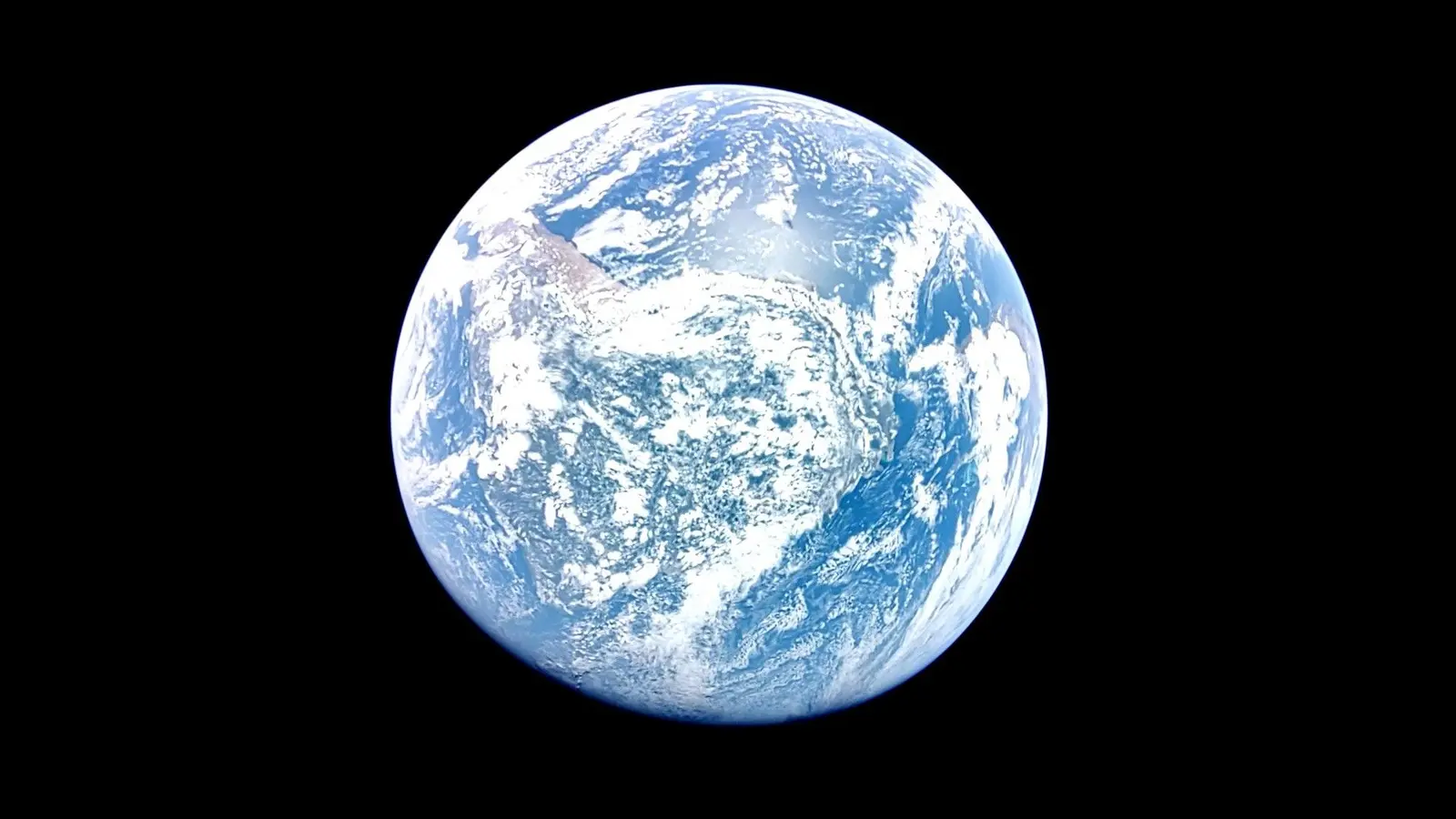
Imagine a thousand alternate solar systems running in parallel on a laptop. Some spit out volcanic super-Earths. Others scatter small, icy bodies into deep space. In a surprising number of trials, a world like ours appears at roughly one astronomical unit, with mass and orbit not forced by the model but born from it.
That is the practical lesson from a new wave of planetary formation simulations presented at the Origins 2026 conference in Paris by Nader Haghighipour of the University of Hawaii. Instead of tuning initial conditions to replicate our solar system, his team began with broad ranges of randomized disks and let gravity, collisions, and orbital dynamics write the ending. The result: Earth analogs are not a contrived outcome; they are a recurring one.
How the models differ and why it matters
Traditional planetary formation models often assume what you want to find. They place planetary embryos and planetesimals where the solar system now sits, then test how those pieces interact. Haghighipour and colleagues flipped that approach. They ran more than 1,000 late-stage accretion simulations from diverse starting conditions, allowing non-uniform distributions of solid material across a protoplanetary disk to evolve under first principles physics.
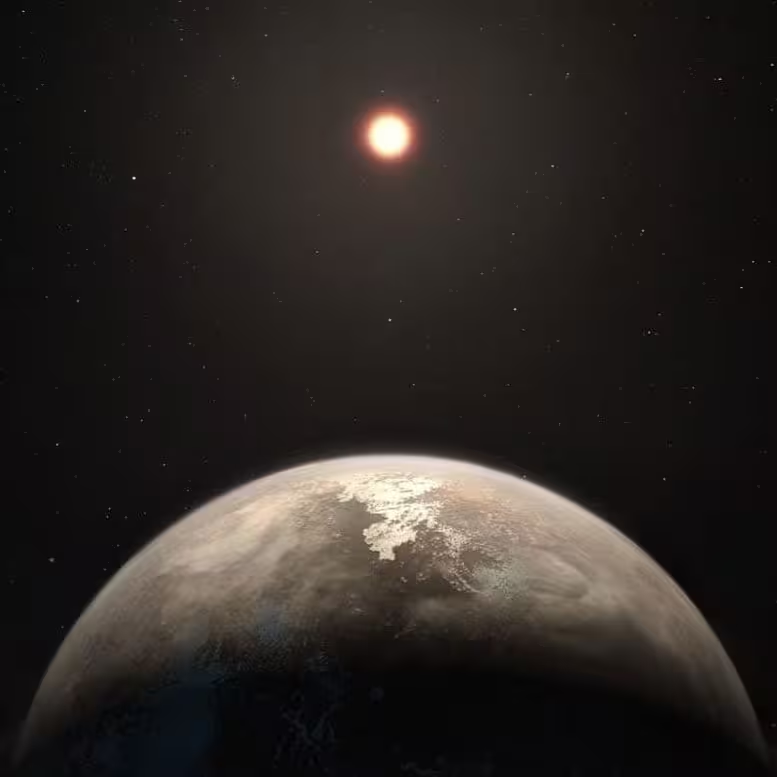
Protoplanetary disks are the dust and gas swirls around young stars. Within those disks, small solids collide and grow into planetesimals, which in turn build planetary embryos. Over millions of years, complex gravitational interactions assemble planets. What happens if you do not assume a neat initial layout? Answering that is this study’s core contribution.
"After about thirty years of doing terrestrial planet formation in one specific way, we have reached a point where we realized that the modeling we have done in the past has many limitations and can’t be pushed any further," Haghighipour said in Paris. The new simulations seek to recover outcomes organically, rather than steer models back to a familiar configuration.
Methods at a glance
The team varied the number, sizes, and radial distribution of planetesimals and embryos. They tracked gravitational interactions, collisions, and orbital migration across millions of simulated years. What used to take half a year of computing can now be completed in six to eight weeks on commercially available laptops, a change that vastly expands how many scenarios researchers can explore.
Even small changes at the start can lead to widely different planetary systems. That sensitivity is a classic signature of chaotic, many-body dynamics. Yet within that chaos, patterns emerge.
Across the ensemble, an Earth-mass planet near one astronomical unit was not rare. Venus-like planets showed up in about 28 percent of runs, sometimes within the host star’s habitable zone and sometimes marginally outside it. Mars analogs appeared repeatedly as lower-mass bodies near the present orbit of Mars. Those outcomes suggest the architecture of our inner solar system is one plausible branch of a broader family tree, not a unique freak occurrence.
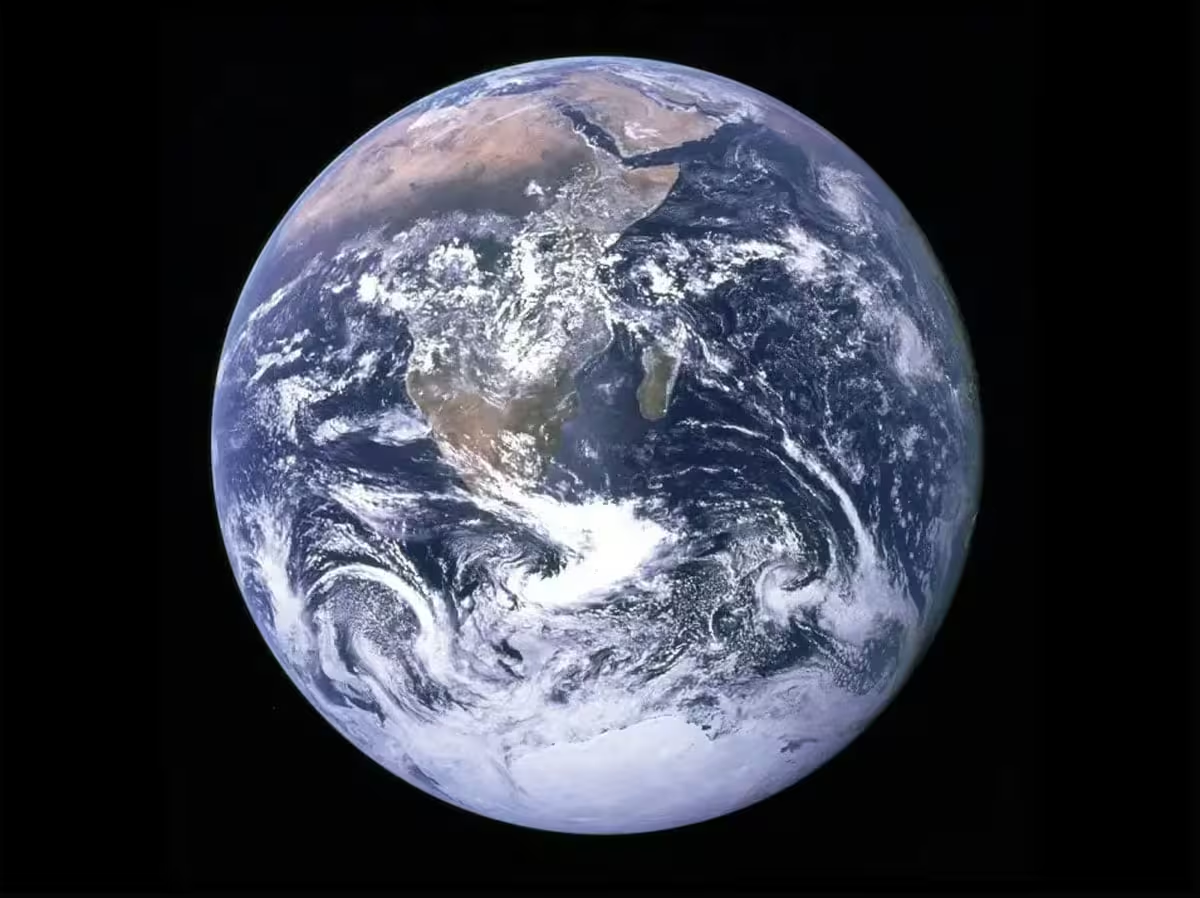
The Blue Marble.
Implications rip outward. If terrestrial planets form naturally in many disks, then small rocky worlds in habitable zones could be common. That strengthens the statistical case for targeting sun-like stars in searches for potentially habitable exoplanets. But common does not mean identical. Details such as volatile delivery, early giant-planet migration, and late giant impacts still shape each world’s surface, atmosphere, and prospects for life.
Why this changes how we plan observations
These simulations help refine where telescopes should look and what signatures they should expect. Knowing that Earth-like masses frequently assemble near 1 AU means observational resources can prioritize spectral studies of terrestrial-size candidates around sun-like hosts, while remaining alert to variation in composition and orbit.
Could life be common if Earth-like planets are? Haghighipour warned about leaps from formation to biology. Detecting biosignatures remains technologically difficult. Still, if the physical conditions that produce Earth-like planets are widespread, the probability space for life-bearing worlds grows. That is an important, testable pivot in our strategy for exoplanet surveys and future missions.
Expert Insight
"These results do not prove life is elsewhere, but they reshape the baseline for where we look," says Dr. Lena Ortiz, an astrophysicist who studies planet formation at a major research center. "When formation models are free of artificial constraints, we see the true diversity of possible planetary systems. That diversity tells us which observables—masses, orbital spacing, volatile budgets—are realistic priorities for follow-up with next-generation observatories."
Ortiz adds that improved computing and open access to large suites of simulations will allow teams to couple formation outputs with climate and atmospheric models. That pipeline is exactly what is needed to translate raw formation statistics into estimates of habitability.
Conclusion
Planet formation is messy and sensitive to initial conditions. Yet within that mess, Earth-like outcomes appear naturally and repeatedly in modern simulations that begin without built-in expectations. The study led by Nader Haghighipour demonstrates that our planet may be less of a cosmic oddity and more of one common result among many possible evolutionary paths. The next step is to connect those formation pathways to surface environments and atmospheric chemistry, and then to push our telescopes and instruments to test the models against real exoplanet systems.

“The cosmos has always fascinated me. I write about space missions, astronomy, and the technologies pushing humanity beyond Earth.”

Discussion
Leave a Comment
Comments (2)
Is this even true? sims are neat but how much do initial assumptions still sneak in, and what about late giant impacts.. if that's real then…
wow, imagining a thousand solar systems on a laptop is wild! if Earth-like worlds pop up that often, kinda hopeful... but also mind-boggling, right?