
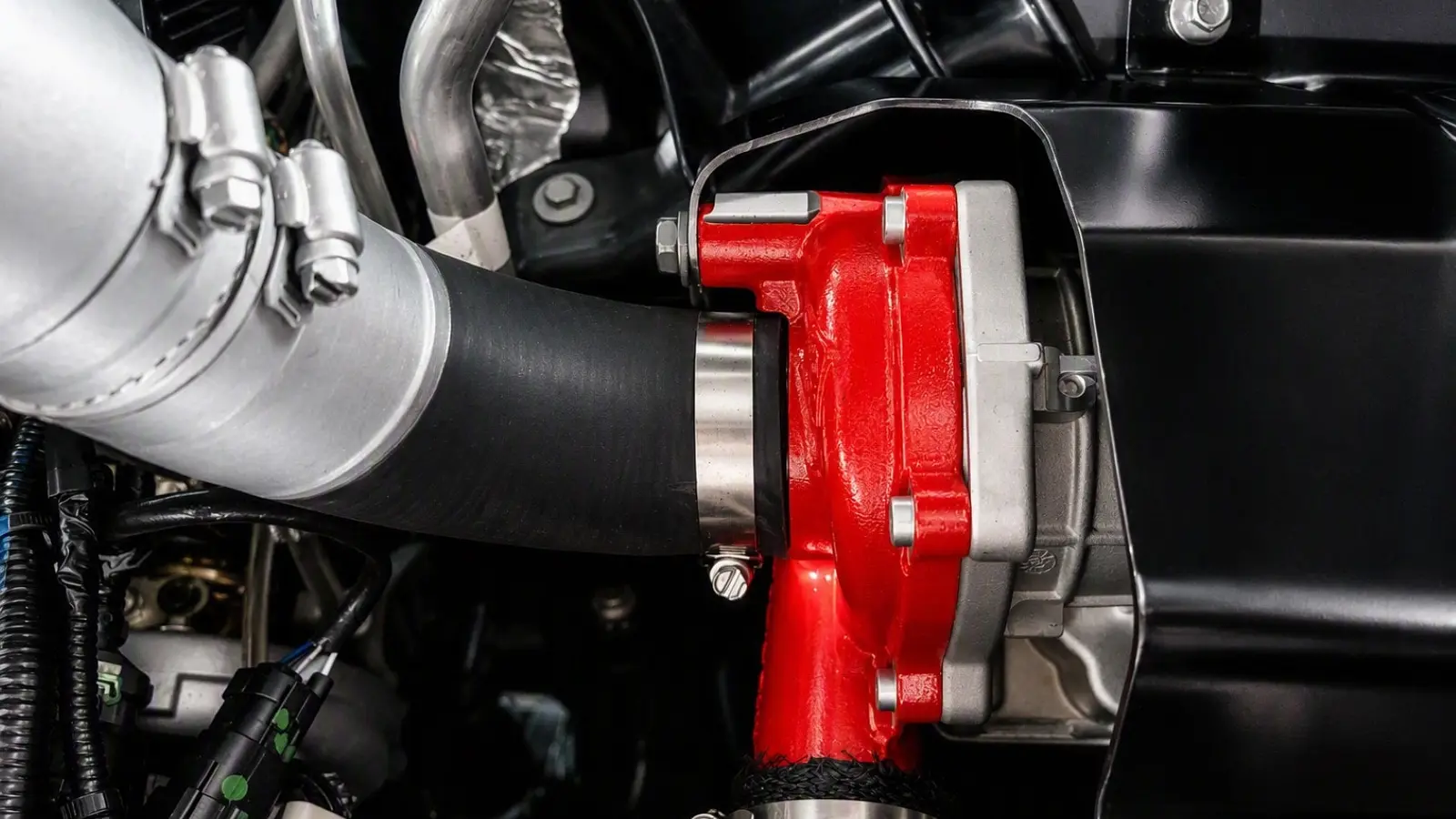
There’s that tiny pause between stomping the throttle and everything finally waking up. It’s a silence drivers hate because it steals the drama. Stellantis’ Street and Racing Technology division thinks it has a neat way to kill that pause for good.
Placement is everything
Called eBoost Air, the system is disarmingly simple. Instead of trying to spin the turbo shaft with electricity, SRT puts an electric compressor ahead of the exhaust-driven turbos and an electronically controlled bypass to route intake air through it when needed. Quick spin. Instant pressure. The turbos then take over as exhaust flow builds.

That arrangement makes the idea feel less like an exotic F1 trick and more like pragmatic engineering. Yes, F1 and Mercedes-AMG have shown us electrified turbochargers, and Audi once tried a similar electric compressor approach on the SQ7. But SRT’s emphasis on an upstream compressor plus a bypass keeps the hardware simpler to integrate and closer to a traditional supercharger-that-knows-when-to-stop.
In short: big turbo power without waiting. Short throttle lag. Sustained boost across the rev band. Throttle response that feels taut and immediate, not spongy.

Want numbers? SRT paired the concept with a 3.0-liter Hurricane twin-turbo inline-six in a Jeep Grand Cherokee prototype. The combination reportedly produces about 640 horsepower and 600 pound-feet, which is 813 Newton-meters, of torque. Those are credibly muscle-car figures, and the electric compressor gives them off idle instead of keeping them hostage until the turbos spool.
Why does that matter? Large turbochargers move serious air and unlock high-end power, but they need revs before they sing. That creates the familiar disconnect between input and acceleration. eBoost Air essentially fills the gap with electrically generated boost until exhaust gases can do the heavy lifting.
Think of it this way: the electric compressor is a short-term loan. It provides immediate pressure, then steps back when the engine can sustain boost itself. Lower complexity. Less hardware stress. Easier packaging into existing engines than systems that attempt to electrify the turbo shaft directly.

Will this reach showrooms? SRT has moved fast from concept to a running prototype. That signals serious intent, not a styling exercise. If engineers can translate the prototype’s behavior into production hardware without excessive cost or durability trade-offs, Hurricane-powered SRT vehicles would gain both punch and polish at low revs and still breathe like monsters at the top end.
In the end, eBoost Air is about reconciling two things drivers always want: instant response and big power. It’s a technical compromise done in a clever place. The question now is practical: can SRT keep it affordable and reliable enough for daily drivers to enjoy the payoff?

“I cover automotive innovation, electric vehicles, and the future of mobility — where technology meets sustainability.”

Discussion
Leave a Comment
Comments
No comments yet. Be the first.