
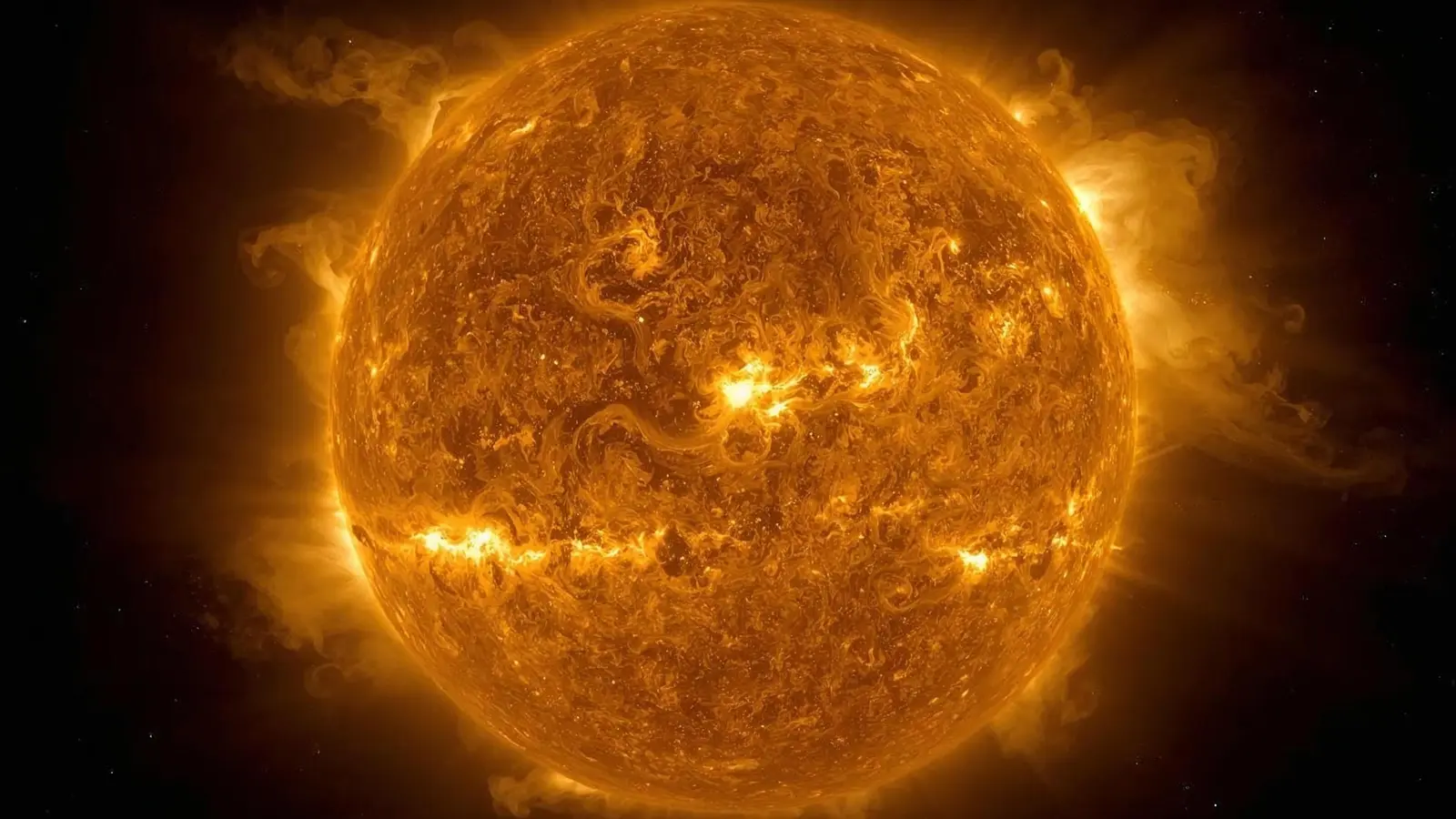
A clue came from ancient space rocks. Primitive meteorites, relics of the cloud that formed the solar system 4.6 billion years ago, have long hinted at slightly more silver than the Sun’s textbooks reported. A new analysis of sunlight now brings the two into much closer agreement.
The revision comes from researchers at Uppsala University, who estimate that silver in the Sun is about 55 percent more abundant than older calculations suggested. That adjustment may sound modest, but in the precision-driven world of stellar chemistry it has meaningful consequences for how scientists track the creation and movement of heavy elements across the galaxy.
The Sun’s chemical composition serves as a fundamental benchmark for understanding the formation and evolution of stars and planets. New research suggests that some of these measurements may need revising, with important implications for understanding how heavy elements spread throughout the galaxy.
Reading silver in the light of the Sun
Silver atoms leave fingerprints in sunlight. When atoms in the solar atmosphere absorb photons at particular wavelengths, the continuous spectrum acquires narrow dark lines. Identifying a line tells you silver is present; estimating how much requires a physics-rich model to convert line strength into abundance.
The team combined a dynamic three-dimensional model of the Sun’s outer layers with improved calculations of how silver atoms interact with both radiation and particles. Crucially, they included non-local thermodynamic equilibrium effects, which account for how incoming and outgoing radiation alters atomic energy levels and therefore changes absorption strengths. That matters because simplified assumptions can bias abundance estimates.
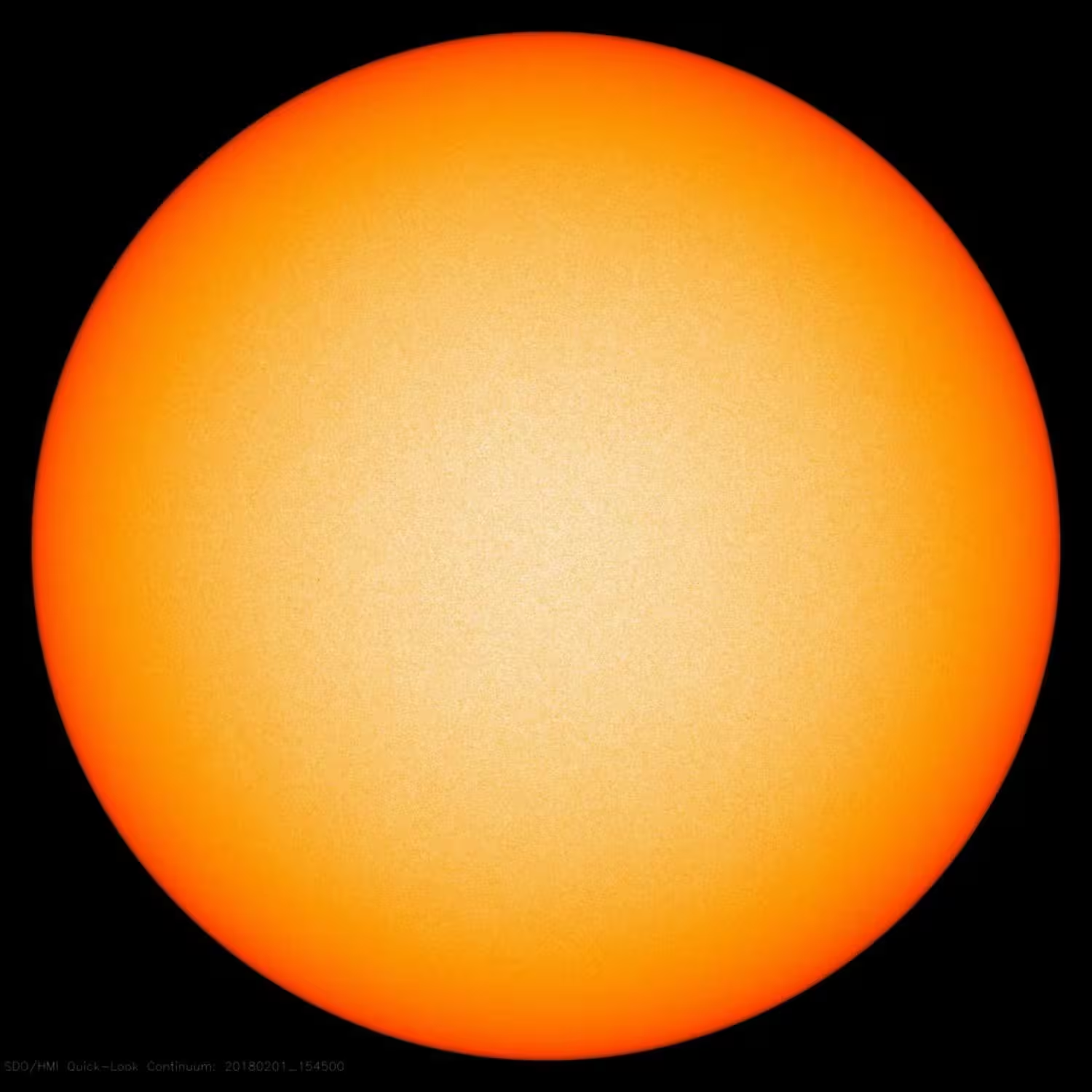
The optical wavelengths (what our eyes see) probe deeper layers of the Sun’s atmosphere, and our analysis is based on these layers.
"With our new model, we were able to interpret the spectral lines used to determine the solar silver abundance more accurately," says Sema Caliskan, who led the work during her PhD at Uppsala. Shorter or longer sentences take different burdens; here, the technical lift was to match observed line shapes to a realistic, moving photosphere.
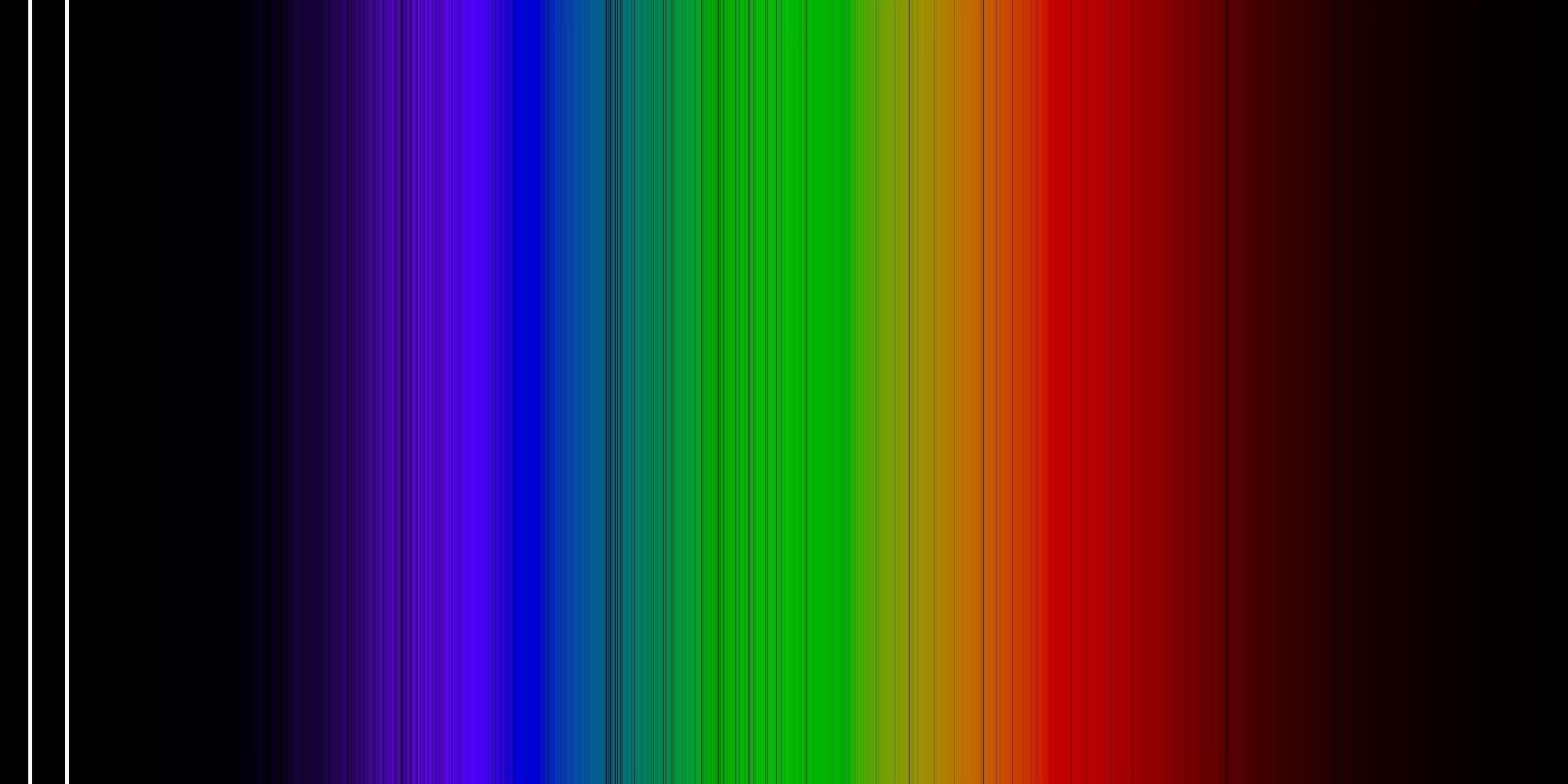
The solar spectrum. The two strongest silver lines, highlighted in white, lie in the ultraviolet region that is invisible to the human eye.
Why the difference matters for galactic chemistry
Hydrogen and helium make up almost all of the Sun by mass. Heavy elements such as carbon, iron, and silver are rare by comparison, but they carry the story of previous generations of stars. Silver is especially interesting because its origins trace to different nuclear pathways: slow neutron captures in evolved stars and rapid processes in explosive events like neutron star mergers or some types of supernovae.
Bringing the Sun’s silver content closer to that measured in meteorites helps align two independent records of the same primordial material. It also tightens constraints on models that attempt to map where and when heavy elements formed in the Milky Way. If solar abundances are adjusted, the reference point for many stellar and planetary studies shifts accordingly.
The researchers plan to apply the same modeling approach to other stars. By measuring silver in stars of varying ages and masses, astronomers can start to pinpoint which astrophysical sites dominate silver production and how that material has been mixed into the galaxy over time.
Conclusion
Small corrections can reshape big pictures. A 55 percent upward revision in the Sun’s silver abundance does not rewrite stellar physics, but it refines a cornerstone value used across astrophysics. With better models and broader surveys, astronomers will sharpen their view of how the elements were forged and spread through the cosmos.

“The cosmos has always fascinated me. I write about space missions, astronomy, and the technologies pushing humanity beyond Earth.”

Discussion
Leave a Comment
Comments
No comments yet. Be the first.