
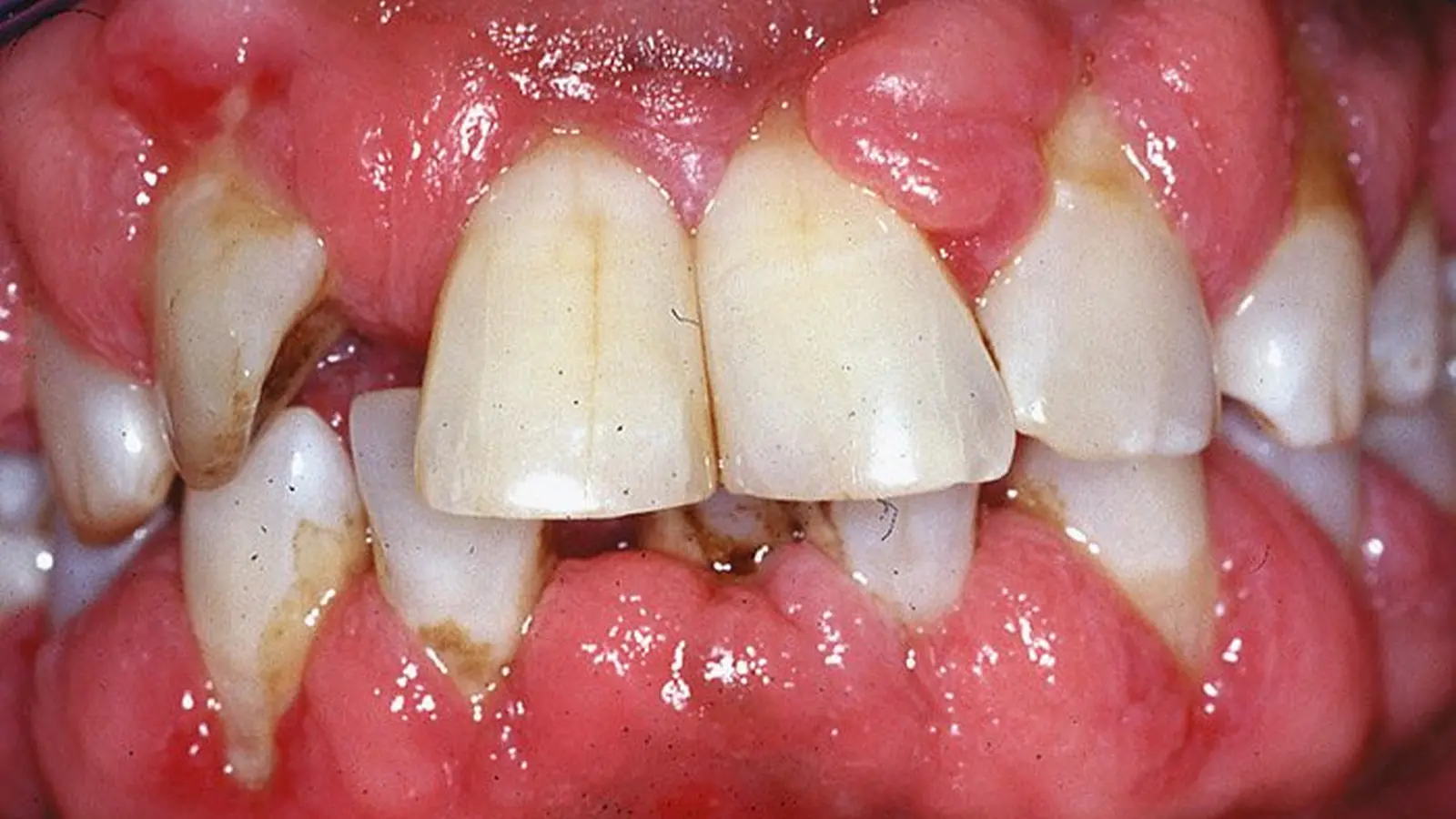
Picture a scaffold so small it slips between gum fibers, carrying two medicines and shutting down the destructive cycle that eats away at the jaw. That is the idea behind a new DNA-based delivery system developed by researchers at Sichuan University, and in lab tests it slowed the bone loss that underlies advanced gum disease.
How a tiny DNA frame carries a punch
Periodontitis begins quietly: bacterial plaque accumulates under the gum line, immune cells respond, and over months or years the inflammation chips away at the connective tissue and bone that hold teeth in place. Typical treatments—deep cleaning and antibiotics—can cut bacterial load but often fail to repair damaged tissue or fully halt progression.
The Sichuan team assembled a tetrahedral DNA structure known as a tetrahedral framework nucleic acid, or tFNA. Think of it as a microscopic cage. Inside that cage they packed two complementary agents: curcumin, a plant-derived anti-inflammatory and antioxidant, and defensin, a short antimicrobial peptide that destroys certain bacteria.
"We aimed to create a multifunctional DNA nanoplatform capable of delivering both curcumin and defensin directly to periodontal tissues," said Geru Zhang, one of the lead authors. The DNA scaffold performed two practical jobs. It stabilized curcumin, a compound that normally breaks down quickly, and it shielded defensin from enzymatic degradation so the peptide remained active long enough to act at the site of infection.
Laboratory and animal results that matter
In cultured human periodontal ligament stem cells, the combined complex—called Cur-de-tFNA—reduced inflammatory signaling triggered by a bacterial molecule. The researchers measured a drop in activity along the TLR4/NF-kB pathway, a biochemical route that amplifies inflammation and leads to tissue breakdown. Oxidative stress markers fell too, while proteins linked to bone formation rose.
Antibacterial tests showed enhanced killing of pathogens associated with periodontitis compared with either curcumin or defensin on their own. In rats with induced periodontitis the results became clearer: animals treated with the DNA carrier sustained less bone loss around teeth. Histology revealed less osteoclast activity, more collagen deposition, and nascent bone forming where damage had been occurring.
"The nanoplatform delivered stronger antimicrobial activity, better control of inflammation, and improved preservation of periodontal tissues in preclinical models," said Xiaoxiao Cai, summarizing the animal findings.
Why this approach could change dental care
There are two practical advantages here. First, combining an antimicrobial and an anti-inflammatory agent in one packaged unit attacks both the bacterial trigger and the destructive immune response. Second, the use of DNA as a biodegradable carrier increases local stability and uptake without leaving persistent foreign material behind.
What remains to be seen is how these promising preclinical results translate to humans. The carrier appeared well tolerated in lab and animal studies, but safety, dosing, and delivery method must be tested in clinical trials before dentists can consider it for routine care.
Conclusion
The work from Sichuan University shows a pragmatic route toward repairing and preserving the tissues that support teeth by marrying nanotechnology and bioactive compounds. It is not a finished therapy yet, but it is a clear demonstration that smart carriers can reshape how we treat chronic inflammatory diseases in the mouth. If clinical trials confirm safety and efficacy, a DNA-based two-in-one therapy could become a new tool against one of the leading causes of adult tooth loss.

“The cosmos has always fascinated me. I write about space missions, astronomy, and the technologies pushing humanity beyond Earth.”

Discussion
Leave a Comment
Comments (1)
Less bone loss in rats sounds promising, but can it actually rebuild enough bone in people? thats the big question for me.