

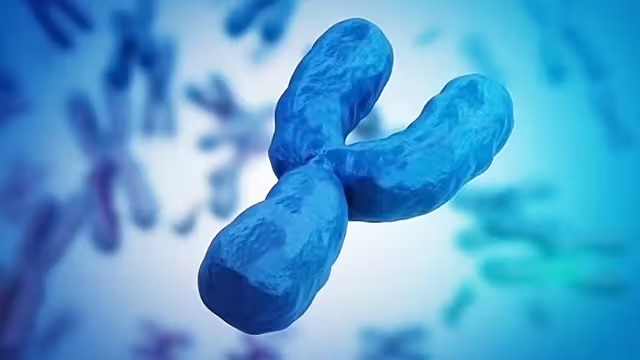
Imagine a tiny thread inside some of your cells quietly slipping away. No alarm, no fever, just a subtle genetic change that accumulates with time. For a growing number of men, that thread is the Y chromosome, and its disappearance in pockets of the body may be more than a curiosity of aging.
From curiosity to clinical concern
For decades scientists treated loss of the Y chromosome in certain cells as a benign sign of getting older. That view is changing. Studies have repeatedly linked mosaic loss of the Y chromosome, often abbreviated as mLOY, with a range of serious conditions: cancer, cardiovascular disease, kidney failure, and neurodegeneration such as Alzheimer’s. The pattern is striking. Roughly 40 percent of 70-year-old men show Y loss in blood cells. By age 93 that number climbs to about 57 percent.
Why does this matter? Unlike most chromosomes, the Y can be lost by a cell without triggering immediate cell death. That makes it uniquely fragile. Loss often occurs during cell division when replication errors produce daughter cells missing the entire Y chromosome. Historically, the Y was thought to mainly govern sex determination and sperm production. Many labs once assumed it was a genetic spare part sitting in the background.
New genomic tools have dislodged that complacency. The Y chromosome was fully sequenced only recently. Even though it comprises less than 1 percent of a male cell’s DNA, the genes that remain appear to influence immune function and other systems across the body. In mice, for example, a 2022 experiment showed that losing Y in specialized immune cells within the heart led to heart dysfunction and increased mortality. Clinical research in humans has echoed those concerns: men exhibiting mLOY are statistically more likely to develop cancer or to die earlier than men without such losses.
What the data reveal about disease links
Some of the clearest signals come from cancer research. Men have a higher incidence of certain cancers, and in bladder cancer striking proportions of tumors show Y loss. A 2023 analysis found that up to 40 percent of tumors from older male bladder cancer patients lacked the Y chromosome. That pattern prompted researchers to ask whether Y loss helps tumors evade immune detection or otherwise influences tumor biology.
Early experimental evidence supports this idea. A 2025 study reported that immune cells missing the Y chromosome were less effective at attacking cancer cells. A subsequent review that same year concluded mLOY likely shifts male immune system activity in ways that could promote disease. Beyond cancer, researchers are mapping connections to chronic kidney disease and cardiovascular problems. The mechanisms are not all clear, but several hypotheses converge: immune dysfunction, altered cell signaling, and changes in how tissues repair themselves after injury.
Not all instances of Y loss occur only in old age. Rarely, mLOY appears in younger men and has been associated with fertility issues and developmental anomalies. These cases are exceptions, but they underline a broader principle: the Y chromosome, minor though it may seem by size, is not irrelevant.
Key conditions linked to mosaic loss of Y
- Bladder cancer: increased frequency of Y loss in tumors
- Cardiovascular disease: animal models show immune-driven heart dysfunction
- Kidney disease: epidemiological signals of association
- Neurodegeneration: correlations reported with Alzheimer's risk
These links raise practical questions. Could screening for mLOY become part of risk assessments for older men? Could restoring the functions encoded by Y-linked genes reduce disease risk? The research is not there yet, but genomic sequencing advances and larger cohort studies are pushing the field forward.
Debate in evolution and what the Y might mean for our future
Beyond medicine, the Y chromosome sparks an evolutionary debate. Today the human Y retains roughly 3 percent of its ancestral genes. That small set of genes may be highly conserved because they serve critical functions across multiple tissues. Evolutionary biologist Jennifer Hughes argued in 2025 that strong selection should preserve those genes: losing them would carry too high a fitness cost for humans.
Not everyone agrees. Jenny Graves, another evolutionary biologist, points to species like the spiny rat and the mole vole, which have lost the Y chromosome entirely. In those animals, other chromosomes took over the role of sex determination. Genes can relocate, she notes, and what is indispensable in one era can be repurposed elsewhere over evolutionary time. The human Y may be resilient, but it is not immune to change.
That tension matters for how researchers frame Y-loss studies. If Y-linked genes are central to immune or tissue maintenance, mLOY is not merely a marker of aging but a driver of disease. If those functions can shift to other genomic locations, the clinical implications might differ.
Expert Insight
Dr. Maria Connor, an immunogeneticist at the University of Edinburgh, offers a pragmatic view: "We are seeing a convergence of genomic data and clinical signals. Loss of the Y in immune cells seems to tilt the immune landscape in measurable ways. That does not mean every man with mLOY will get sick, but it raises the stakes for understanding how these cells behave in aging tissues."
Her remark captures why this topic now draws attention from cardiology, oncology, nephrology, and neurology. The next wave of research will need to connect cell-level changes with whole-organism outcomes, and then ask whether intervention is possible.
Practical work is already underway. Larger population studies now include mLOY analyses, while laboratories are testing how Y-linked genes affect immune signaling and tissue repair. If those experiments identify actionable pathways, they could open new avenues for therapies aimed at age-related conditions in men.
The Y chromosome may be small, but its impacts are proving to be disproportionate. Whether it survives intact across millions of years remains an evolutionary question. For now, the pressing issue is clinical: understanding how the loss of this tiny chromosome in certain cells reshapes health across a man’s lifespan.

“My work centers on sustainability, energy, and environmental science — examining how innovation can lead to a greener future.”

Discussion
Leave a Comment
Comments (1)
Wait, 40% by age 70? had no idea this was so common...