

Imagine a century-old disease shrugging off the medicines designed to stop it. That is not a hypothetical. It is happening now.
A shifting threat: how a familiar foe is changing
Typhoid fever, caused by Salmonella enterica serovar Typhi, has stalked human populations for millennia. Once controlled in wealthy nations through sanitation and antibiotics, it remains endemic across large parts of South Asia and sub-Saharan Africa. The problem today is not that the bacterium has suddenly become more lethal. The problem is that it is getting harder to treat.
Researchers who sequenced 3,489 S. Typhi genomes collected between 2014 and 2019 across Nepal, Bangladesh, Pakistan, and India found a marked increase in extensively drug-resistant, or XDR, strains. These variants are not merely resistant to a single old drug. They can withstand the classic first-line antibiotics such as ampicillin, chloramphenicol, and trimethoprim-sulfamethoxazole, and many are now tolerant of later-generation treatments including fluoroquinolones and third-generation cephalosporins.
What does that mean for patients? For now, oral azithromycin remains the last widely available pill that works reliably in many places. But that lifeline is fraying. Mutations conferring azithromycin resistance are spreading in some populations. If those mutations combine with XDR backgrounds, clinicians could soon be left with intravenous-only options, or none at all in resource-limited settings.
How fast and how far: patterns of spread
Speed matters. Since the first XDR S. Typhi detected in Pakistan in 2016, that genotype became dominant there within a few years. Scientists have documented nearly 200 episodes of international exportation of resistant strains since 1990, with destinations that include Southeast Asia, parts of Africa, and high-income countries such as the United Kingdom, the United States, and Canada.
Why does this matter beyond the immediate regions? Global travel, migration, and trade create multiple pathways for microbes to cross borders. South Asia accounts for roughly 70 percent of global typhoid cases today, but a resistant strain seeded in one city can appear across continents within weeks or months. Jason Andrews, an infectious disease researcher at Stanford, described the rapid emergence and spread of highly resistant S. Typhi as a real cause for concern and called for urgent expansion of prevention efforts.
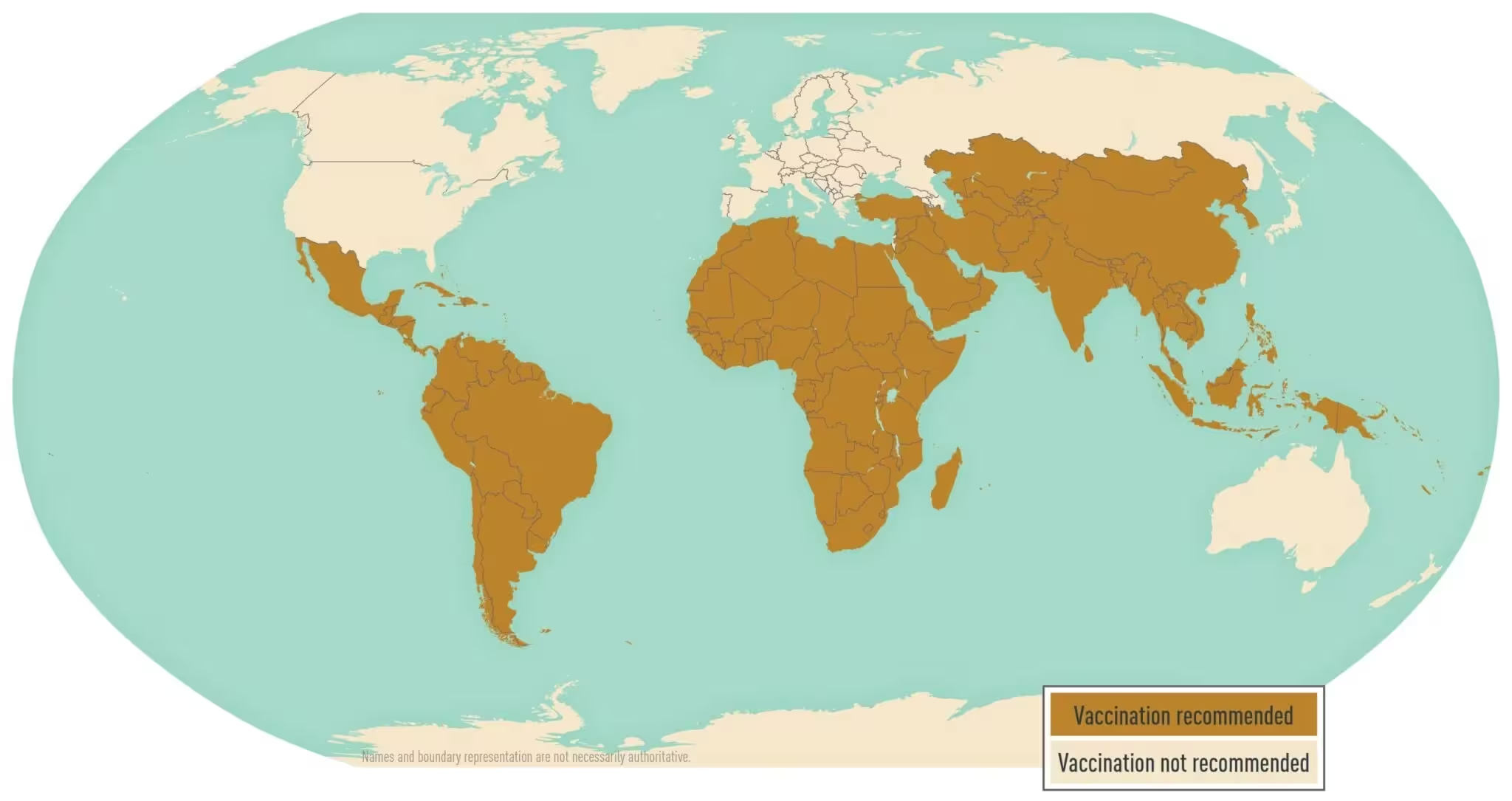
Typhoid vaccine recommendations (CDC)

The public-health stakes are high. Untreated typhoid can be deadly: historically up to one in five cases may end fatally without care. In recent years, the global burden remains substantial: reports cited over 13 million cases in 2024. In practical terms, that translates to a major pressure on health systems if common oral treatments fail.
Vaccines, stewardship, and tools for control
Medical teams face three broad levers: treat what you can, prevent what you can, and slow resistance where possible. Vaccination is central to prevention. Typhoid conjugate vaccines (TCVs) provide durable protection for children and adults and can reduce transmission in crowded urban settings. Pakistan led the way by introducing routine typhoid immunization nationally, and other countries are beginning or planning rollouts.
The World Health Organization has prequalified several typhoid conjugate vaccines, paving the way for inclusion in childhood immunization schedules in endemic countries. Modeling studies suggest targeted vaccination in high-incidence urban areas could cut cases and deaths substantially. One 2021 analysis from India estimated up to a 36 percent reduction in typhoid cases and deaths with routine pediatric vaccination in cities.
Antibiotic stewardship matters too. Overuse and misuse of antimicrobials drive the genetic changes that let bacteria survive. Investments in sanitation, clean water, and diagnostic capacity reduce unnecessary prescriptions by distinguishing typhoid from other febrile illnesses. At the same time, pharmaceutical research must prioritize new oral agents or alternative treatment strategies because, realistically, not all health systems can deliver intravenous care at scale.
Expert Insight
"We are watching a familiar pathogen reshuffle its genetics in response to pressure from the drugs we've relied on for decades," says Dr. Mira Anand, an infectious disease epidemiologist who has worked on typhoid surveillance programs in South Asia. "Vaccines buy time. Strong surveillance and rapid diagnostics buy even more. But without coordinated global action, pockets of resistance will continue to expand and find new routes across borders."
Dr. Anand adds a practical note: "Countries must scale vaccine access while improving water and sanitation. Both are needed. One without the other will slow progress."
Conclusion
The rise of XDR typhoid challenges assumptions about treatable bacterial infections. It is a reminder that antibiotic effectiveness is a finite resource and that vaccines and public-health infrastructure are among our most powerful defenses. Preventing the spread of resistant S. Typhi will require faster vaccine rollouts, stronger surveillance to detect emerging mutations, smarter antibiotic use, and continued investment in new treatments. The clock is ticking, but the tools to prevent a wider crisis are within reach—if policy and funding follow the evidence.


“The cosmos has always fascinated me. I write about space missions, astronomy, and the technologies pushing humanity beyond Earth.”

Discussion
Leave a Comment
Comments (2)
How widely available are these vaccines in the places seeing the most resistance? Seems like thatd be the first hurdle
Scary that the last common pill might stop working too... clean water and vaccines cant come soon enough.