
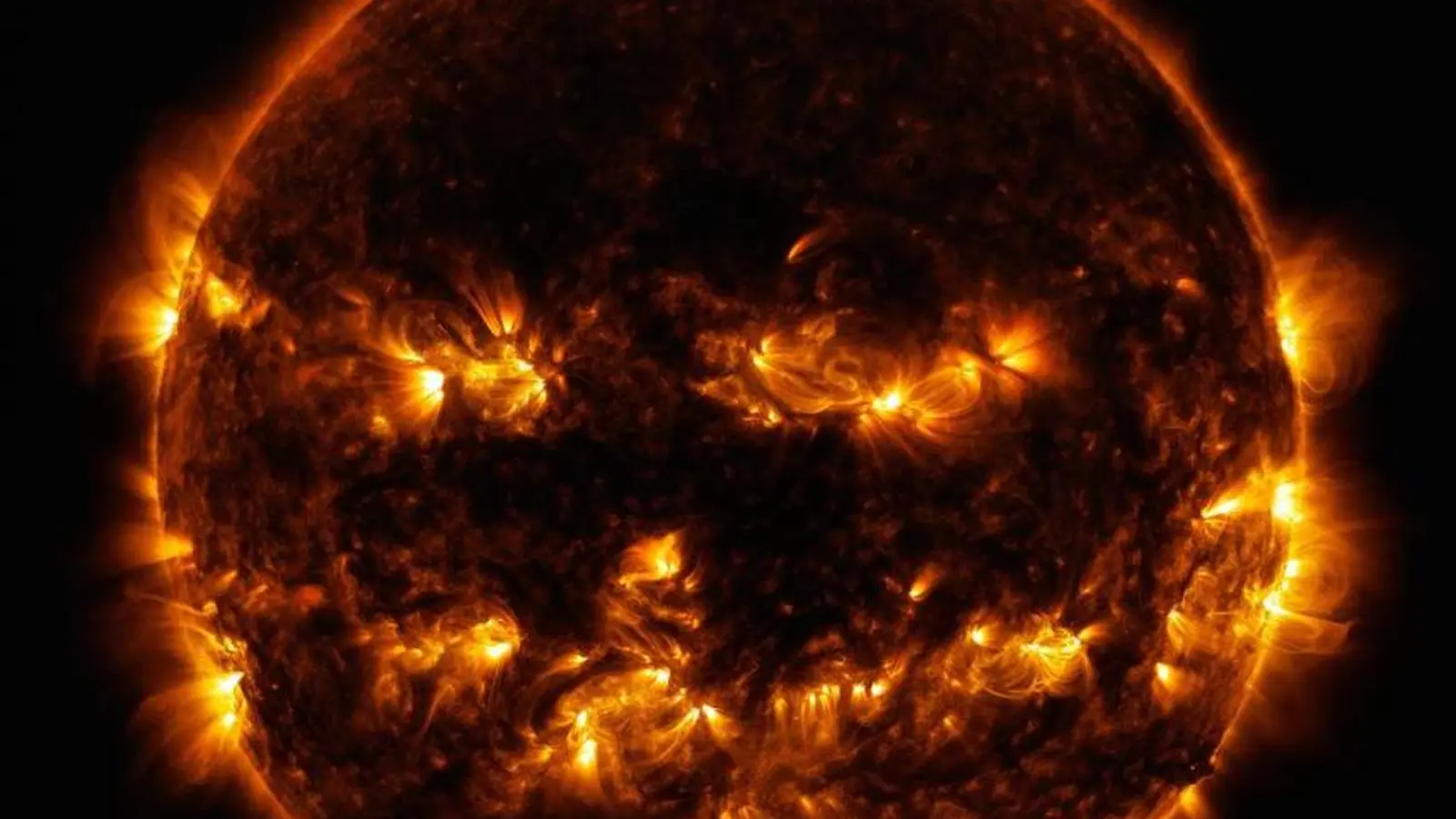
Picture the solar system as a tidy family portrait: the small inner planets huddled close to a brilliant Sun, the gas and ice giants posing farther out. For billions of years that image has seemed stable, even eternal. New simulations now force us to revise that intuition. When our star dies, its final acts will not only engulf or roast the inner worlds; they will also shove and scatter the distant giants, reshaping the outer solar system into something unrecognizable.
How a Dying Star Turns Gentle Orbits into Chaos
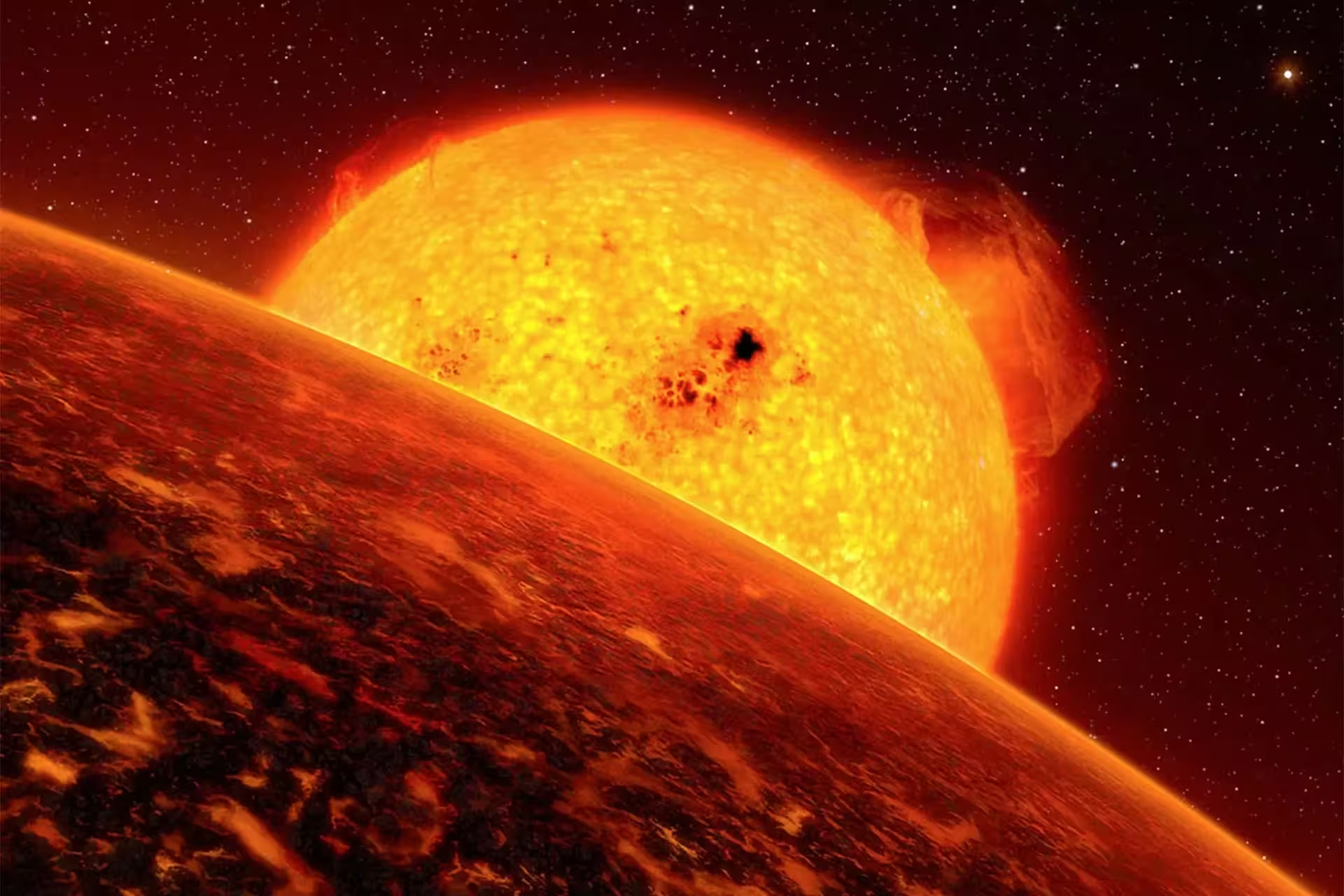
The Sun will not explode like a supernova. Instead, in about five billion years it will swell into a red giant, shedding vast amounts of mass as its outer layers drift into space. For decades astronomers assumed that this mass loss is gradual and smooth, allowing distant planets to drift outward in an orderly fashion. That picture is incomplete.
Stellar observations and new models suggest mass loss can be uneven and episodic. Think of the Sun as a slowly leaking bucket, sometimes punctured by sudden surges. When a star loses mass unevenly, the gravitational ties that keep planets on stable paths can weaken abruptly. Resonances shift, orbital periods change, and formerly distant companions feel a change in the rules that governed them for billions of years.
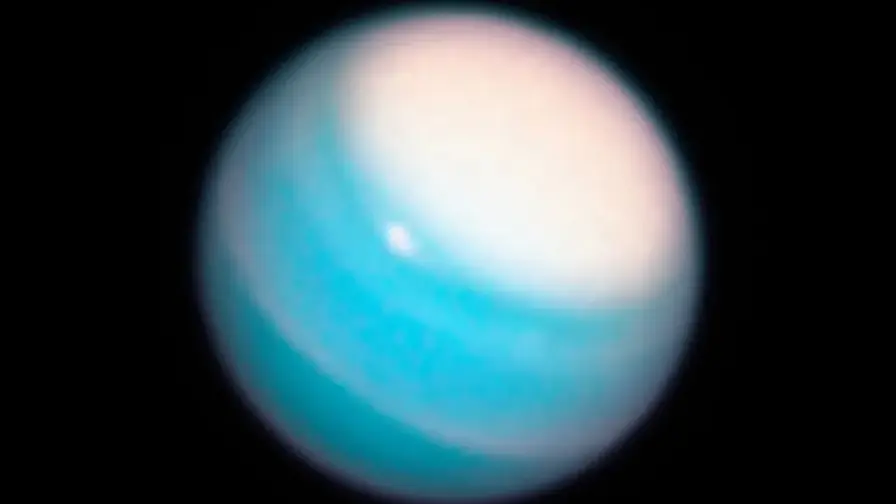
Numerical N-body simulations, tuned to reflect realistic patterns of stellar mass loss, reveal dramatic outcomes. In some runs, Uranus and Neptune swap places. In others, one of the ice giants receives enough of a dynamical kick to be flung into interstellar space. There are even scenarios in which Saturn is the planet that escapes, leaving behind a very different architecture. The culprit is not random passing stars or the slow creep of chaos alone; it is the Sun itself, by pounding the planetary stage during its final throes.
What the Models Tell Us About Timing and Fate
Previous estimates allowed the outer planets to survive effectively forever on astrophysical timescales, with some studies projecting stability for periods far longer than the current age of the universe. The new research narrows that prospect considerably. Simulations indicate that roughly one billion years after the Sun becomes a white dwarf, the familiar configuration of Jupiter, Saturn, Uranus, and Neptune may be gone.
Closer in, other risks exist as well. Mercury has long been flagged as vulnerable: there is about a one percent chance it could be ejected from the solar system over the next five billion years, or collide with Venus, Earth, or Mars in some models. But the outer system’s vulnerability is a different and less intuitive hazard, arising once the Sun begins to drop mass in fits rather than in a uniform trickle.
How do astronomers know this is plausible? Two lines of evidence converge. First, observations of evolved stars and their planetary nebulae show signs that mass loss can be clumpy and variable. Second, surveys of white dwarfs reveal metal pollution and dusty, gaseous discs that imply planetesimals or even entire planets can be disrupted after the host star’s death. Taken together, these data argue that post-main-sequence planetary systems are dynamic, not frozen snapshots of former arrangements.
There is also an intriguing flip side. The chaos unleashed by stellar death seems capable of both destroying and creating. Material thrown into new orbits may accrete into second-generation bodies, forming a new family of planets around a white dwarf. Observations have begun to confirm that such worlds exist, hinting at a resilient, if transformed, planetary future.
Expert Insight
"What this work makes clear is that the star is not a passive backcloth to planetary motion during its final evolution," says Dr. Elena Marquez, an astrophysicist who studies orbital dynamics. "When a star sheds mass in bursts, it changes the gravitational landscape. Resonances can be crossed quickly, and that is enough to scatter planets into wildly different configurations. It also means that signs we see around other white dwarfs—metal contamination, dusty discs—may be the fingerprints of these violent rearrangements."
Jamie Williams, the astronomer credited with finding one of the first candidate second-generation planets orbiting the white dwarf HS 0209+0832, offers a complementary view: "Discovering a planet born after its star’s death shows nature does not always end in emptiness. Material that survives or is scattered can reassemble. It speaks to the complex lifecycle of planetary systems."
Implications for Exoplanets and the Long-Term Solar Story
There are immediate consequences for how we interpret observations of evolved stars and their companions. White dwarf pollution, previously seen as evidence of rocky bodies falling in, may also record earlier epochs of instability and scattering. For exoplanet hunters, the possibility of second-generation planets prompts new search strategies: look not only for remnants but for signs of reformed systems around stellar corpses.
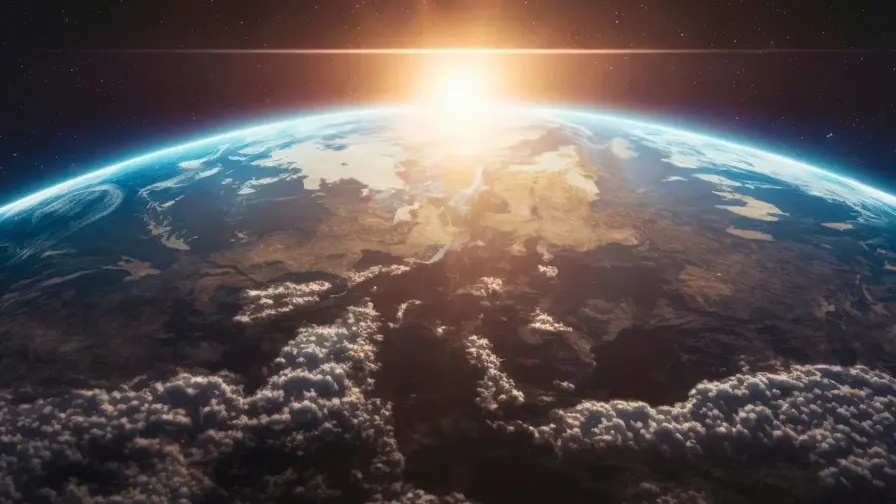
For Earth and its neighbors, the news is mixed. The red giant Sun will almost certainly sterilize the inner planets long before these outer instabilities fully unfold. Yet the idea that the outer giants could be tossed about, collide, or be ejected changes how we picture the distant future of the solar neighborhood. It also reframes older questions raised by Newton: planetary order is not guaranteed forever, but the source of disruption may be the dying star itself rather than external intruders.
Conclusion
The final act of our Sun will be more than a gentle dimming. Mass loss that is uneven and episodic can trigger planetary upheaval across the entire solar system. The gas and ice giants, once thought immune to the star’s death, may be dislodged, exchanged, or expelled. Yet the story is not only one of loss: the chaotic aftermath may seed new worlds around the white dwarf remnant. As models improve and observations of evolved systems accumulate, we will refine this far-reaching portrait of planetary mortality and rebirth.
Published research in The Astrophysical Journal Letters underpins these findings and urges a reconsideration of how stellar evolution sculpts long-term planetary destinies.

“My work centers on sustainability, energy, and environmental science — examining how innovation can lead to a greener future.”

Discussion
Leave a Comment
Comments (1)
wait, the Sun might fling Saturn into space?? that's wild and kinda heartbreaking. the idea of planets reborn is weirdly beautiful...