
A late night in autumn, a railway signal box, and a departure delayed by 16 minutes: a mundane mishap that, when reexamined, rewrites the early history of space weather’s impact on human technology.
Researchers have traced a long-standing error in historical records and established that the infamous Exeter incident—once dated to 1841—almost certainly occurred on October 18, 1848. The correction shifts the timeline for the first documented collisions between solar activity and electrical systems, while revealing a pattern: as soon as long conductive networks existed, geomagnetic disturbances began to interfere with them.
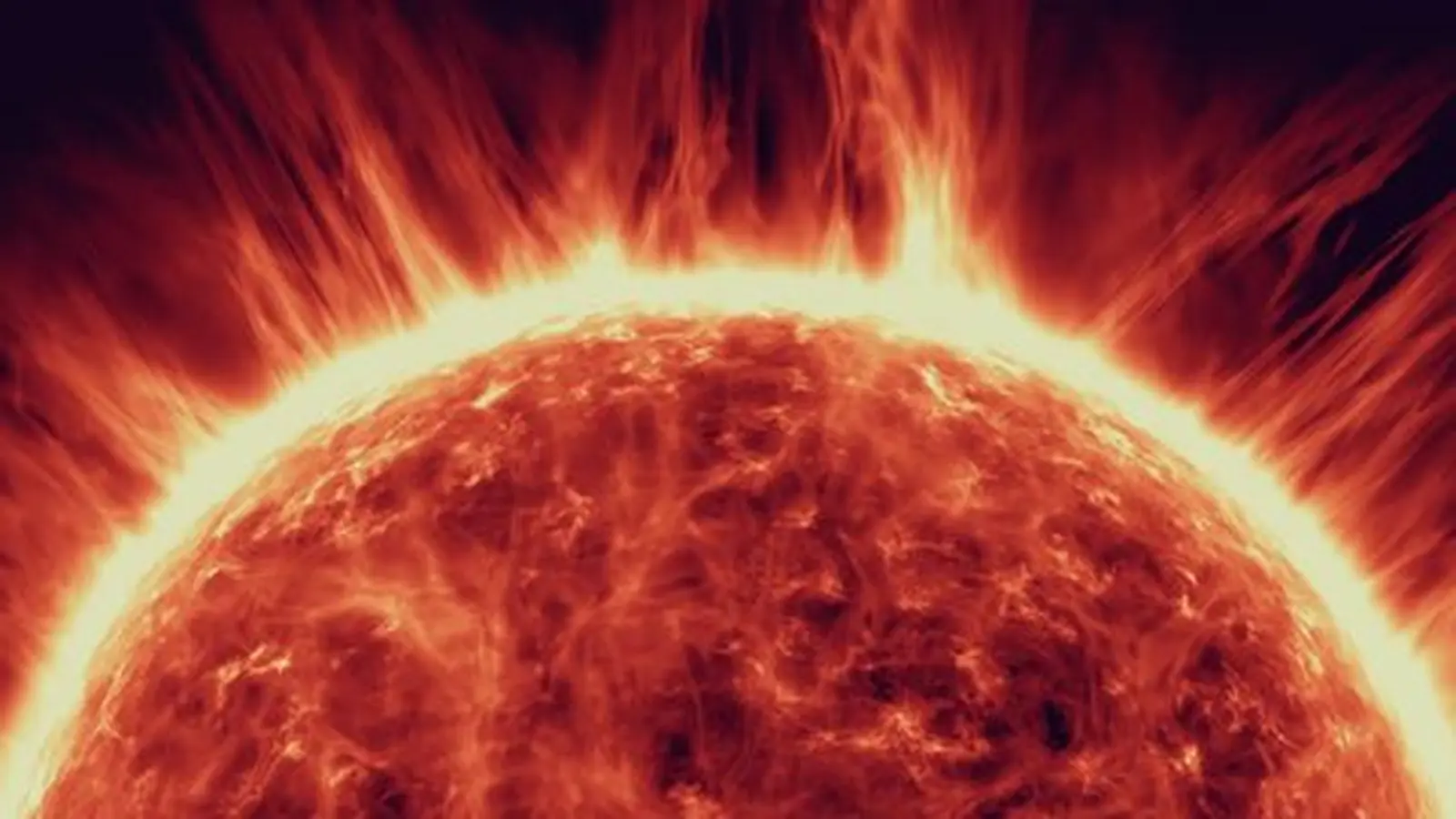
Geomagnetic disturbances occur when bursts of solar activity, including solar flares and coronal mass ejections, disrupt Earth’s magnetic field. These events can induce electrical currents in long conductors, sometimes affecting power grids, communication systems, satellites, and other technology.
A railway timetable exposes a historical typo
The Exeter tale first entered scientific lore via an anonymous note in a 19th century journal. It described a "very intense magnetic disturbance" that interfered with signals and delayed a 10:05 p.m. departure from Exeter by 16 minutes. That account became widely cited as one of the earliest examples of space weather affecting engineered systems.
But there was a simple, stubborn problem: the specific railway line mentioned in the report—running from Exeter to Starcross—did not open until 1846. You can spot a single typo or misremembered year on a page, but the mismatch of infrastructure timelines is harder to shrug off. That mismatch prompted historians and space scientists to return to primary sources: newspapers, timetables, auroral logs, and geomagnetic observations from observatories around the world.
The international team that reassembled the record included researchers from Lancaster University, RMIT University, the British Geological Survey, Natural Resources Canada, Baylor University, and the UK’s national space laboratory, RAL Space. Their cross-disciplinary approach combined archival forensics with an understanding of how solar storms manifest in both sky and instrument.
Piecing together skyglow, telegraphs, and train schedules
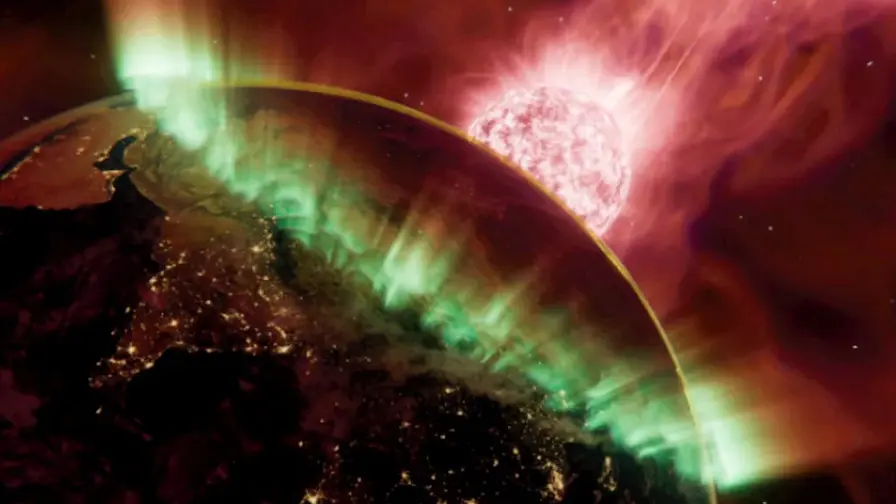
What emerges is a forensic picture: contemporary newspapers reported auroral displays; observatory magnetometers recorded disturbances; and railway timetables place the delayed Exeter departure in October 1848, not 1841. Put together, these independent strands point to the same date.
Why does the exact year matter? Because the sequence of documented events shapes our narrative of when technological systems first began to feel the reach of space weather. Telegraph networks spread rapidly through the 1840s. The more extensive those long-wire networks became, the greater the chance that a geomagnetic storm could drive currents through them and upset equipment. The corrected date nudges Exeter later in the decade and identifies an even earlier credible disruption on Britain’s Midland Railway in March 1847.
Solar storms create currents by altering the magnetic environment that surrounds Earth. Rapid changes in the magnetic field produce electric fields on the surface; whenever you have long, conductive paths—telegraph wires in the Victorian era, power transmission lines today—those fields can force electrons to move. Those geomagnetically induced currents can overload devices, produce sparks, or even allow telegraph systems to operate without their batteries because the storm itself supplies the power.
Readers know the Carrington Event of 1859, the dramatic eruption that lit the sky with auroras seen near the equator and produced shocks and fires in telegraph stations. What this new research emphasizes is that significant effects on technology did not begin with Carrington. They were documented more than a decade earlier, as soon as widespread electrical networks existed to be influenced.
Why Victorian telegraphs matter for modern grids
It is tempting to treat 19th century telegraphs as quaint curiosities. Don’t. The physics that linked the Sun to Victorian technology is the same physics that threatens satellites, navigation systems, and continental power grids today. A geomagnetic storm does not care whether the wire it energizes runs from pole to pole or from one telegraph post to the next village; the consequences scale with system complexity and interconnectivity.
Modern systems are both more resilient in some ways and more vulnerable in others. Grid operators have tools—real-time monitoring, power-flow management, contingency plans—that Victorian engineers lacked. On the other hand, society’s dependence on a web of interlinked electronic services multiplies the ripple effects of a significant disturbance.
Historical records are not antiques; they are data. Old magnetometer logs, mariners’ auroral reports, newspaper accounts, and railway timetables extend our record of extreme space weather events beyond the telemetric era. That expanded record helps refine statistical models of storm frequency and severity, which in turn informs engineering standards, emergency planning, and policy.
Expert Insight
"Recovering the correct date for the Exeter episode is more than a footnote," said Dr. Elena Marquez, a space systems engineer who has worked on satellite resilience. "Every verified historical event tightens our grip on how often extreme geomagnetic conditions can occur and how diverse their impacts can be. That directly influences how we build and protect today’s infrastructure."
Marquez adds a practical note: "Engineers need long baselines. Without them, designs rely on incomplete risk estimates. Archival sleuthing—combining newspapers, observatory logs, and transport records—gives us those baselines."
Implications for forecasting and preparedness
The revised timeline does more than correct a historical date. It underscores a lesson for contemporary planners: electrical vulnerability has accompanied technological diffusion from the moment networks became long enough to act like antennas for geomagnetic induction. As the world prepares for future peaks in solar activity, including the coming solar cycle highs in the 2030s, that lesson is urgent.
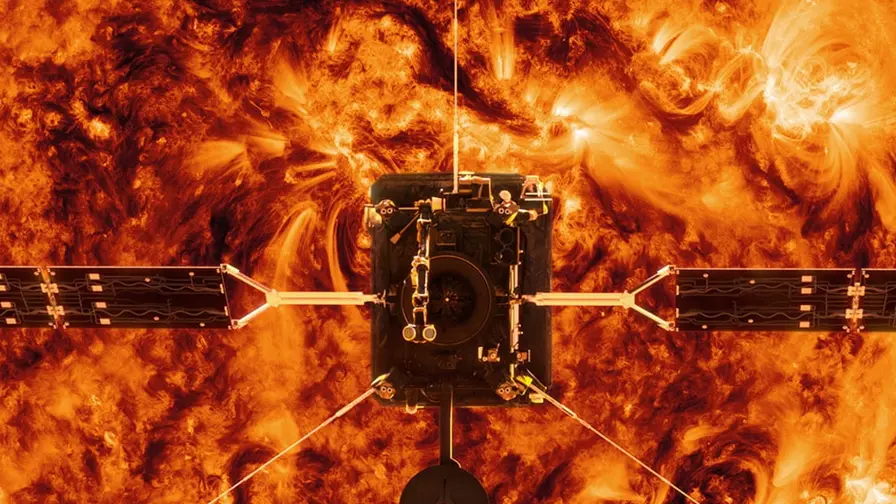
Forecasting progress helps. Solar observatories, space-based monitors, and ground networks now provide early warnings in ways Victorian scientists could not imagine. Still, effective mitigation requires policy, grid design changes, and routine drills. Knowing that disruptions occurred as far back as the 1840s places the risk in historical context and challenges any assumption that space weather is a modern novelty.
Conclusion
The 16-minute Exeter delay is a small episode with an outsized lesson. It reminds us that the Sun has been influencing human electrical systems since those systems first reached scales that could couple to geomagnetic variations. Correcting the historical record to 1848 sharpens our understanding of that long-running interaction and reinforces why historical archives matter for contemporary risk assessment.
Whether the disruption is a telegraph spark in a Victorian office or a transformer trip in a modern grid control room, the underlying connection is the same. We need the combined tools of historians, climatologists, space scientists, and engineers to translate past events into practical measures that protect the technology society depends on today.

“The cosmos has always fascinated me. I write about space missions, astronomy, and the technologies pushing humanity beyond Earth.”

Discussion
Leave a Comment
Comments
No comments yet. Be the first.