
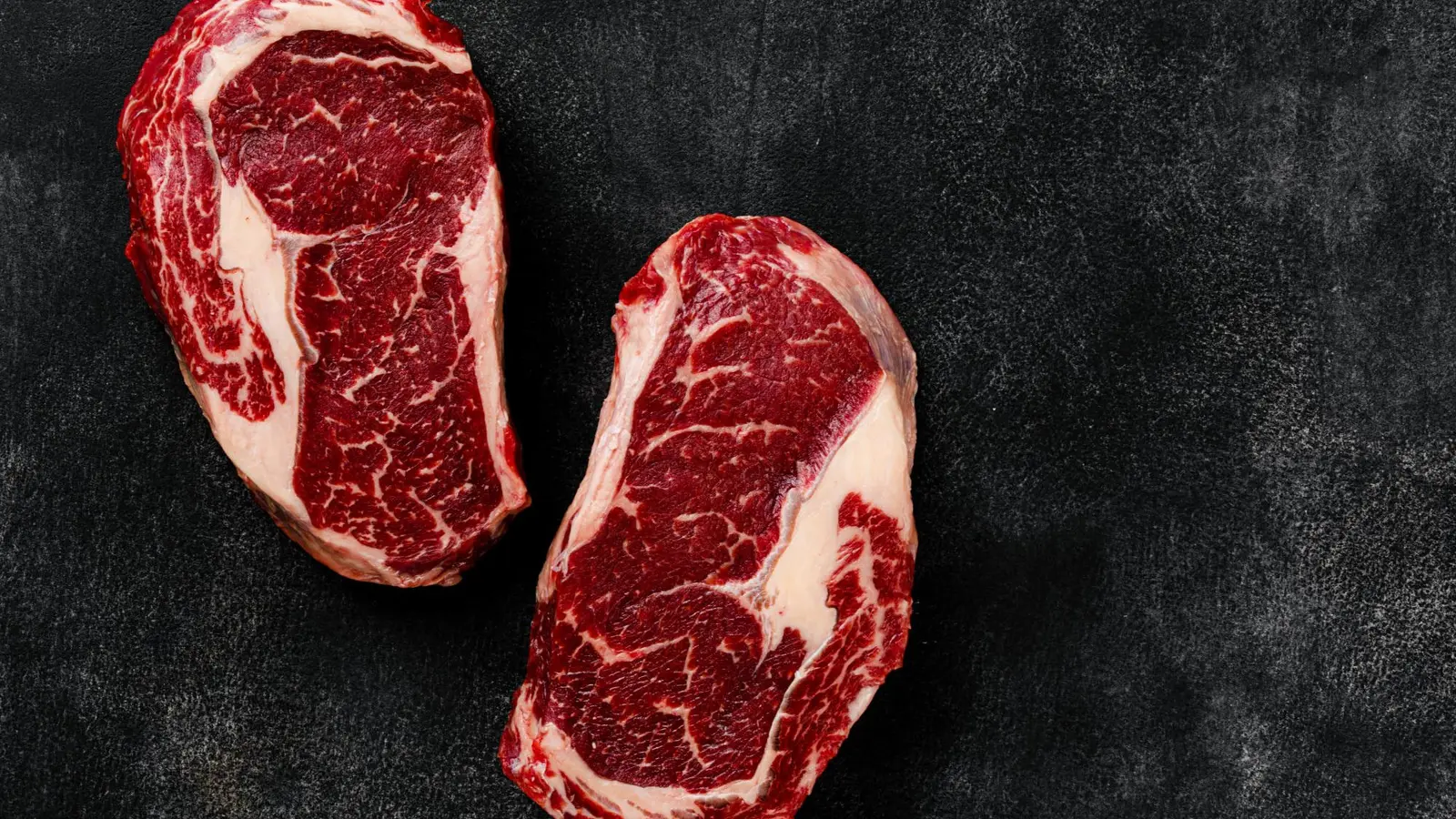
Imagine a tiny sugar molecule, abundant in a steak or lamb chop, slipping past digestion and embedding itself into human tissues. Your immune system spots it and treats it like an invader. That slow, low-grade clash—ongoing and unnoticed—could be one of the missing links between eating red meat and developing type 2 diabetes.
A molecule humans no longer produce naturally may be one piece of the puzzle connecting red meat and diabetes risk.
A sugar humans stopped making
Most mammals make a sugar called N-glycolylneuraminic acid, or Neu5Gc. Humans do not. A mutation long ago disabled the CMAH gene in our lineage, and since then Neu5Gc has been foreign to our bodies. Yet the molecule reenters the human system through food—chiefly red meat such as beef and lamb—and in smaller amounts via dairy.
Once dietary Neu5Gc becomes incorporated into human cells and tissues, the immune system can view it as an alien marker. Antibodies that target Neu5Gc may drive persistent immune activity, a chronic inflammatory state researchers sometimes call xenosialitis. That inflammation has been studied in relation to cancer and heart disease; now scientists are exploring whether it might also nudge metabolism toward insulin resistance and type 2 diabetes.
What the new analysis shows
Researchers drew on nearly 90,000 adults enrolled in NutriNet-Santé, a long-running French study that links diet, lifestyle, and health outcomes. Participants—average age 42, mostly female—completed multiple 24-hour food records. Investigators used a validated database to estimate Neu5Gc levels in specific foods and then divided participants into five groups by their intake of meat-derived Neu5Gc.
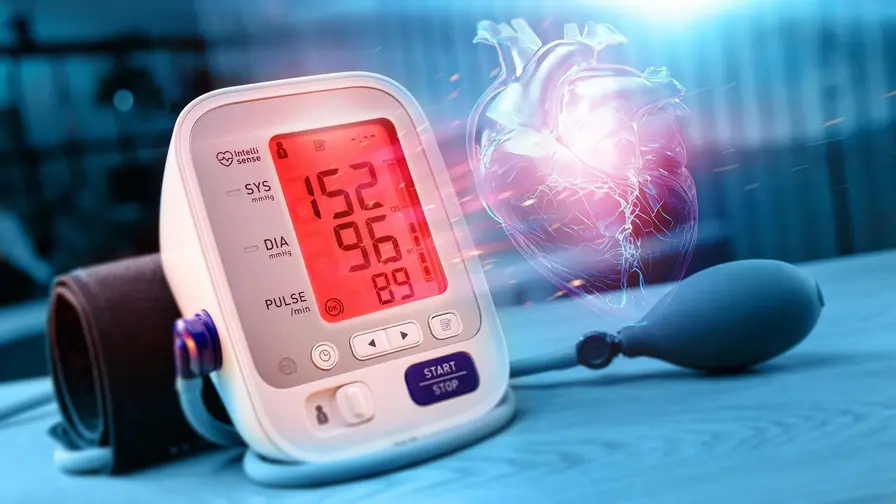
Over a median follow-up of 7.2 years, 966 participants developed type 2 diabetes. The pattern that emerged was striking: compared with the lowest Neu5Gc consumers, people in the second-highest intake group had about a 41 percent higher risk of developing type 2 diabetes, and those in the highest group showed roughly a 63 percent higher risk. These estimates came after adjusting for age, sex, physical activity, overall diet quality, smoking, and other baseline health factors.
Adjusting for body mass index reduced the strength of the link but did not erase it, implying that Neu5Gc-related processes may contribute to diabetes risk beyond the effects of body fat alone. When investigators adjusted specifically for total red meat consumption, the statistical signal weakened further and dropped below conventional thresholds for significance, signaling that Neu5Gc may be one of several meat-related factors at play rather than a lone culprit.
Notably, Neu5Gc from dairy did not show the same association with diabetes risk. The researchers suggest this could reflect lower Neu5Gc concentrations in milk and typical dairy portion sizes, or it might indicate meaningful differences between molecular sources.
Why inflammation is a plausible mechanism
Chronic inflammation is a well-established driver of insulin resistance. The Neu5Gc hypothesis proposes a biologically plausible chain: dietary Neu5Gc incorporates into tissues, anti-Neu5Gc antibodies mount a persistent immune response, that response fosters inflammation in insulin-producing and insulin-responsive tissues, and over time metabolic control deteriorates.
The study’s authors estimate that obesity accounts for roughly 13 percent of the observed association between meat-derived Neu5Gc and diabetes risk. That leaves a substantial portion unexplained by body weight alone, consistent with the idea that inflammatory processes could contribute. Still, the research is observational, and it does not provide direct measurements of anti-Neu5Gc antibodies or tissue-level inflammation in participants, so the causative pathway remains hypothetical.
Researchers also noticed a steep increase in risk at higher Neu5Gc exposure levels, suggesting the possibility of a threshold effect: below a certain level the immune system may tolerate Neu5Gc incorporation, but when exposure crosses that threshold immune activation ramps up. That idea remains speculative and requires targeted laboratory and cohort studies to confirm.
Methodological strengths and limits

The analysis benefits from a large sample size, repeated dietary records, and a food-composition database specifically measuring Neu5Gc concentrations. Those elements improve exposure estimation compared with cruder approaches. Yet limitations are important to acknowledge. Diet-based estimates can misclassify individual exposure. Residual confounding—differences in unmeasured behaviors, cooking methods, or socioeconomic factors—could influence results. And the attenuation of the association after adjusting for total red meat intake means Neu5Gc is unlikely to be the sole explanation for the meat–diabetes relationship.
Processed meats were handled separately in the analysis, and the investigators examined Neu5Gc from all sources combined; when considering total dietary Neu5Gc the association with diabetes persisted but was weaker than for meat-derived Neu5Gc alone. That pattern suggests source matters: not all Neu5Gc exposures are equivalent, or other meat components—such as haem iron or specific fats—may interact with Neu5Gc to influence risk.
Expert Insight
"This study adds a compelling piece to the puzzle linking red meat and metabolic disease, but it does not close the book," says Dr. Maria Lopez, an immunometabolism researcher at a university medical center. "The idea that a dietary molecule the body recognizes as foreign could provoke a chronic, low-level immune response that eventually impairs glucose regulation is biologically plausible. Still, we need direct measures of anti-Neu5Gc antibodies, tissue inflammation markers, and experimental data to move from association to mechanism."
Dr. Leopold Fezeu, the study’s lead author from Université Sorbonne Paris Nord, summarized the implications concisely: "Our findings support chronic inflammation as a specific mechanism linking red meat consumption with type 2 diabetes, partly beyond the amount of red meat a person eats and partly independent of body fat."
Looking forward, the research team plans to test Neu5Gc alongside other red-meat constituents, including haem iron, and to measure anti-Neu5Gc antibodies directly in large cohorts. Those steps would provide a more direct test of the xenosialitis hypothesis and help determine whether Neu5Gc operates independently or in concert with other dietary compounds.
Conclusion
The new analysis does not prove that Neu5Gc causes type 2 diabetes, but it highlights a plausible inflammatory pathway that merits further study. For individuals and public-health decision makers, the findings add nuance to dietary guidance: replacing some red meat—especially beef and lamb, which carry higher Neu5Gc— with poultry, fish, legumes, and other plant-based proteins may reduce exposure to potential proinflammatory compounds while delivering well-established cardiometabolic benefits.

From a research perspective, the next steps are clear. Large studies that pair detailed dietary data with blood measurements of anti-Neu5Gc antibodies and biomarkers of inflammation, together with mechanistic experiments, will be required to determine whether reducing Neu5Gc exposure can lower diabetes risk. Until then, moderation and variety in protein choices remain prudent advice for metabolic health.

“The cosmos has always fascinated me. I write about space missions, astronomy, and the technologies pushing humanity beyond Earth.”

Discussion
Leave a Comment
Comments
No comments yet. Be the first.