
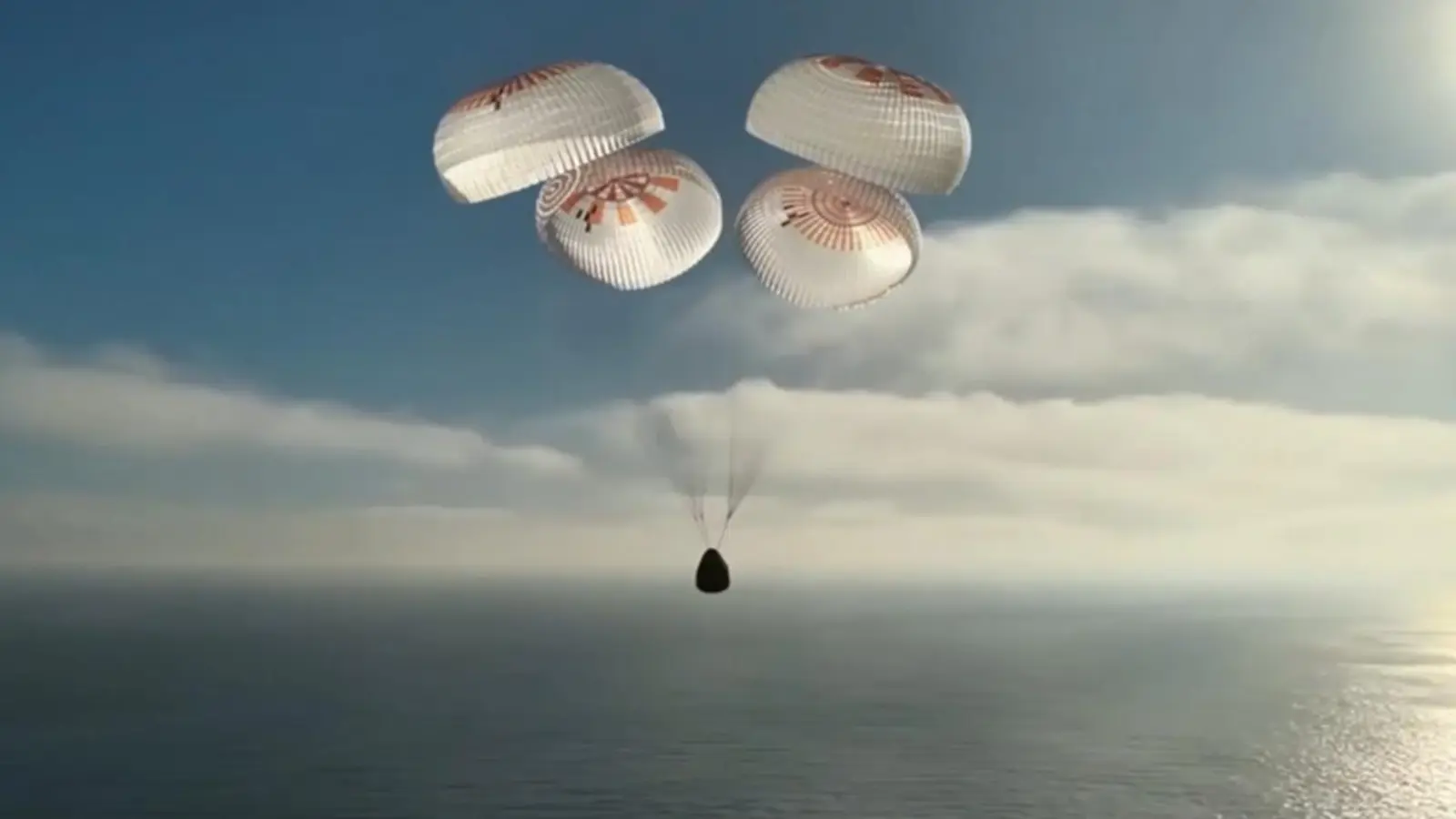
Waves broke around a small white capsule as daylight slipped over the Pacific. Inside, four people who had lived in microgravity for more than seven months took their first breaths of sea air since February. It was the quiet, human end to a very long voyage: 237 days, roughly 100 million miles, and a dozen projects that will inform the next generation of human spaceflight.
The SpaceX Crew Dragon Freedom splashed down in the Pacific Ocean off the coast of Los Angeles at 8:34 a.m. PDT on October 8, 2026. Onboard were NASA astronauts Jessica Meir and Jack Hathaway, ESA astronaut Sophie Adenot, and Roscosmos cosmonaut Andrey Fedyaev. Recovery teams reached the capsule quickly, bringing the crew aboard a recovery ship for medical checks before they returned to shore and then to NASA's Johnson Space Center in Houston.
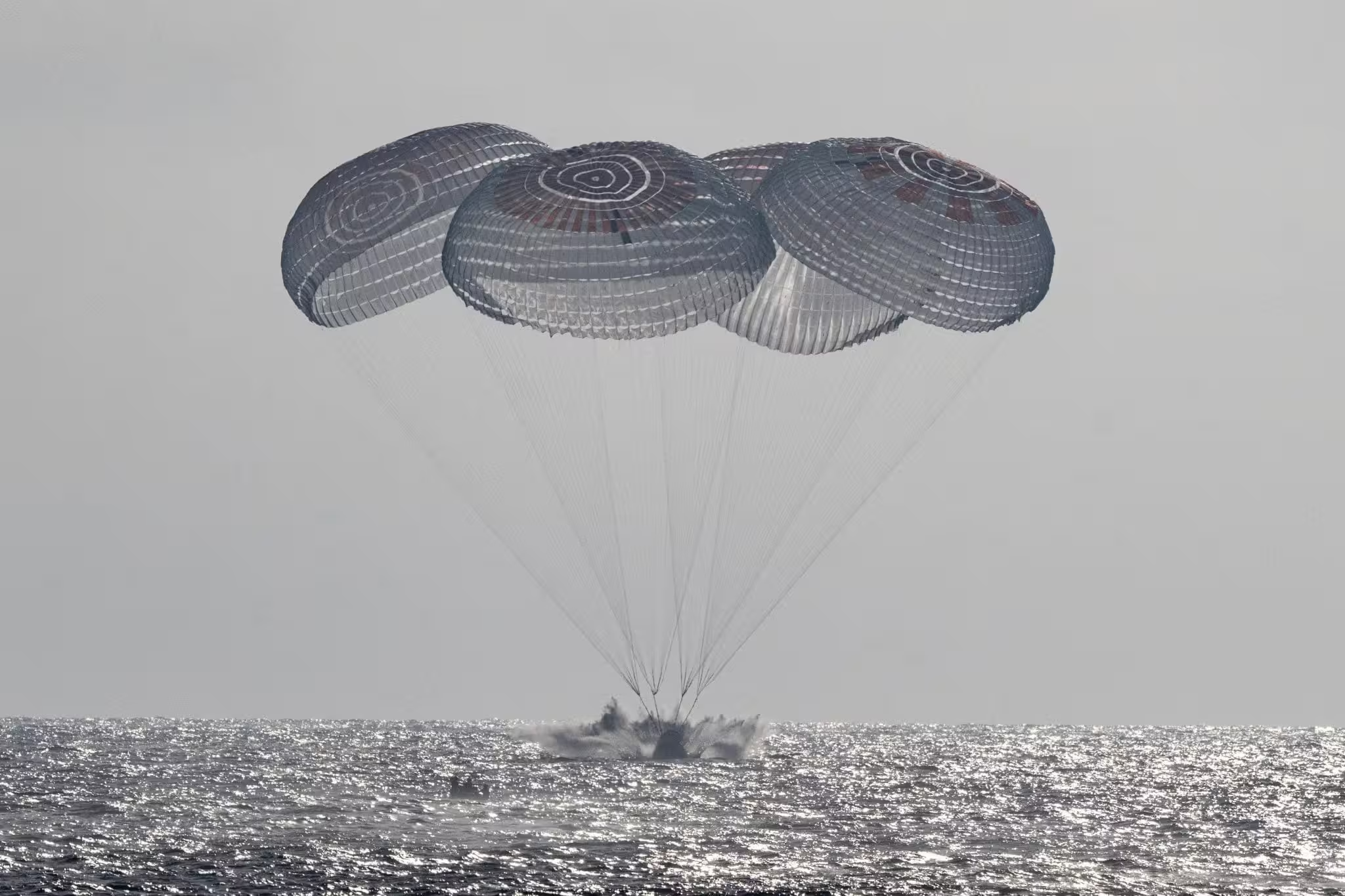
The image from NASA captures that exact moment: the Freedom capsule in the water with the four mission specialists inside. The SpaceX Crew Dragon Freedom spacecraft is seen as it lands with NASA astronauts Jessica Meir, Jack Hathaway, ESA (European Space Agency) astronaut Sophie Adenot, and Roscosmos cosmonaut Andrey Fedyaev aboard in the Pacific Ocean off the coast of Los Angeles on October 8, 2026.
What this flight accomplished
Crew-12 was more than a long-duration crew rotation. The mission tested medical, biological, and operational capabilities that matter not only for low Earth orbit activities but for ventures to the Moon and Mars. The astronauts logged more than 3,792 orbits of Earth and completed experiments that ranged from cellular biology to on-demand medical manufacturing.
Among the spaceborne investigations, teams focused on growing stem cells in microgravity. Cells behave differently when gravity is minimal. That difference can let researchers observe growth patterns and drug responses that are masked on Earth. Another test explored the feasibility of making intravenous fluids in space. Carrying large medical stores to deep-space destinations is expensive and inefficient. If crews can manufacture key medical fluids on demand, mission planners gain flexibility and reduce risk.
Other studies looked at how certain pneumonia-causing bacteria might trigger lasting cardiac damage, work that could improve treatments for infection-related heart problems on Earth. Nutrition studies and cardiovascular monitoring rounded out a portfolio of human research designed to protect astronauts during long missions and to refine countermeasures for bone, muscle, and circulatory changes caused by extended exposure to microgravity.
Milestones outside the airlock
Science was not the only headline. Jessica Meir performed four spacewalks while on station, bringing her career total to seven and placing her among the most experienced female spacewalkers in NASA history. Sophie Adenot completed three spacewalks as well, becoming the first French woman to exit the International Space Station for extravehicular activity. Those excursions supported maintenance, upgrades, and new hardware tests that keep the station viable as a platform for research and as a proving ground for future exploration technologies.
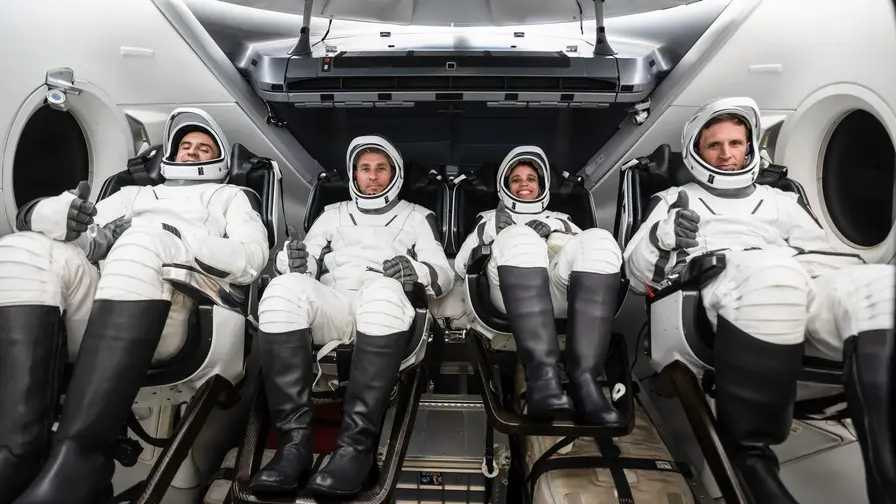
For two crewmembers this was a second voyage; for two it was a first. Hathaway and Adenot experienced microgravity and station operations for the first time, while Meir and Fedyaev returned to Earth again having added new layers of operational knowledge to their previous flights.
From splashdown to scientific value
After recovery and preliminary medical checks, the crew will brief the public and the research community. NASA scheduled a press conference at the Johnson Space Center in Houston on October 15, where the astronauts and mission leads will lay out key findings and next steps. For mission managers, safe recovery and the return of experimental samples are critical checkpoints in converting raw flight time into published science and engineering lessons.
“The success of this mission depends on thousands of hands across agencies and industry,” said a senior NASA representative. “Each flown experiment and every carefully executed spacewalk adds to our confidence for longer, more ambitious missions.” That confidence is exactly what engineers and scientists need as they design systems for crewed lunar landings and eventual trips to Mars.
Expert Insight
Dr. Maya Singh, a flight systems engineer who has worked on life-support demonstrations, offered a practical perspective: "Long-duration missions are a laboratory for operational resilience. Producing IV fluids on demand and understanding how microbes change in space are not academic exercises. These are solutions that reduce mass, increase safety margins, and directly inform how we will live farther from Earth. The lessons learned on Crew-12 flow directly into mission architecture for the Moon and beyond."
Her comment highlights a recurring theme: incremental advances compound. A single procedure validated in low Earth orbit can scale into a reliable protocol for deep-space missions, cutting both risk and cost.
Beyond those technical returns, missions like Crew-12 refine the human systems that support spaceflight. Training pipelines, medical screening, telemedicine techniques, and international coordination practices all receive stress tests during a 237-day expedition. The result is not just papers and data but hardened processes that future crews will rely on when communication delays and isolation are greater than anything experienced in near-Earth operations.
As the astronauts settle back on Earth and samples move into labs, scientists will start to parse weeks and months of data. Some results will appear quickly. Others will require careful analysis and follow-up flights. Either way, Crew-12 has delivered a body of work that will be evaluated for years and folded into the engineering and biomedical playbooks that underpin human exploration.
For now, the focus is simple and human: four people returned safely. Their mission adds to a growing archive of operational knowledge. And every cautious step in low Earth orbit helps make the next giant leap a little less uncertain.

“My work centers on sustainability, energy, and environmental science — examining how innovation can lead to a greener future.”

Discussion
Leave a Comment
Comments (1)
Wow, seeing them bob in the Pacific gave me chills. 237 days, 100M miles... the stem cell stuff could change medicine. Proud but nervous too.