
Picture the early Solar System as a crowded ballroom. Young planets jostle. Gravity pulls. Orbits cross. A small misstep and someone gets pushed out into the dark.
The missing giant that explains odd moons
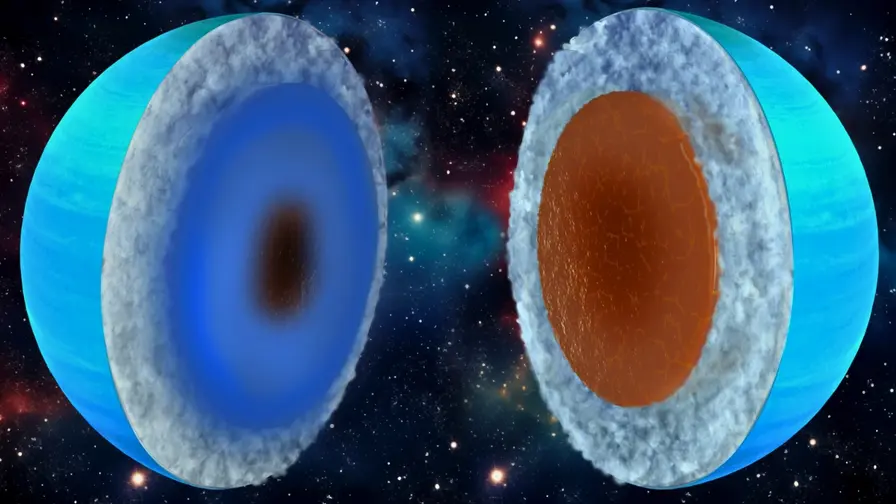
That image is at the heart of a recent study that revisits one of the most provocative ideas in planetary science: our system may once have contained more than the eight planets we see today. Using thousands of hours of supercomputer simulations, researchers probed whether an extra giant — an ice giant beyond Neptune’s rank — could have been expelled during the Solar System’s violent youth, and whether that loss helps explain puzzling features of the present day.
Why does this matter? Because some satellites around Jupiter and Uranus don’t fit neat formation stories. They are the so-called irregular satellites: bodies with tilted, elongated, sometimes retrograde orbits that suggest capture rather than in-place formation. Traditional models that assume planets formed where they sit today struggle to account for these captures. The Nice model, introduced in 2005, offers a cleaner explanation by allowing giant planets to migrate and scatter, creating the chaotic environment needed to trap or fling small bodies.
The new work tested 122 dynamically plausible early-Solar-System scenarios, sampling a range of initial planet configurations and interactions. The simulations show that the survival of irregular satellite systems around both Jupiter and Uranus is a delicate outcome. Across all runs, the probability that the moons of both planets survive a common instability period is under 15 percent. In other words: the Solar System we observe now is uncommon, not inevitable.

How the Nice model changes the story
At the core of these simulations is a key event predicted by the Nice model: a resonance crossing between Jupiter and Saturn. Put simply, resonance means orbital periods lock into a simple ratio. If Jupiter completed two orbits for every one of Saturn, gravitational tugs amplify. Orbits become unstable. Scattered debris and planet-planet encounters follow. Planets migrate. Chaos reigns.
That chaos is a double-edged sword. It helps explain features like Jupiter’s Trojan asteroids and the present-day spacing of the giant planets. But it can also be catastrophic for fragile satellite systems. The simulations in this study reveal that only a few initial setups allow both Jupiter’s and Uranus’s irregular moons to survive intact. Many successful Solar System reconstructions that match large-scale architecture nonetheless destroy one or the other moon systems.
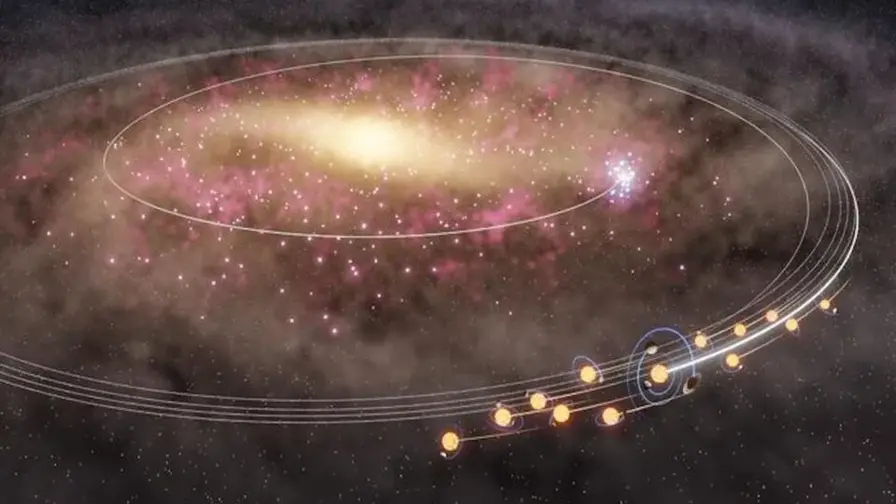
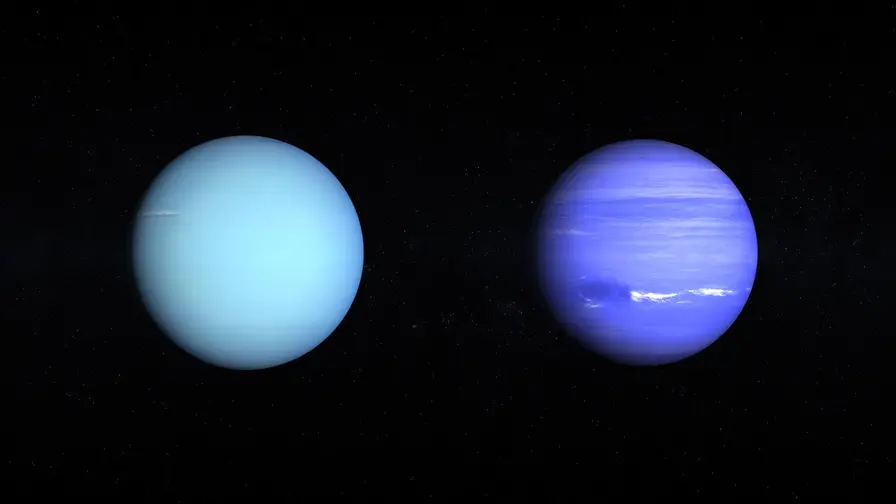
Interestingly, when the models included one or more additional ice giants, survival odds shifted. Simulations that preserved Jupiter’s irregulars tended to feature two small extra ice giants. Simulations that left Uranus’s satellite system intact were likelier to start with a single, somewhat larger additional planet. That tension helps explain why creating a model that preserves both systems simultaneously has proven so challenging for theorists.
Moon survival is rare. One run kept them both.
Out of 122 scenarios, only one simulation preserved the major irregular moons of both Jupiter and Uranus through a shared instability phase. That solitary success is telling. It suggests that the precise initial arrangement and sizes of outer planets mattered enormously, and that small differences produce very different long-term outcomes.
Why do extra ice giants help preserve some moons? They can act as gravitational sponges. Encounters that would otherwise fling inner satellites into destructive paths are absorbed by the dynamics of the extra bodies. But those same interactions can also send an ice giant on an escape trajectory. In many of the runs where moons survived, one of the ice giants was ultimately ejected from the Solar System — tossed outward and lost to interstellar space.
Think of it as trading a roommate to calm a fight in the house. It worked sometimes. But not reliably.
Uranus’s tilt and a tale of two instabilities
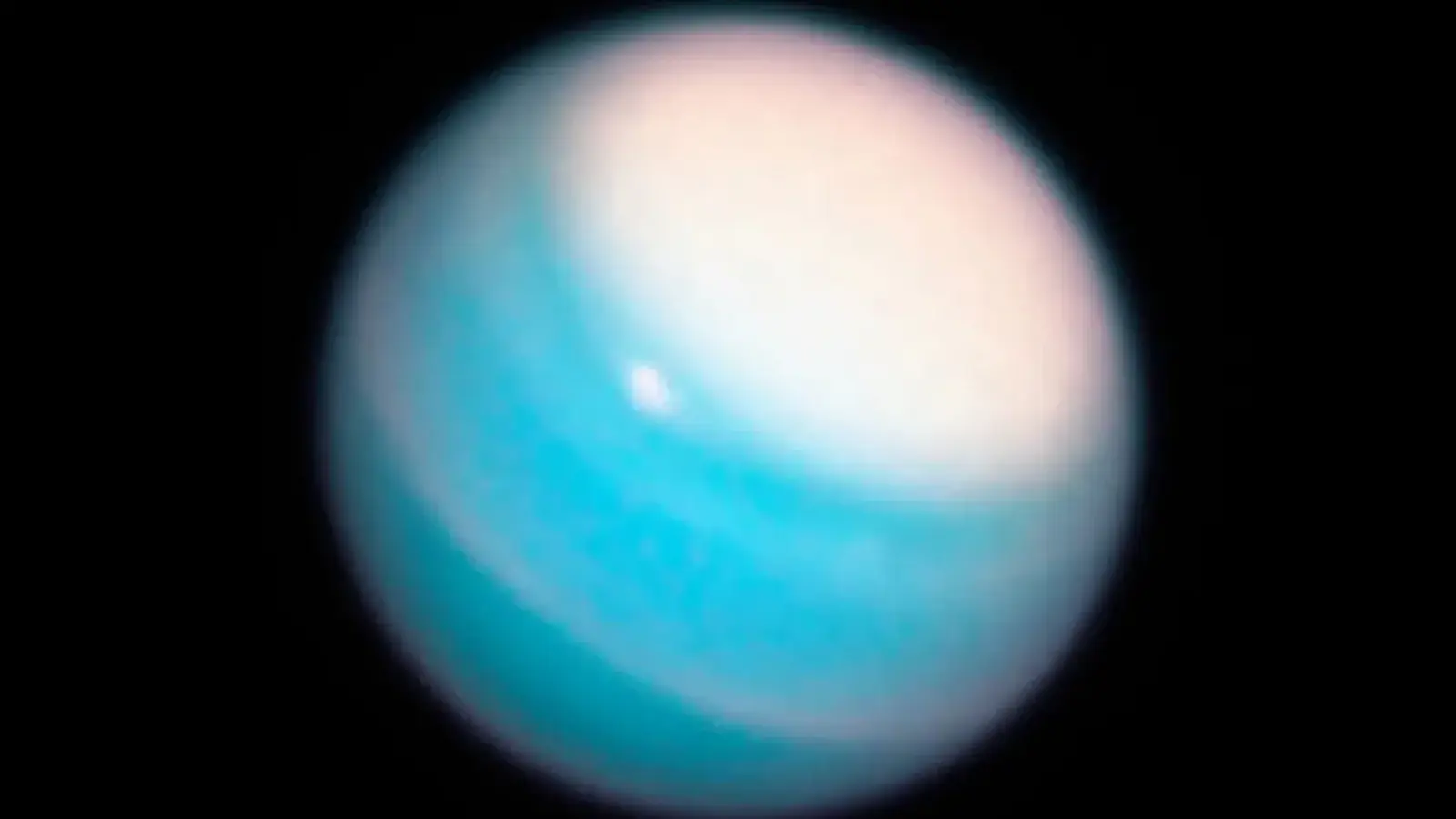
Uranus adds its own twist to the narrative. Its rotation axis is tipped roughly 98 degrees — the planet essentially rolls along its orbit. The most accepted explanation is a massive ancient collision, one large enough to topple the world and severely perturb or even destroy its satellite system. If that event occurred, then Uranus’s moons may have been reshaped twice: once by the giant impact and again during the planet migration and resonance-driven instability of the Nice-style scenarios.
The study suggests several possible ways to reconcile Uranus’s odd tilt with the present moon system. One option: Uranus underwent an early, catastrophic impact that altered its axis and removed earlier satellites, and then later reacquired a new irregular population during the Nice instability. Another option is that Uranus managed to avoid close encounters with other giants during migration, an exceptional run of luck that preserved both tilt and moons. Both explanations are plausible within the simulations, but neither is common.
What this means for Solar System history
These results sharpen a growing picture: the early Solar System was a high-stakes environment where survival depended on timing and chance. The Nice model still explains many large-scale traits, but the small bodies — moons, Trojans, scattered disk objects — impose more exacting constraints. Any viable narrative must account not only for planetary orbits but also for fragile satellite systems.
That raises questions about what constraints the surviving moons already impose. Could they tell us the mass or number of any planets that were once present? Perhaps. The simulations indicate that certain configurations of extra ice giants produce satellite outcomes closer to reality. Conversely, other arrangements — though they might reproduce planetary spacing — would likely erase the moon systems we observe today.
The implication is clear: if a fifth giant existed and was ejected, its identity and the timing of its removal leave fingerprints we can detect by studying satellites. Matching those fingerprints requires both detailed dynamical models and more complete observational catalogs of irregular satellites across the giant planets.
Expert Insight
"These dynamics are a forensic puzzle," says Dr. Elaine Park, a planetary dynamicist not involved in the study. "We can reconstruct plausible scenes, but the archive is incomplete. The moons are survivors — they carry information about ancient chaos — and we need simulations that respect those small-scale survivors as much as the big-planet architecture."
"When a simulation preserves Trojan populations and planetary orbits but destroys a planet’s satellite system, it tells us the model still misses a piece of the early environment," Park adds. "That missing piece might be an extra body, a different migration timescale, or even a sequence of impacts."
Observational and technological directions
What can observers and mission planners do to help? Several avenues are promising. Deep surveys with telescopes like the Subaru Telescope, and precise studies using space observatories, can enlarge the census of small irregular moons and outer-system debris. Each new object constrains the capture histories the simulations try to reproduce.
On the mission front, targeted spacecraft encounters with the outer planets or their irregular satellites would be transformative. High-resolution imaging and compositional data could indicate whether certain captured moons resemble local planetesimal populations or were delivered from more distant reservoirs. That information feeds back into models of scattering and capture.
Meanwhile, computational advances matter. These simulations are compute-heavy: thousands of hours on supercomputers to explore hundreds of initial conditions. As hardware and algorithms improve, researchers can expand scenario sampling, include more realistic collision physics, and test longer timescales. That will refine the estimated probabilities for different evolutionary paths.
Broader implications and open questions
Finding evidence that a giant planet was expelled has consequences beyond our system. Planet ejection appears to be a common outcome in extrasolar planetary systems. Surveys find many free-floating planet candidates that may be the debris of such early instability. If our Solar System lost a giant, it would be another data point connecting local dynamics with the broader exoplanetary census.
Still, many uncertainties remain. How common were collisions big enough to tip Uranus? What was the original mass distribution of the outer planetesimal disk? Did resonant crossings happen early or late? Each variable influences satellite survival.
In short: the story of our cosmic neighborhood’s adolescence is far from finished. The new simulations make the tale richer — and messier. They show that reproducing the eight-planet architecture is necessary but not sufficient. The moons and small bodies are equally demanding witnesses. We must listen to them.
Conclusion
The possibility that the Solar System once hosted an extra giant planet — and later lost it — remains compelling. Recent simulation work reinforces that such a planet could help explain unique features like Jupiter’s and Uranus’s irregular moons, but it also highlights the narrowness of the pathways that preserve those moons. Survival was rare. A few lucky configurations fit both large-scale architecture and small-scale satellite records. Pinning down which one occurred will require tighter observational constraints, expanded simulations, and perhaps direct exploration of irregular satellites.
The early Solar System was not a slow, predictable machine. It was an arena of chance, cataclysm, and occasional escape. The missing giant, if it existed, may now drift alone between the stars — a silent relic of a chaotic youth.

“The cosmos has always fascinated me. I write about space missions, astronomy, and the technologies pushing humanity beyond Earth.”

Discussion
Leave a Comment
Comments (4)
Pretty sobering, survival of moons is a tight constraint. More surveys, more sims, and maybe a probe to a weird irregular moon.
I ran tiny N-body sims in college, chaotic stuff for sure. Seeing how moons barely survive rings true, makes me wanna re-run them lol
Is this even true? 1 out of 122 sounds like clutch luck, or model bias. maybe missing physics, or wrong disk mass??
wow, that ballroom metaphor nailed it! the idea of a lost ice giant roaming btw, gives me chills... could explain so much, but odds seem tiny.