
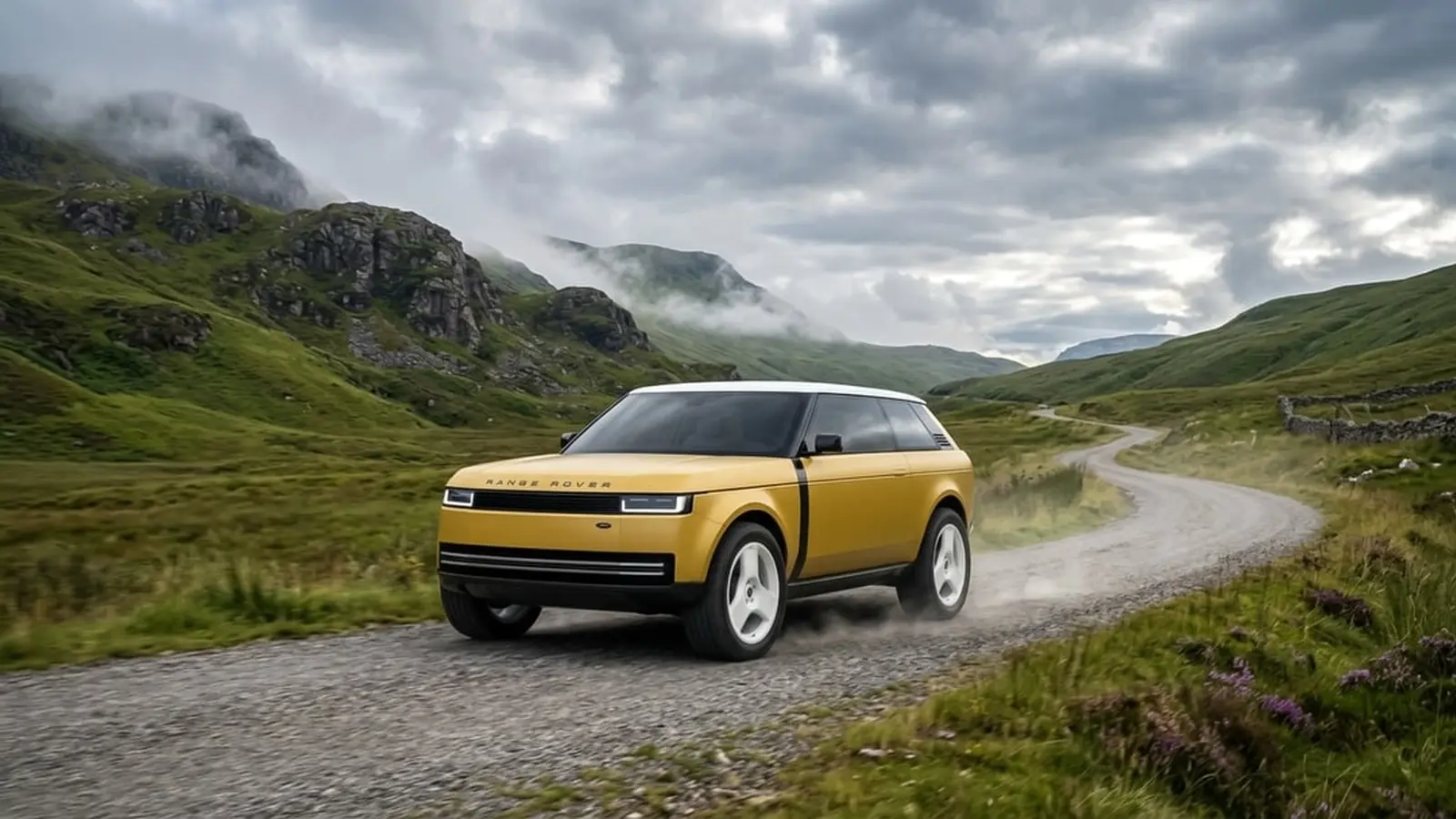
Picture a compact Range Rover parked on a cliff road at sunset. Short, upright, unmistakable. It looks like a memory, but with LED lights and soft leather where canvas once was. That is the thrill behind a recent CGI idea from Turkish visual creator uygarspots, who took the elegant simplicity of the 1970s three-door and imagined it in today’s Range Rover language.
Small shape, big questions
Land Rover is not a brand that chases trends. It refines them. The company has quietly concentrated on its most valuable plays: Defender and Range Rover, the models that account for the bulk of sales and prestige. Discovery Sport is being phased out, while electric Range Rovers and a teased GT sibling expand the family. Into that lineup, a compact three-door Range Rover sounds like both a nostalgic wink and a bold gamble.
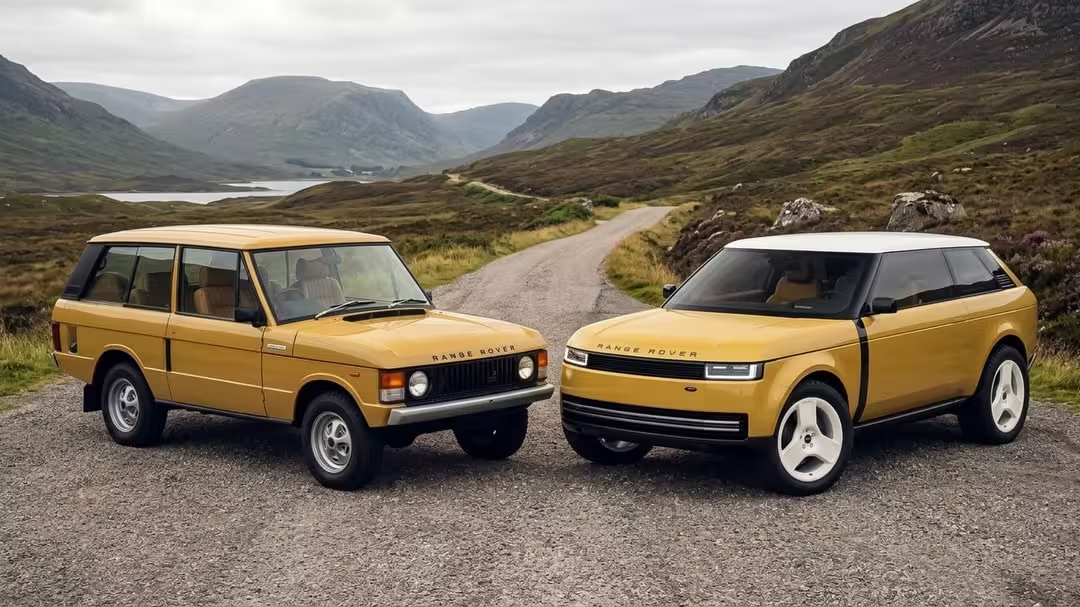
Uygar’s render places a modern three-door Classic next to an original short-wheelbase Range Rover, and the comparison is clarifying. The proportions match. The attitude is the same. Yet the imagined car is not a bare-bones workhorse. It carries the creature comforts and chassis sophistication expected of a premium Range Rover. Think of Defender 90’s compact footprint but with Range Rover finish and poise.

Would buyers bite? Niche models thrive when they deliver identity. A three-door Range Rover would be a statement piece. It would appeal to buyers who want Range Rover cachet in a more playful, less practical package. Urbanites who value style over rear-seat legroom. Collectors who appreciate a modern twist on a classic silhouette. But segmenting the Range Rover family further also raises real commercial questions.
How it might fit the line-up
There are practical reasons why a three-door could work, and practical risks too. Broadly speaking, the case for this model comes down to three points:
- Distinctiveness: A three-door offers a unique visual identity within a crowded premium market.
- Heritage value: The original three-door Range Rover carries legit cultural and design cachet that a modern reinterpretation could monetize.
- Portfolio leverage: Using existing platforms and components would reduce development cost versus a ground-up model.

On the flip side, potential problems surface quickly. Will it cannibalize the Defender 90 or tiny Range Rover variants? Can it justify its price if customers perceive it as less practical? And in an era of electrification and regulatory complexity, is the incremental return worth the engineering and marketing lift?
There is also the lifestyle factor. Luxury buyers increasingly buy identity rather than simple transportation. Limited-run or boutique variants often generate disproportionate buzz and profitability. If Land Rover positioned a three-door Classic as a halo piece, with bespoke options and strong personalization, it could become more of a brand-builder than a volume model.
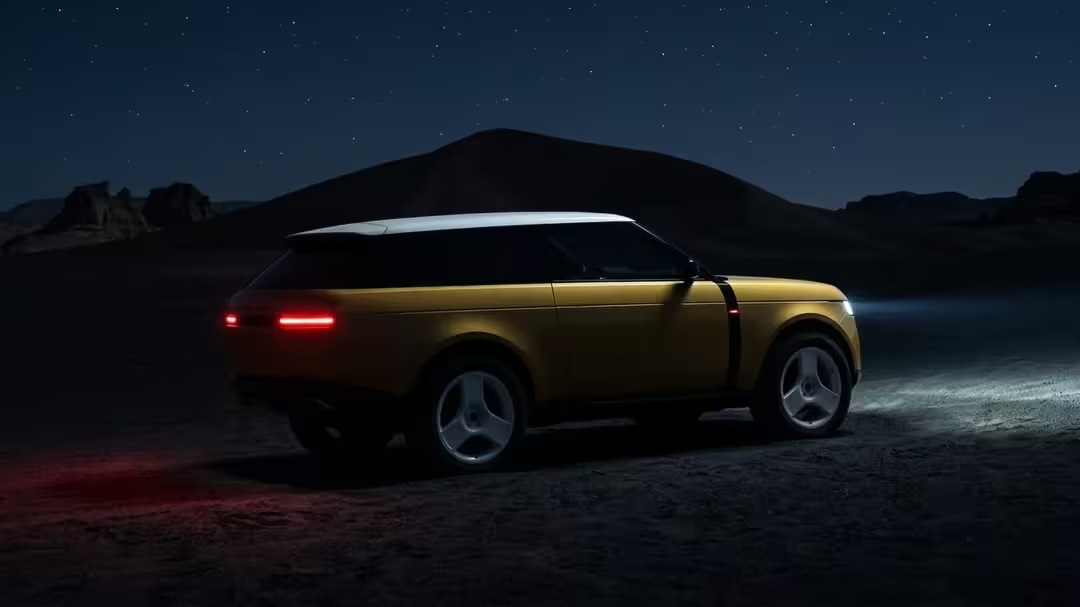
Ultimately, the idea is about more than nostalgia. It is about stretching a brand’s DNA in a way that feels authentic. The original Range Rover began life as a working vehicle with a refined spirit grafted on later. A modern three-door would flip that script: heritage form with contemporary luxury and tech inside.
So is it a clever exercise in brand storytelling, or a product idea that should stay in the render studio? For now, it is both. The CGI teases a possibility, and the market will decide if that possibility becomes a production reality. Would you welcome a compact Range Rover with three doors and big character, or do you think the family is already full?

“Cars are evolving faster than ever. I cover electric vehicles, smart mobility, and the future of transportation worldwide.”

Discussion
Leave a Comment
Comments (2)
is there really room in the lineup for a 3-door Range Rover? Seems like it'd cannibalize Defender 90, or just be a boutique halo car. If they price it right maybe
Whoa the CGI nails the vibe, feels like a memory with LEDs and leather. Compact Range Rover? I wanna it... but hope they dont make it a price gouge