
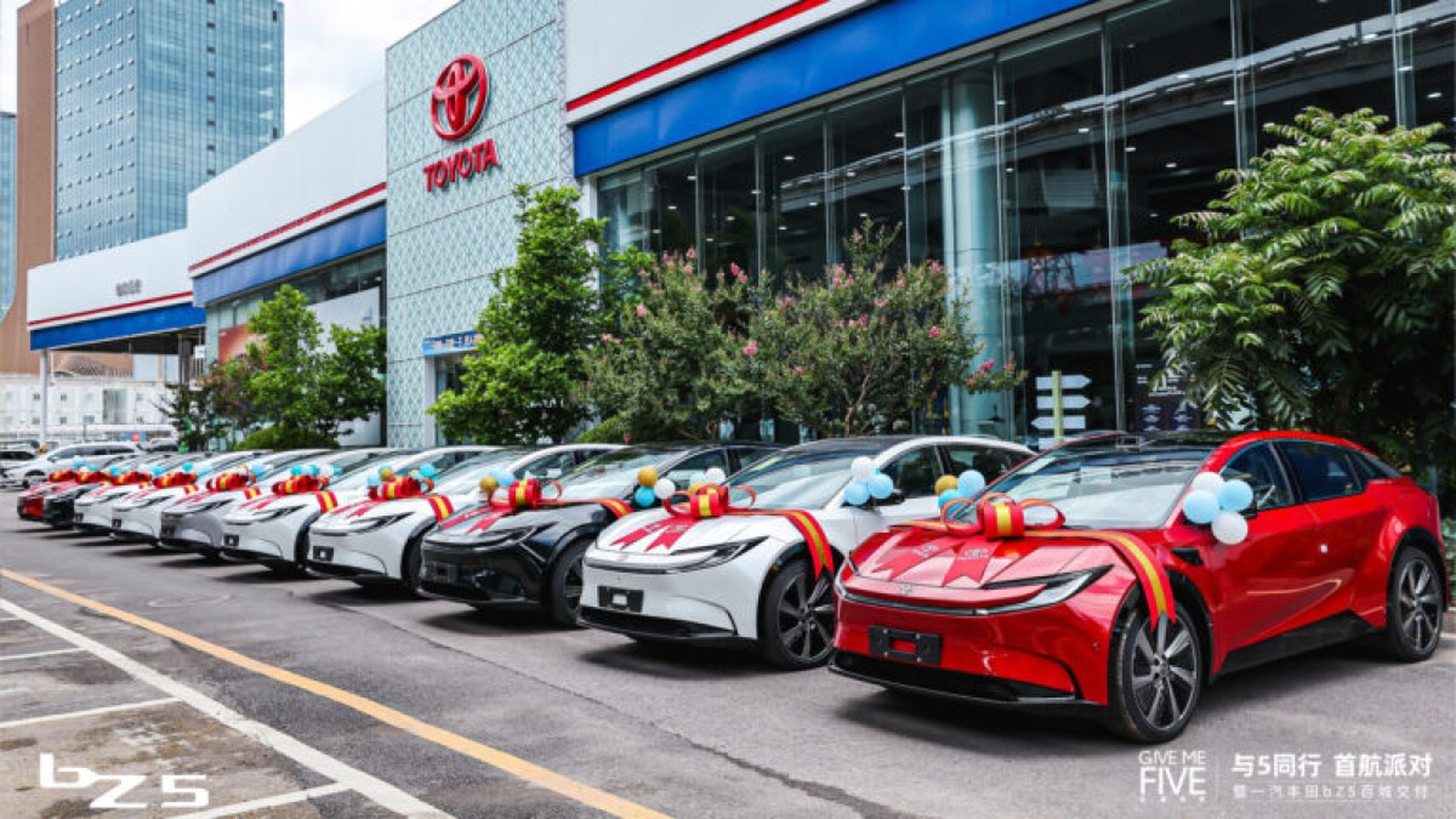
It reads like a dare. A Toyota badge on a swoopy crossover. A price that makes rival SUVs blush. The refreshed bZ5 has arrived in China with a number that will rearrange headlines and dealer strategies: pricing that starts as low as €14,100 with early incentives, and a standard range from about €16,600 to €26,000.
Forget familiar expectations. This isn't a quiet incremental update. It’s Toyota lowering the drawbridge and stepping onto a battlefield where speed, software, and razor-thin margins decide survival.

A bargain born of necessity
What prompted the turnaround? Habit, hubris, and a marketplace that stopped tolerating patience. Toyota long preferred hybrids; pure battery EVs were treated as a diversion. The bZ4X launch reminded everyone why: hardware faults and software snags dented the brand’s early credibility in zero-emission cars.
So Toyota did something unusual: it teamed up. Built with FAW-Toyota and fitted with Chinese-made components, the bZ5 mixes Japanese manufacturing discipline with local tech. The result is a car that looks like a global model on paper but behaves like a product tailored specifically to the cut-and-thrust of the Chinese market.
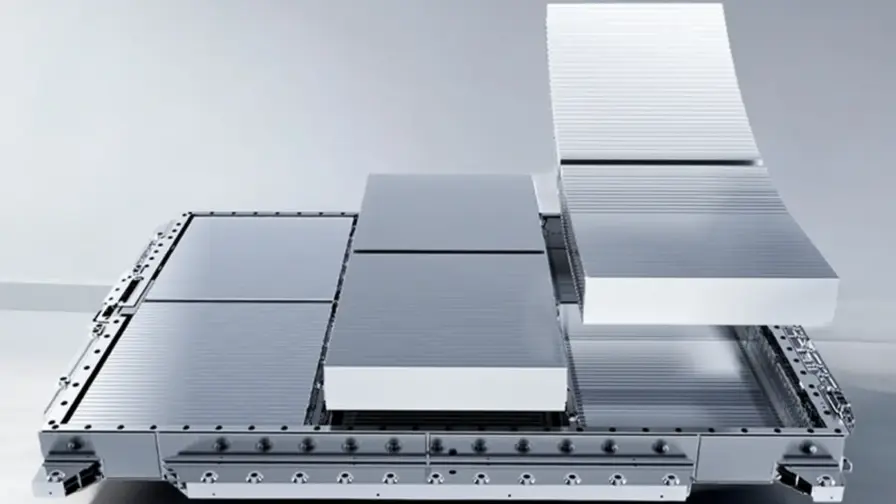
Under the hood, the most headline-grabbing detail is the battery. Toyota is using an LFP "Blade" pack from BYD's FinDreams, available in two sizes: 65.28 kWh claiming about 550 km CLTC, or a larger 73.98 kWh unit rated up to 630 km. Fast charging from 30% to 80% takes roughly 27 to 29 minutes. Power comes from a single front motor delivering 268 hp (200 kW) and 329 Nm of torque, tuned for smooth, linear thrust rather than drag-strip theatrics.

Dimensions matter when you’re sizing up a Tesla. The bZ5 measures 4,780 mm long, 1,866 mm wide, with a 2,880 mm wheelbase. That puts it almost cheek-to-jowl with the Model Y, which is slightly wider and longer. And yet the new Toyota starts at roughly half the price of a Model Y in China, where Tesla's entry-level figure sits around €33,500.
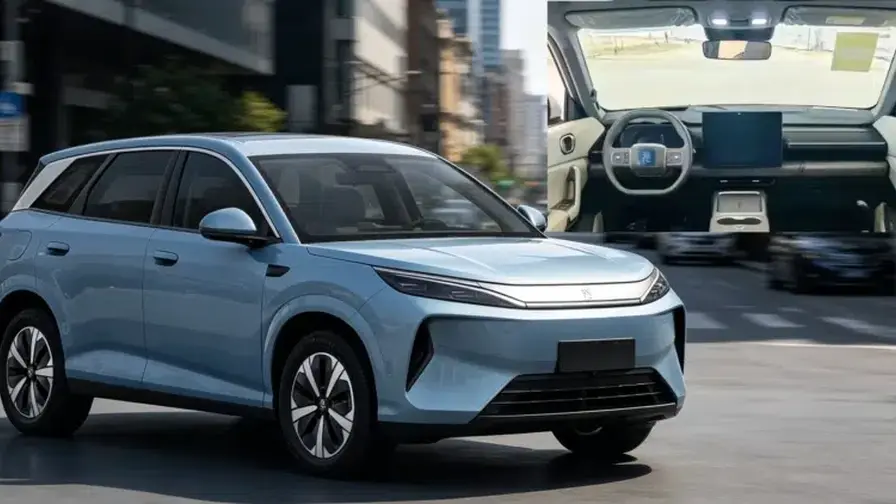
Inside the cabin, Toyota has traded sensible austerity for a cleaner, more modern layout. A 15.6-inch floating touchscreen dominates the center stack, supported by a minimalist digital instrument cluster and a chunky three-spoke wheel. No, it’s not ultra-luxurious. But it feels intentional, and for many buyers the real selling point is what’s behind the interface.

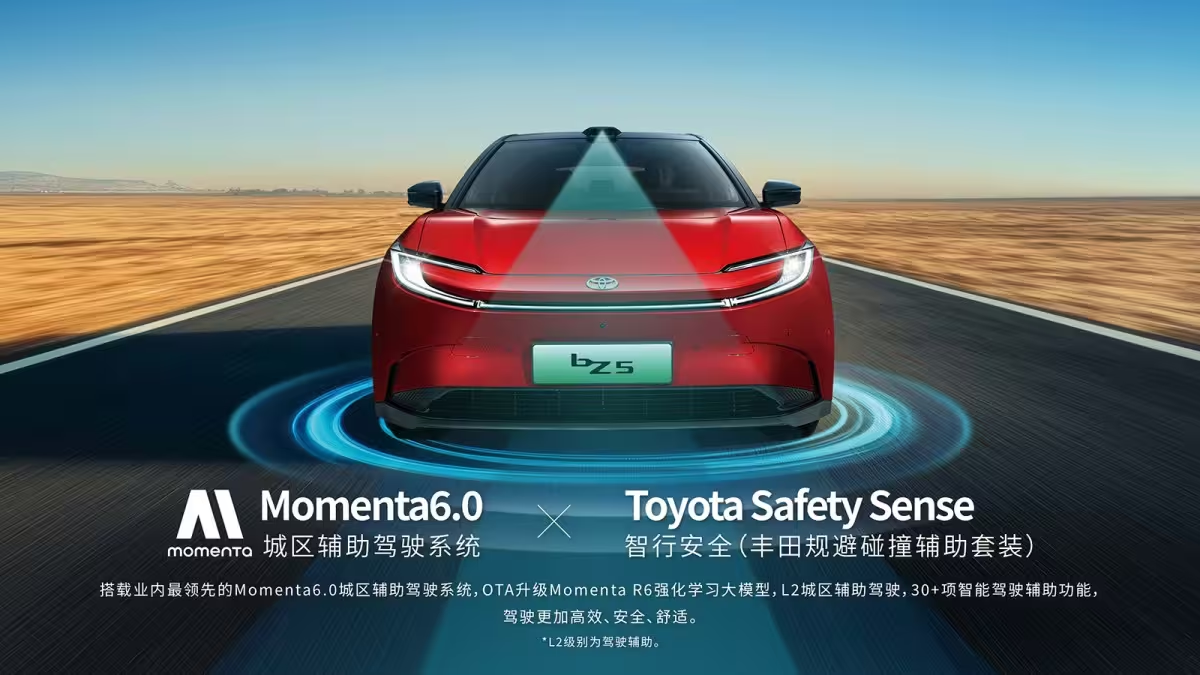
That’s where Momenta's driving stack enters the story. For 2027 Toyota swapped in the Momenta 6.0 intelligent driving system, built on the R6 foundation model and running on a platform rated at 544 TOPS. A roof-mounted LiDAR pod works with 32 sensors to enable urban Navigation on Autopilot, automated parking, and an unusual dual Driver Monitoring System that keeps tabs on both driver and front passenger. It’s a high-end autonomy suite strapped onto an entry-priced car.
Specifications in brief:
- Battery options: 65.28 kWh (≈550 km CLTC) and 73.98 kWh (≈630 km CLTC)
- Fast-charge: 30% to 80% in ~27–29 minutes
- Motor: single front, 200 kW (268 hp), 329 Nm
- Dimensions: 4,780 mm L, 1,866 mm W, 2,880 mm wheelbase
So yes, you get BYD chemistry, Momenta autonomy, FAW assembly, and a Toyota badge. Strange bedfellows, but effective ones.
Still, hardware and specs don’t guarantee headlines or showroom traffic. The bZ5’s launch bump tells a cautionary tale. Initial deliveries spiked to a few thousand units, then tapered sharply. By midsummer monthly registrations had shrunk to the low hundreds. In a market where domestic brands refresh platforms rapidly and buyers vote with their wallet and software updates, a legacy nameplate is no longer a surefire advantage.

Which raises the central question: can price and partnerships be enough to revive Toyota’s electric fortunes in China? The company’s 2027 refresh reads like an existential gambit. It pairs Toyota’s known strengths in build quality with fast-moving Chinese tech in batteries and software. That combination is compelling on paper. In practice, Toyota still needs to convince buyers that this hybrid of Japanese reliability and Chinese innovation is more than a stopgap.
One thing is clear: Toyota is no longer playing by its old rules. It’s joined the melee, slashed margins, and put advanced driver assistance onto an accessible platform. The bZ5 might not win every comparison, but it changes the terms of engagement. Watch this space—because the race to affordable, well-equipped EVs just got a lot more interesting.

“I cover automotive innovation, electric vehicles, and the future of mobility — where technology meets sustainability.”

Discussion
Leave a Comment
Comments (2)
Wow, Toyota slashed prices and shoved LiDAR+Momenta into an affordable SUV? Mind blown. If quality holds this could shake Tesla up, but i'm cautious, seen this hype before
This reads wild, but is €14k realistic? Cheap battery, Momenta stack, BYD cells, sounds like corner cutting or a masterstroke? If warranty lags buyers will bail. CLTC ranges...