
Pontiac simmered under an August sun, engines growling and exhausts popping as Roadkill Nights filled the streets. Chrysler rolled up with something unexpected: two takes on the refreshed 2027 Pacifica—one quietly sharpened for daily life, the other a loud, minivan-culture statement from VANkulture.
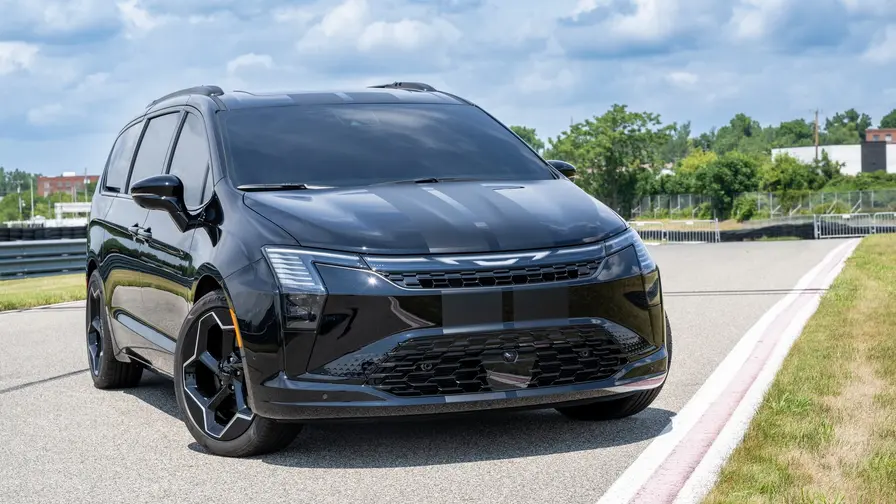
The first Pacifica leaned on subtlety. Think Diamond Black Limited all-wheel-drive dressed with the optional S Appearance Package: expanded black trim, 21-inch Geode wheels in 245/45R21 Pirelli P Zero rubber, and a one-inch drop for a cleaner stance. Even the red seat belts—borrowed from the America250 edition—were a wink toward younger buyers who want personality without overdoing it.
When imagination outpaced metal
The VANkulture car took the opposite approach. This was a full enthusiast build: a VIS Racing aero kit, Arvex satin paint protection film with contrasting black accents, smoked 3M headlight film and a host of chassis upgrades. Underneath were 20-inch Vossen wheels on 275/40R20 Kenda track-spec tires, Megan Racing 32-way adjustable coilovers with custom Swift Springs dropping the ride 2.5 inches, Rotora brakes and a MagnaFlow exhaust. It’s loud in all the right ways.

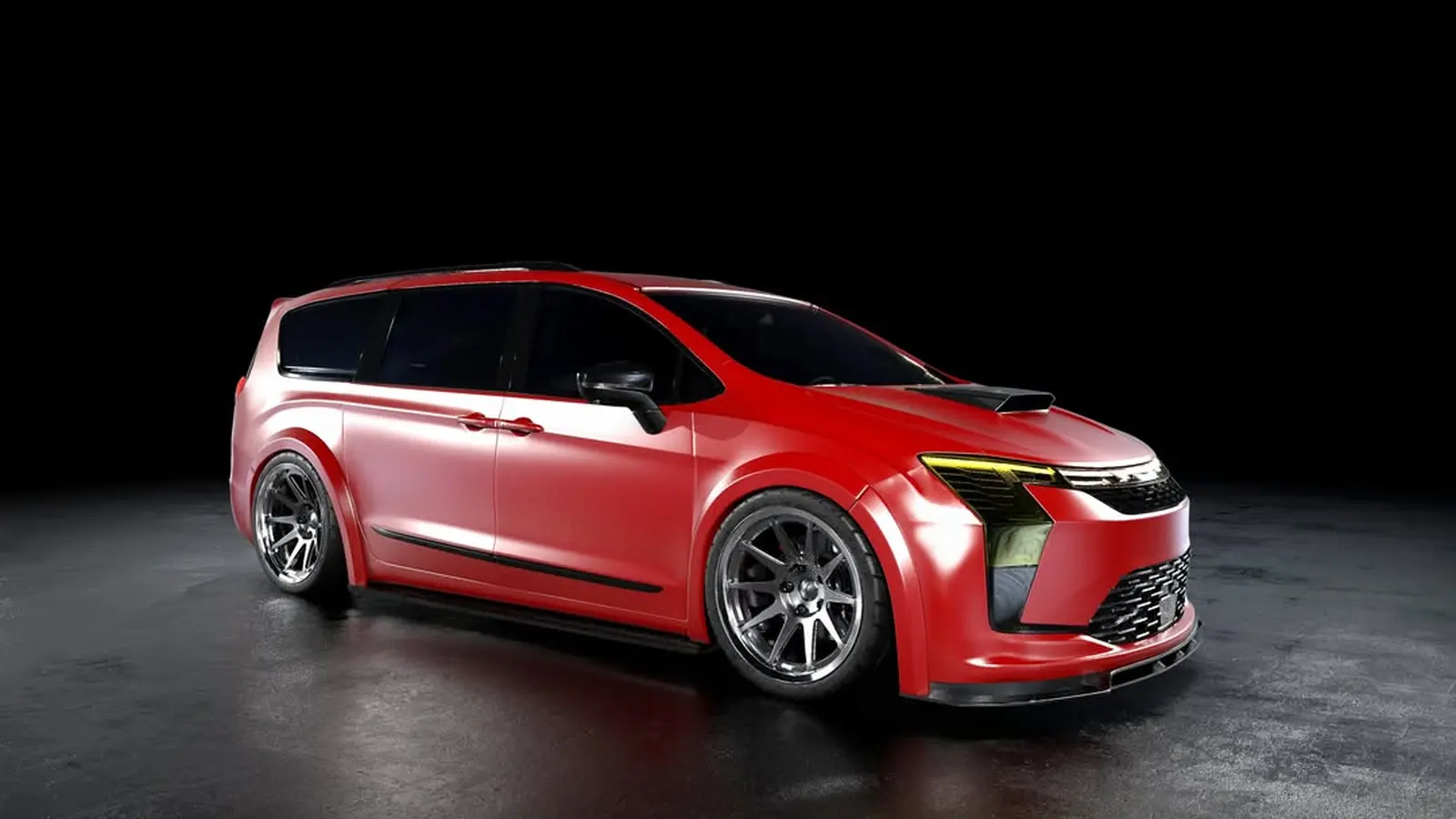
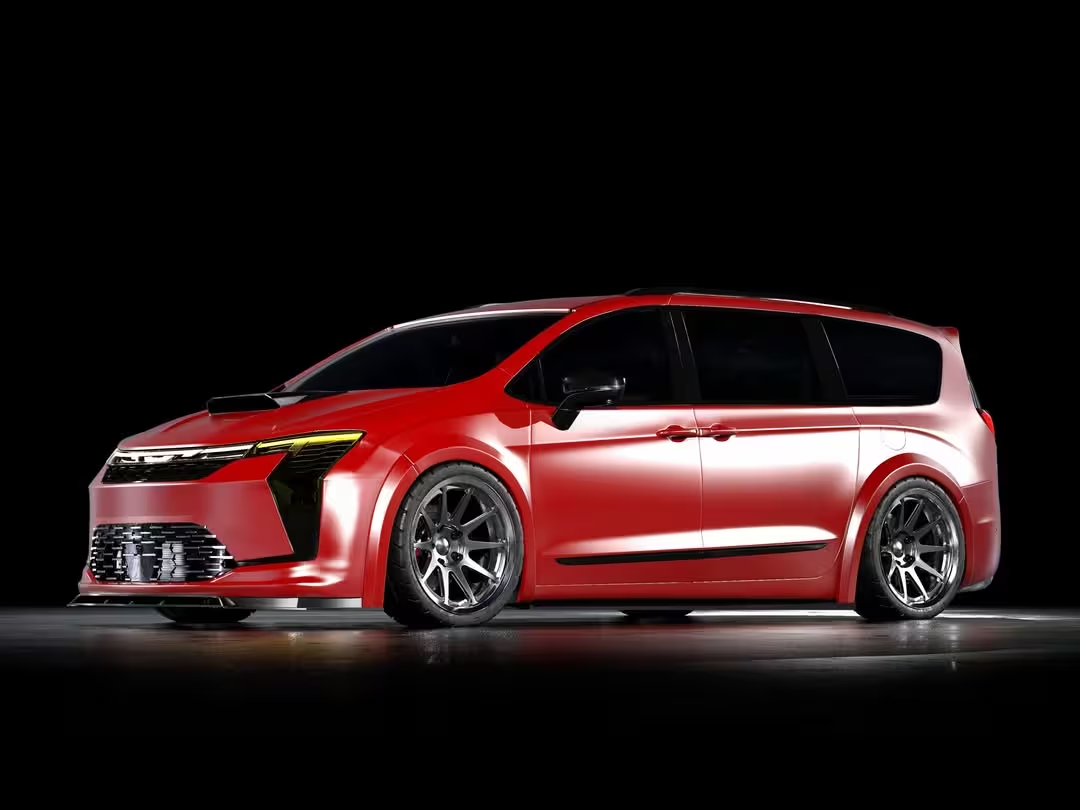
But here’s the twist. Before any metal was cut, VANkulture had commissioned Abimelec Arellano—known online as abimelecdesign—to create official renderings. Those CGI images pushed the Pacifica into territory the real build didn’t fully follow. Why? Practicality, show rules, fitment realities. Or maybe they simply wanted a more wearable, street-ready final product.

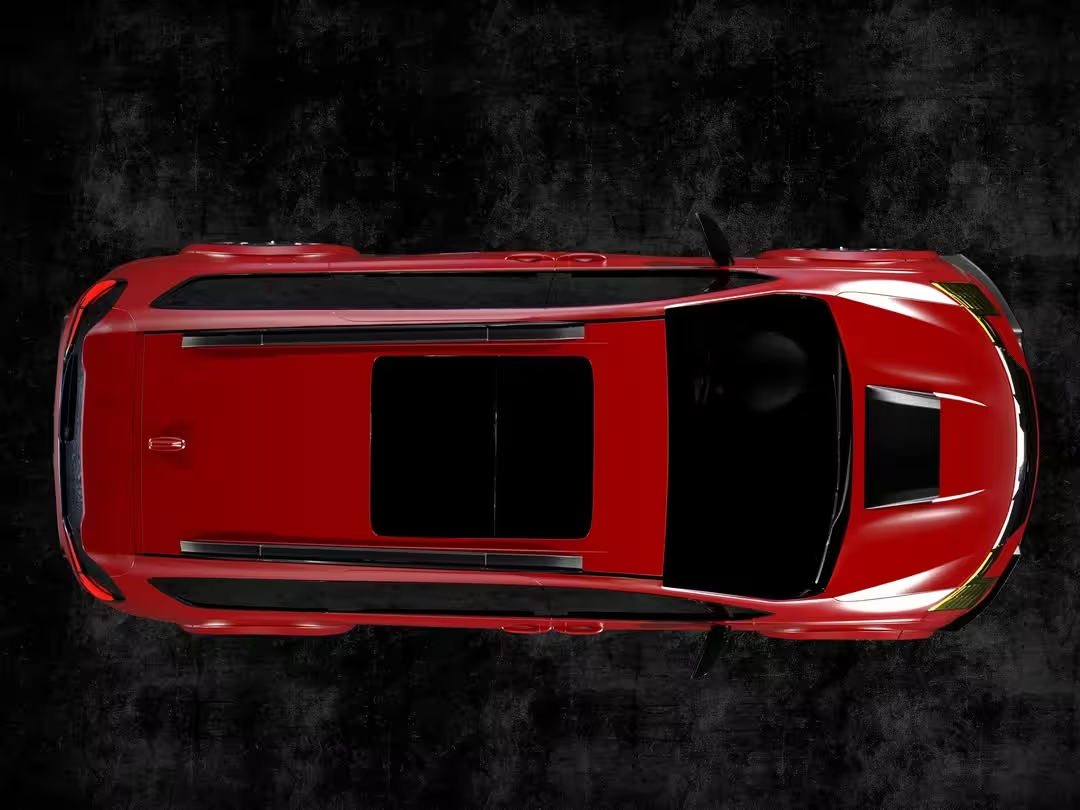
If you line up the renderings against the finished concept, the differences are obvious. The digital Pacifica featured amber LED daytime running lights and partially exposed headlights with amber-tinted glass. Wheels were larger and more concave with a gray finish, the hips wore full widebody fender flares, the hood was vented, and a small ducktail-style roof spoiler added visual aggression.

Those CGI choices read like a designer’s fever dream: extreme angles, exaggerated stance, and visual cues borrowed from track cars and tuner culture. The real VANkulture Pacifica keeps much of that spirit but translates it into components that fit, bolt on and, crucially, pass muster at a public event.
So which is the truer statement—the renderings that push limits, or the built van that makes those ideas reliable and roadworthy? Both, in their own way. One shows what imagination can do when freed from constraints. The other shows the compromise required to turn imagination into something you can drive home.
The CGI pushed boundaries; the production-minded concept chose balance—and that trade-off is exactly what makes this story interesting.

“I cover automotive innovation, electric vehicles, and the future of mobility — where technology meets sustainability.”

Discussion
Leave a Comment
Comments
No comments yet. Be the first.