
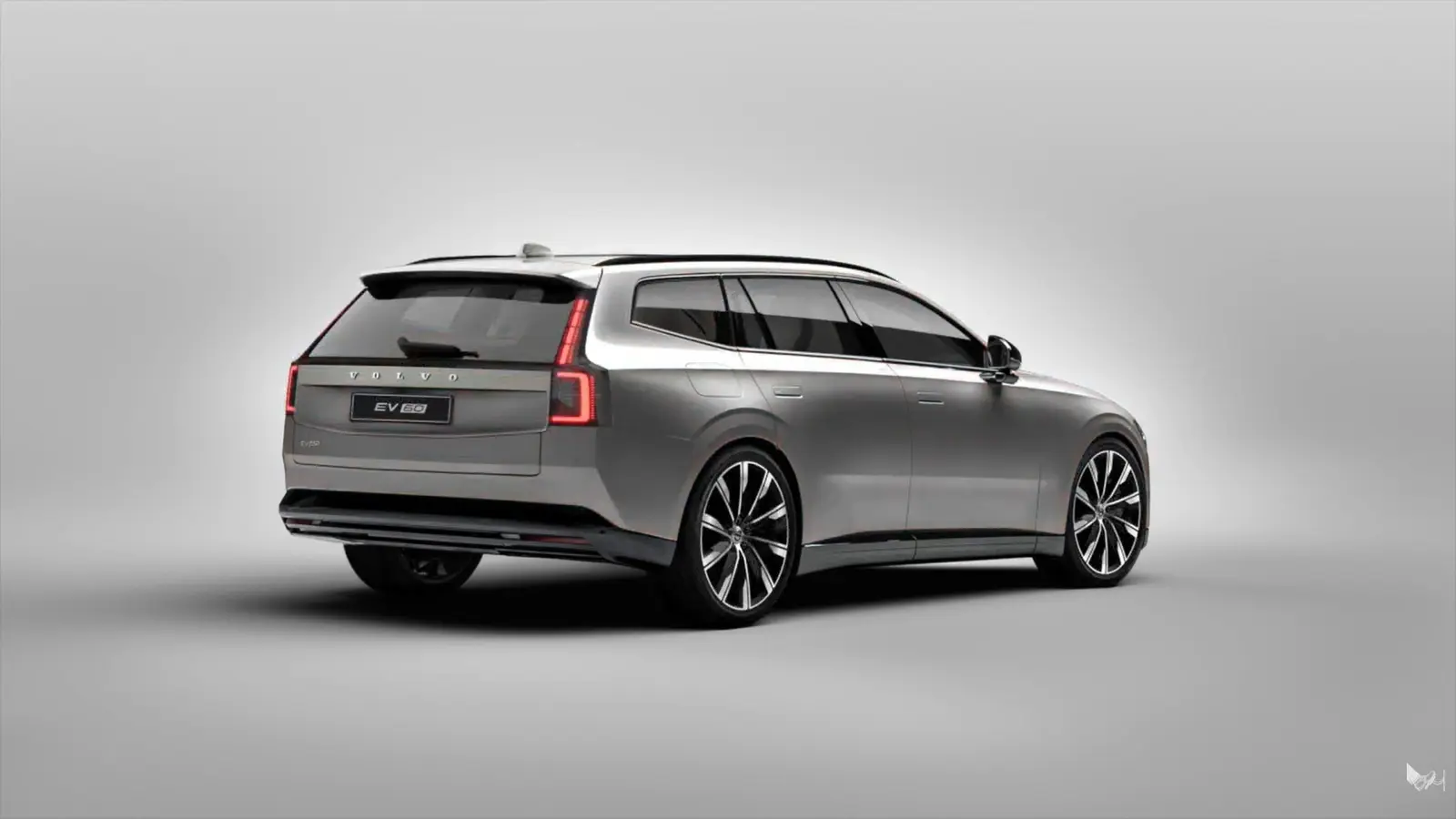
A fresh set of renders has landed online and they do more than look pretty. They propose a question few auto designers ask out loud: what if Volvo returned to the passenger car in a serious way, marrying its spare Scandinavian lines with full electrification?
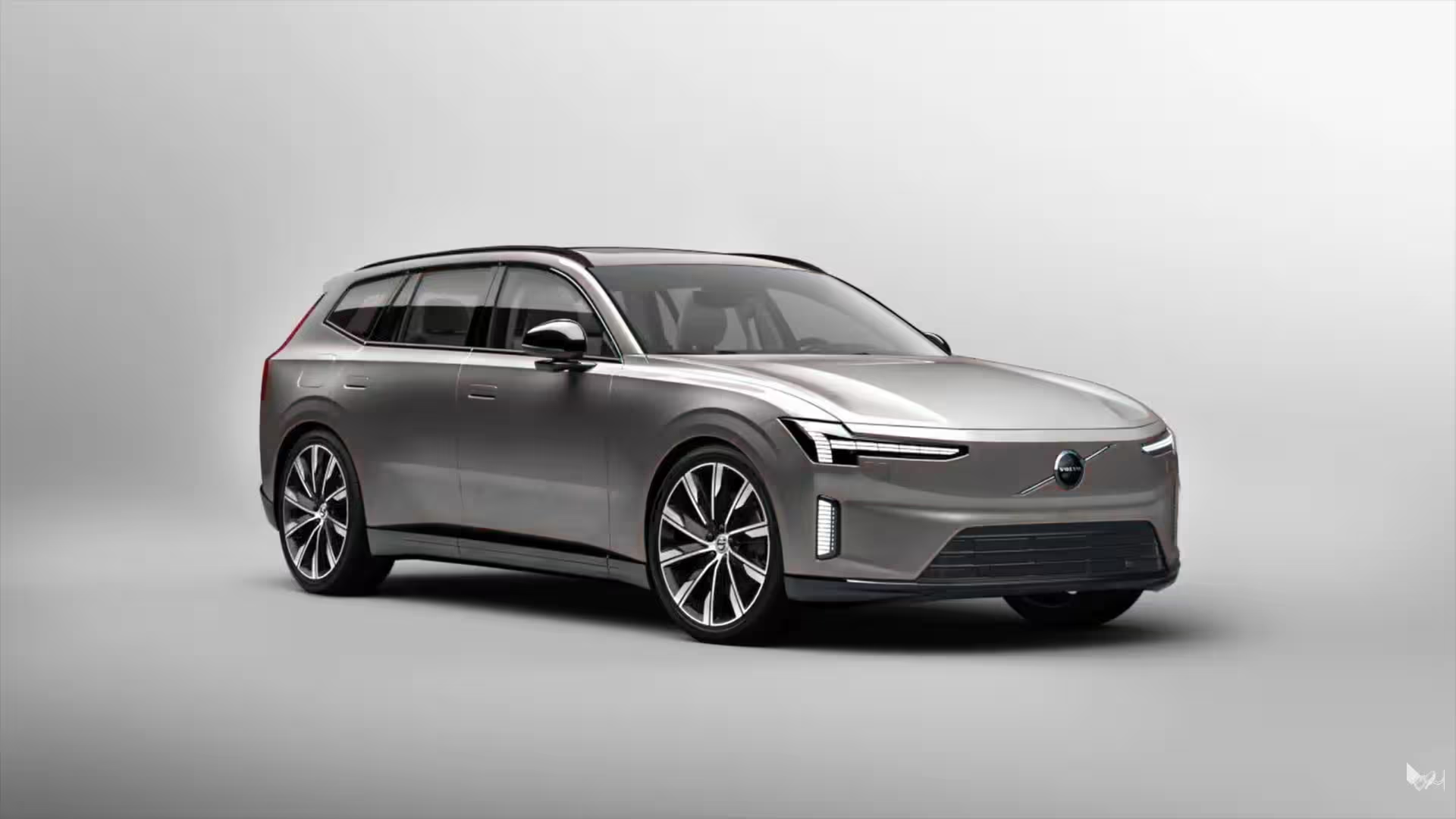
The images come from Theottle, a digital artist known for clever CGI work. His ES60 sedan and EV60 wagon sketches strip Volvo styling down to essentials and then rebuild it for an electric future. The sedan leans sporty and taut, the wagon keeps the brand's sensible proportions but stretches them into a long, practical tourer. Both feel like modern answers to a classic Volvo promise: safety and usability, but dressed for the EV age.
Design, business sense, and the SPA3 hint
These are not factory blueprints, yet they track with industry chatter about Volvo's next architecture. The renders sit on SPA3, the next evolution of Volvo's Scalable Product Architecture. That matters because SPA3 is being pitched as a performance-friendly, cost-efficient EV base that makes big things possible. Think megacasting to simplify structure, cell-to-body battery integration for stiffness and mass centralization, and an 800 volt electrical system for faster charging. Reported battery options include roughly 80, 91, and 112 kilowatt hours, which would cover daily range needs and longer trips alike.
Why does that matter beyond the tech sheet? Because platform choices shape markets. If Volvo can offer sedan and wagon shapes on a scalable EV platform, the company can target buyers who are tired of oversized crossovers and want something more efficient, elegant, or simply different.

The business context is clear. Volvo has doubled down on electrification and smaller powertrains in recent years, rolling out the EX30, EX40, EX60, and EX90 while holding on to flagship SUVs like the XC60 and XC90. At the same time the brand has pared back traditional sedans and wagons in many markets, a move that seems to have coincided with softer sales. With Hakan Samuelsson back at the helm, Volvo is plotting an ambitious product push, and the EX60 is only the start.

Industry whispers also point to a reshuffle of the EX40 in the United States by 2027, with a larger EX50 rumored to take its place. The plan, according to sources, is to upsize and add tech while keeping pricing competitive. That kind of juggling shows Volvo is thinking not just about new models but about where they sit in a rapidly shifting EV landscape.

CGI exercises like Theottle's do more than feed fan forums. They offer a glimpse of potential strategy. If Volvo moves to offer an ES60 and an EV60 alongside the EX range, it would signal a desire to reclaim the middle ground between compact city EVs and full-size premium SUVs. That middle still has buyers who prize driving balance and usable cargo space without the footprint of a big crossover.
If Volvo wants to broaden its electric appeal, a refined ES60 and a practical EV60 on SPA3 would be a smart, coherent next step.

“Cars are evolving faster than ever. I cover electric vehicles, smart mobility, and the future of transportation worldwide.”

Discussion
Leave a Comment
Comments
No comments yet. Be the first.