
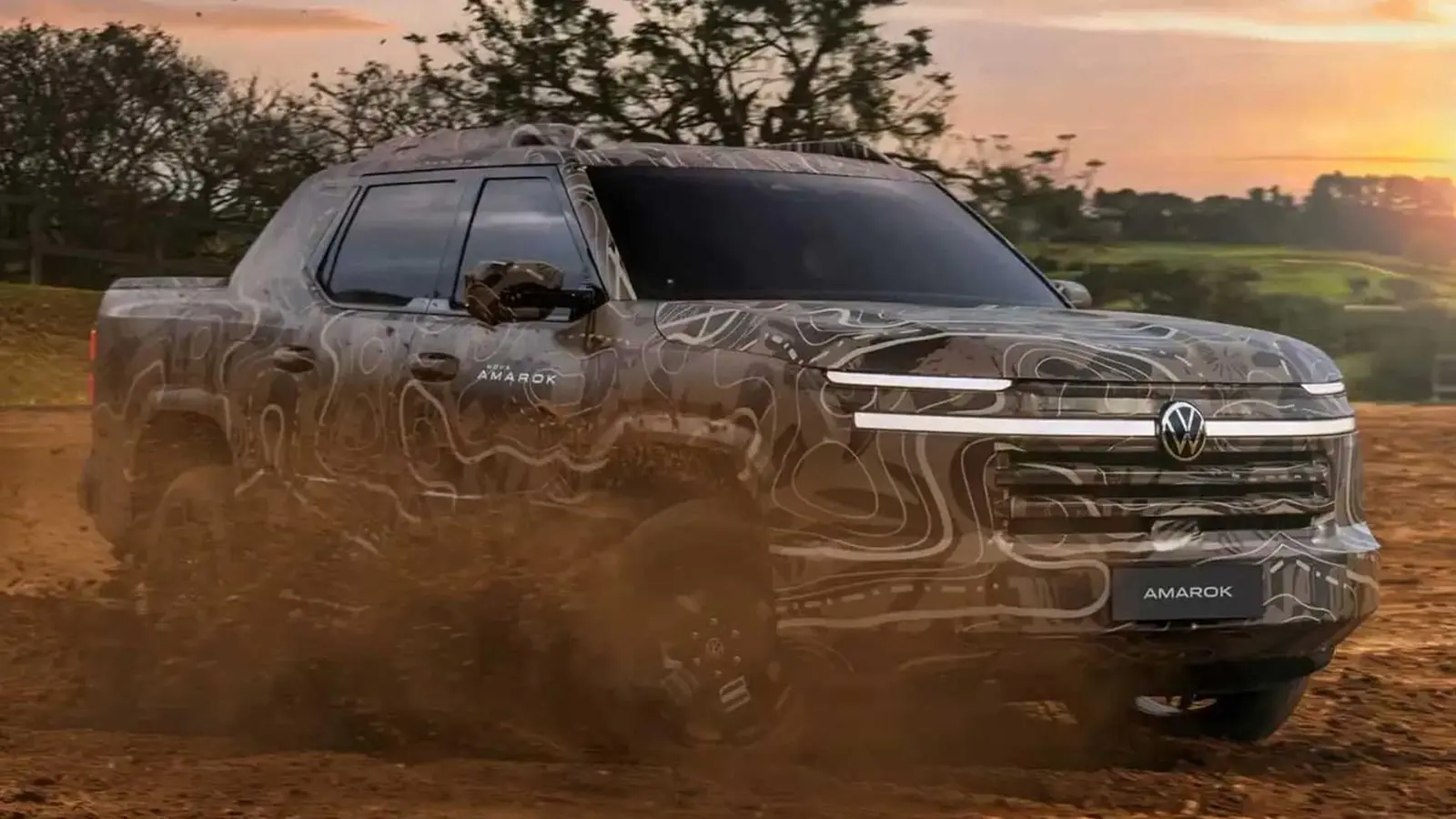
Picture a familiar name wearing an unfamiliar suit. The new Volkswagen Amarok headed for South America looks like a declaration of intent: evolve or get left behind.
Why this Amarok feels different
Volkswagen has released testing images of a next-generation Amarok that, unlike the global model, rides on a Chinese-made platform developed with SAIC. It’s a strategic pivot. Built on the Maxus Interstellar X underpinnings, the pick-up is being readied for production in Argentina and is likely aimed squarely at the region's best-sellers, including the Toyota Hilux, Ford Ranger and Mitsubishi Triton.
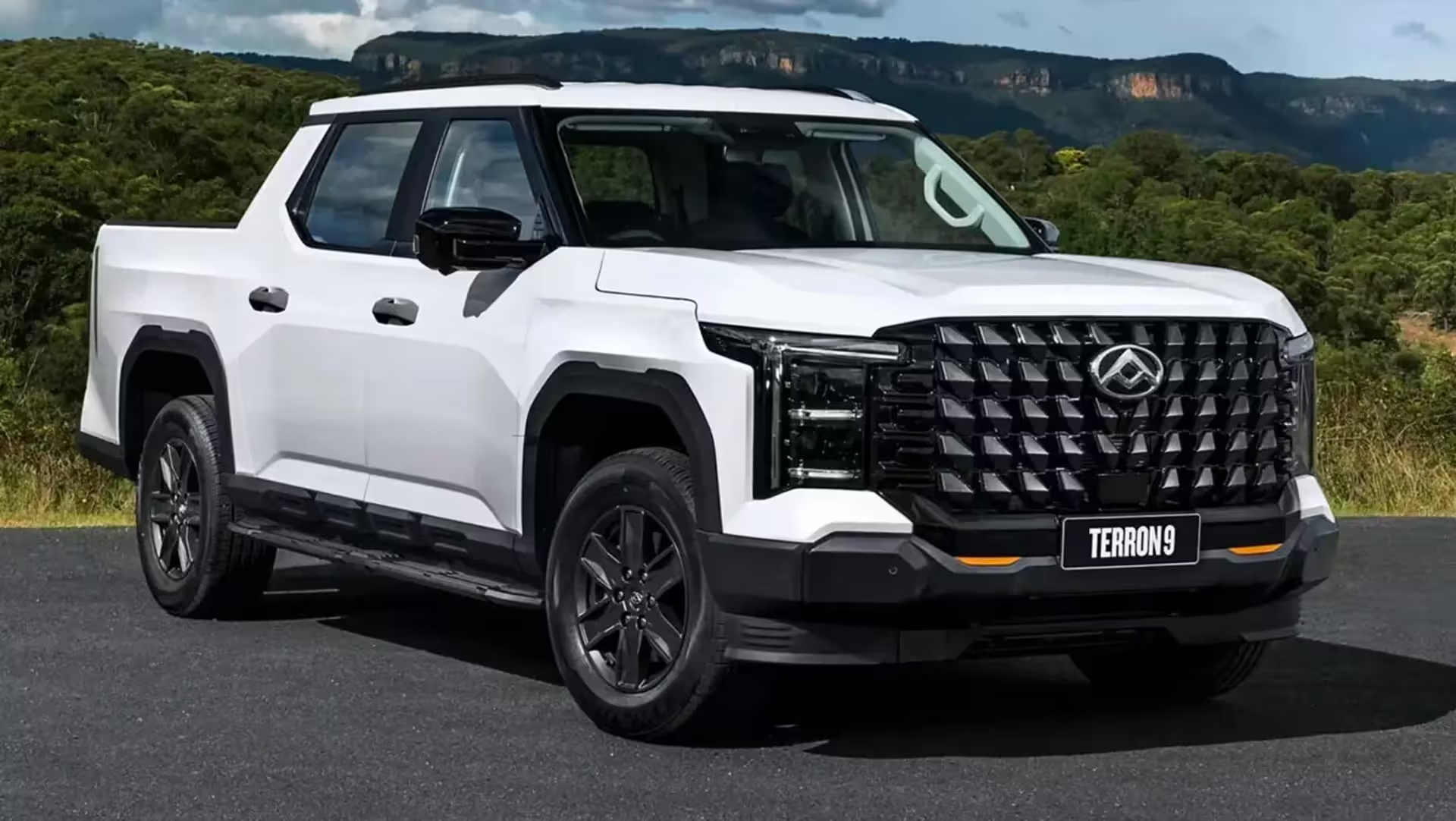
What matters is not just the badge but the bones beneath it. After sharing architecture with Ford for the global Amarok, Volkswagen chose a different path for South America. That decision means the same nameplate will soon cover two mechanically unrelated trucks: one based on the Ford Ranger and another drawing from a platform that many readers will recognize as the Maxus Interstellar X, sold in markets like Australia as the LDV Tron 9.

Visually, the camouflage hides little of the intent. The front end features a full-width LED light bar and a pair of daytime running lights tucked into the hood edge. A slim grille with twin horizontal slats sits below. The profile shows squared mirror housings, pronounced, angular wheel arches, oversized door handles and roof rails that give the truck a purposeful, slightly more compact stance than its Chinese cousin.
Dimensionally the new Amarok looks to be trimmed down compared with the Interstellar X, which measures roughly 5.5 meters long and 2.01 meters wide with a 3.3-meter wheelbase. The current Amarok sits at about 5.35 meters long with a 3.1-meter wheelbase, so expect the South American model to be closer to the smaller end of that range.
Performance and drivetrains: muscle with choice
Volkswagen has confirmed the next Amarok will offer hybrid power. Local Brazilian reports point to a flagship called 800 TSI, likely a plug-in hybrid setup delivering more than 470 horsepower and around 800 newton-meters of torque. If those figures hold, the top variant would sprint from 0 to 100 kilometers per hour in under 5 seconds, and all-wheel drive would come standard on that trim.

But this isn't a one-note play. Fans of diesel will still have options. The Maxus family uses a 2.5-liter turbodiesel, and Volkswagen appears set to retain turbo-diesel choices alongside its electrified lineup, giving buyers familiar range and towing ability as well as the new hybrid punch.
Production is expected to start around 2027 at Volkswagen's facility in Argentina, and while VW has kept formal specs under wraps, testing activity and local reporting suggest the carmaker has been developing this variant for at least two years. The collaboration with SAIC and platform sharing follows an increasingly common pattern in the mid-size pickup segment, where cost, speed to market and local relevance often trump single-brand purity.
- Platform: SAIC Maxus Interstellar X
- Flagship powertrain: reported 800 TSI plug-in hybrid, >470 hp, ~800 Nm
- 0-100 km/h: expected under 5 seconds for top model
- Diesel option: likely 2.5L turbodiesel variants to remain
- Production: planned in Argentina, target around 2027
So what should buyers and rivals take away? Volkswagen is adapting its strategy region by region. The Amarok name survives, but the truck beneath it is being rewritten to match local tastes and economics. That could be clever, conservative or risky, depending on how the market receives a German badge on Chinese architecture with a powerful hybrid heartbeat.
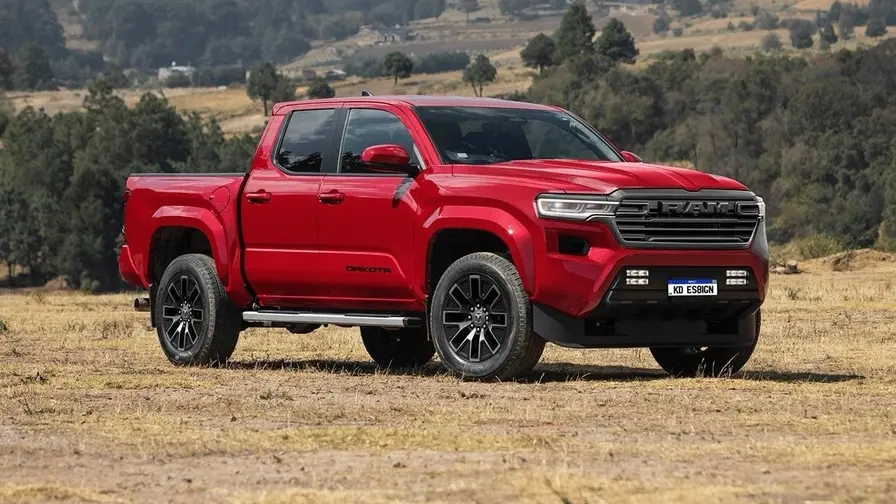
Either way, the era of rigid, one-size-fits-all global models is fading. This Amarok proves that platforms now travel as freely as badges, and in the pickup world, a good chassis partnership can be the difference between leading the segment and playing catch-up.

“I cover automotive innovation, electric vehicles, and the future of mobility — where technology meets sustainability.”

Discussion
Leave a Comment
Comments (2)
Is VW risking brand trust by rebadging Maxus? If that 800 TSI PHEV really does 0-100<5s I'll be shocked, but curious...
Wow, VW putting a Chinese chassis under Amarok... feels weird but kinda smart, tbh. Hope build quality holds up!