
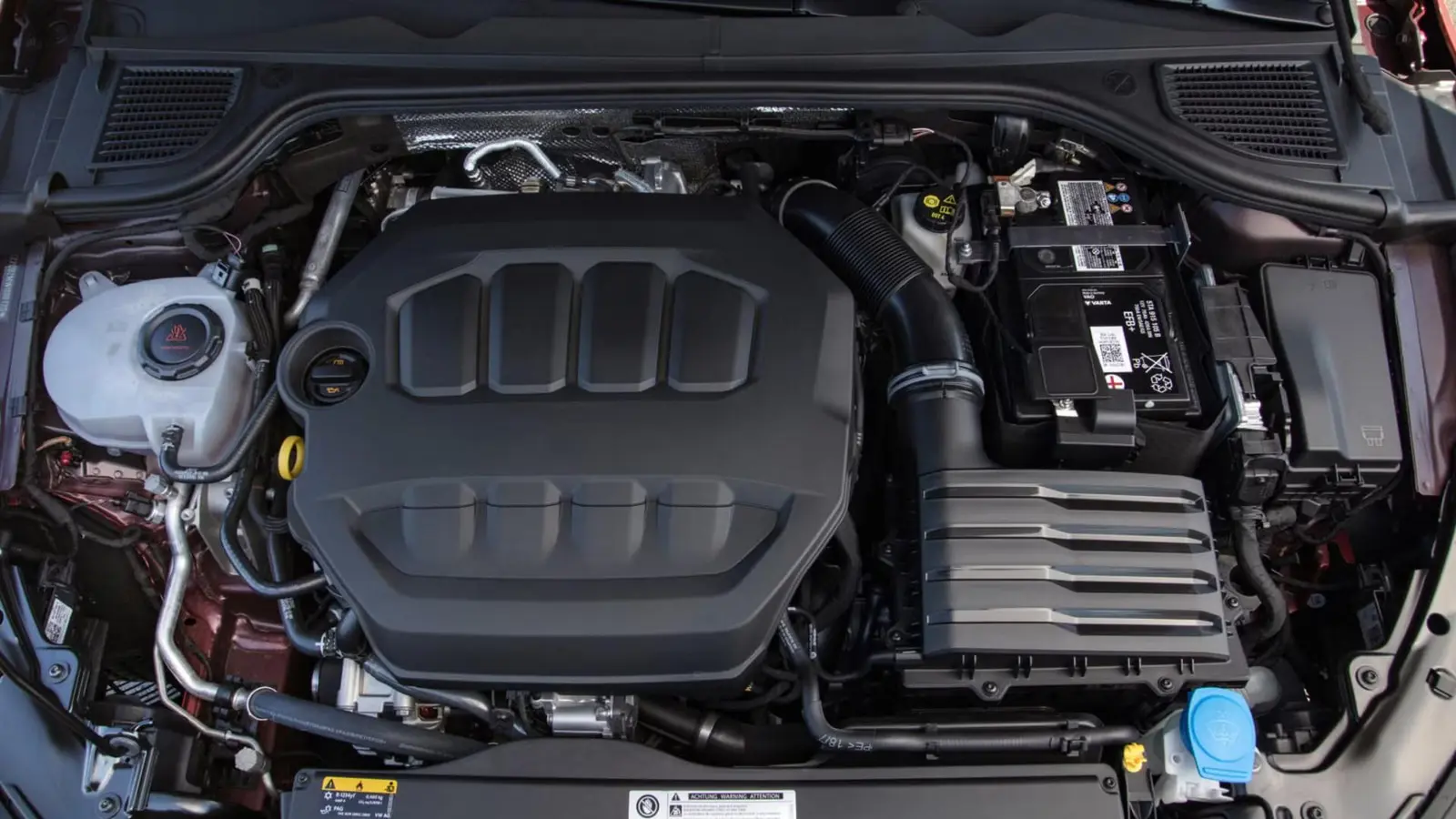
On a frosty morning you turn the key, wait a few seconds, and head out for a ten minute run to work. The turbo spins almost instantly. The oil does not. That mismatch is quiet, invisible, and over months it eats the heart out of a modern downsized Volkswagen engine.
When short trips become a slow engine killer
Small turbocharged engines are brilliant at shaving fuel use while delivering surprising punch. They are also unforgiving when used the wrong way. In cold-weather, sub-15 minute commutes the engine rarely reaches stable operating temperature. Oil stays thick. Water vapor and unburned fuel condense and collect. The turbo and its feed system suffer repeated micro-insults during every cold start and quick stop. Over time those insults add up.
Think of a turbo as a precision spinning assembly that can pass 100,000 revolutions per minute or more. It needs a steady, clean flow of warm oil to create the thin hydrodynamic film that separates bearings and keeps the shaft centered. In a cold start the turbo wheel is already spinning from exhaust flow while the oil supply is still fighting viscosity and slow circulation. Moments of metal on metal precede proper lubrication. Meanwhile thick oil drains slowly from return lines and can pool in the turbo housing. Repeated cycles widen bearing clearances, destabilize the shaft, and precipitate early turbo housing failure.

Direct-injected, high-pressure engines such as Volkswagen Group’s two-liter TFSI EA888 illustrate the problem clearly. Their high-pressure fuel pumps are mechanically driven off the cam and use small sacrificial followers that rely on clean oil for lubrication. When oil is diluted by fuel or thinned by degradation, the sacrificial coating on those followers wears quickly. The result can be catastrophic: pump internals score the cam, metal debris circulates through the cylinder head, and engine damage cascades. Volkswagen eventually extended some warranties to respond, but many owners still do preventive inspections every 10,000 to 20,000 miles to catch early wear.
Short trips also keep crankcases cool and let moisture and fuel vapors condense inside the oil. Cold enrichment at start sprays extra fuel that can pass by cold piston rings into the crankcase. On a fully warmed engine those contaminants are carried out through the positive crankcase ventilation system and burned. On short runs they sit, dilute the oil, reduce viscosity, and form acidic sludge that robs bearings of protection. What begins as a local weakness — a starved follower, or a slow-draining turbo bearing — can become a widespread failure over surprisingly few miles.
If you live in a cold city and most commutes are under fifteen minutes, a naturally aspirated engine tends to be far kinder to long-term durability than a small turbocharged unit.
There are other weak links. Early EA888 variants suffered timing-chain tensioner issues that led to catastrophic chain jumps in some model years. Later generations showed coolant leaks from plastic thermostat housings and water pumps that would crack under heat. Some models were recalled for high-pressure fuel pump or fuel-rail fastener problems that could leak and create a fire risk. Add corroding wastegate linkages, torn boost diverter diaphragms in early units, and leaky camshaft solenoids, and you see why ownership of these engines can demand more vigilance than their simple displacement numbers suggest.


Service discipline matters. Volkswagen Group recommends scheduled oil and filter changes, using the brand-approved full synthetic oil, every 8,000 to 16,000 kilometers or once a year. Routine maintenance costs vary depending on whether you do the work yourself or visit a dealer. Expect a basic oil service to run roughly between €74 and €138 for an independent shop, and around €138 to €230 at a dealer. Spark plugs are typically replaced every 48,000 to 64,000 kilometers in stock tune, though tuned engines can cut that to 16,000 to 24,000 kilometers, with service costs in a broad band from about €55 to €322 depending on who does the work.
Coil packs often last 64,000 to 96,000 kilometers but may need replacement at the first sign of misfire; a set of four coils costs roughly €110 to €184 in parts. Cabin and engine air filters are refresh items around every 20,000 to 30,000 miles, costing about €37 to €74. DSG transmission oil and filter changes are a major item for owners of dual-clutch models: expect €276 to €736. Haldex all-wheel-drive units require service roughly every 48,000 kilometers with an oil and pump filter job that runs about €138 to €276.
Timing belt inspection at 64,000 kilometers and potential replacement near 96,000 kilometers is another ownership cost, roughly €138 to €276. Carbon buildup on intake valves — a byproduct of direct injection — commonly needs walnut-shell blasting every 80,000 to 120,000 kilometers; professional shops charge about €368 to €736 for that. These intervals particularly matter for urban drivers, because failure to manage them shortens the real-life durability of a turbo engine far more than the odometer alone would suggest.
There is a simpler mechanical path: naturally aspirated designs such as Volkswagen’s older VR6 deliver predictable, resilient performance for city duty. Port fuel injection continuously rinses intake valves, avoiding the carbon deposits that plague direct-injection engines. Lower operating pressures and simpler oiling paths reduce the number of delicate components that can fail from repeated cold starts. The trade-off is fuel economy. A VR6 will rarely compete with a small turbo on consumption numbers, but it will generally age more gracefully in stop-and-start, sub-15-minute driving cycles.
So what should a buyer or city driver do? Match the engine to the mission. If the daily routine is short trips in cold weather, favor a naturally aspirated engine or commit to rigorous service and occasional longer runs to bring oil and engine temperatures into their safe zones. If a turbo is your choice, be religious about correct synthetic oil, observe shorter service intervals if recommended, and include periodic highway drives long enough to purge moisture and burn off deposits.

Finally, when assessing used examples, do not equate low mileage with benign use. A low-mileage vehicle that lived its life on cold, short runs may have endured more mechanical wear than a higher-mileage car that spent years on highways. Ask for service records, oil change history, and any evidence of walnut-blast cleanings or high-pressure pump work. Those documents will tell you far more about future reliability than the odometer alone.

“Cars are evolving faster than ever. I cover electric vehicles, smart mobility, and the future of transportation worldwide.”

Discussion
Leave a Comment
Comments
No comments yet. Be the first.