
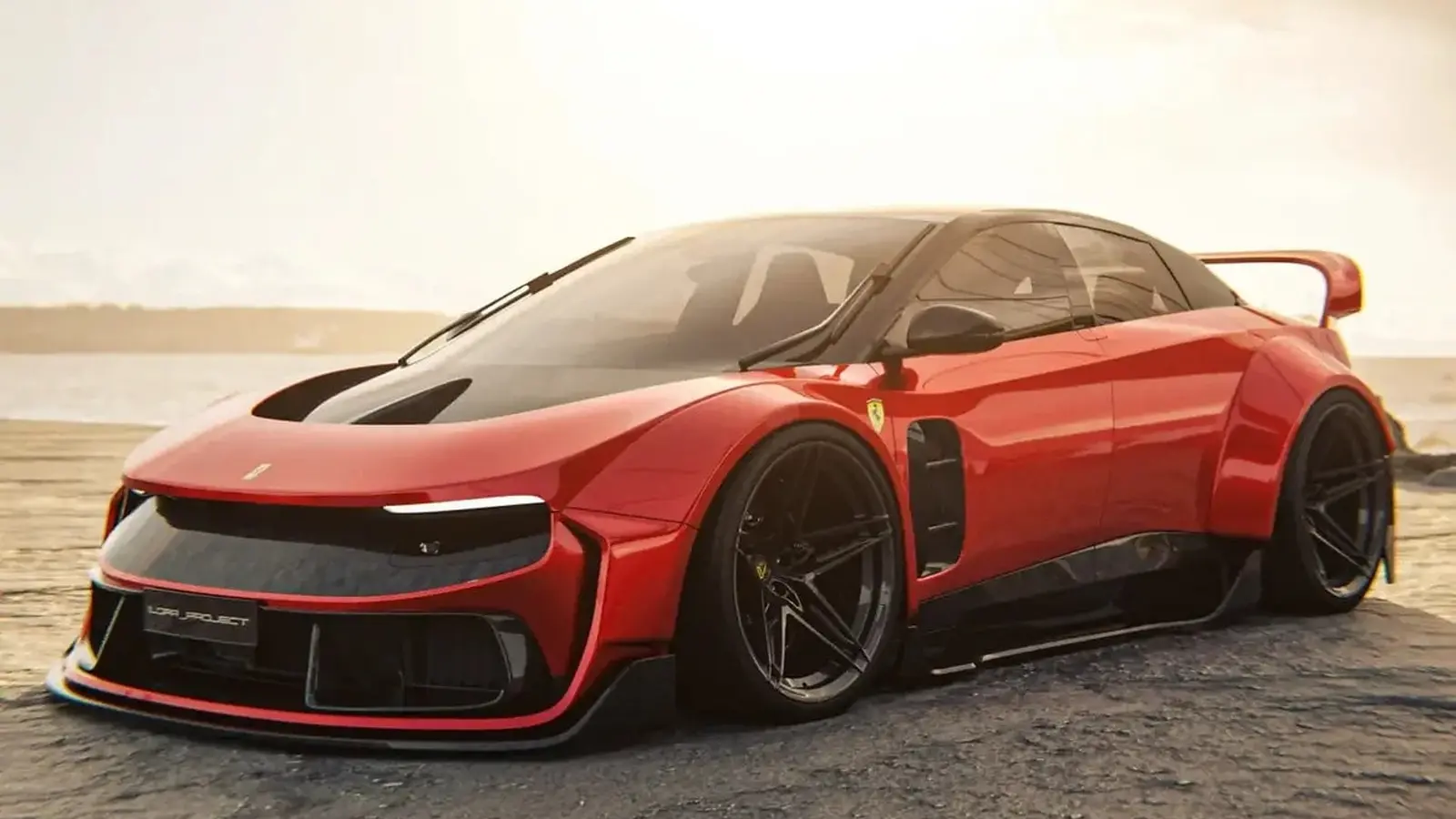
Imagine a Ferrari that refuses to behave. It has four doors, a battery the size of a small power plant, and already a reputation that fuels both adoration and ridicule online. Someone paid about €37.2 million for chassis 0, and the internet did what it does best: it did not hold back.
When the tuner takes Photoshop to Dubai
The image above comes from @ildar_project, and it asks a blunt question: what if the Luce were treated like a Liberty Walk fantasy instead of a polished production car? The result is extreme. Wide arches swallow the wheels. The stance sits so low a leaf would be a serious hazard. A rear wing riffs on the old F40 and F50 spirit, while forged carbon details scream aftermarket excess.
It is not real. It is CGI tuning, staged in a digital Dubai for maximum drama. Yet the render lands the same way a bold paint job does on the auto show floor: some will cheer, others will recoil. Either reaction proves the point that the Luce means something to the conversation, even when that something is controversy.

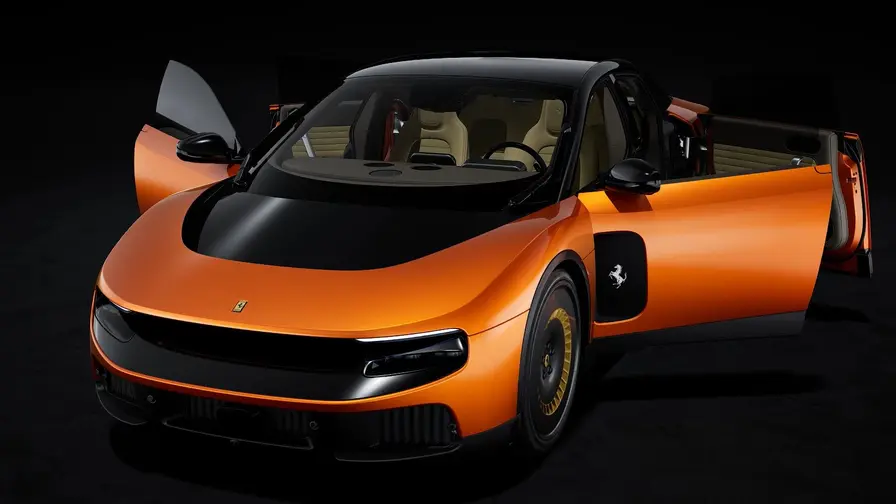
Let us be clear about the car behind the pixels. The Luce is Ferrari's first high-profile electric push, packing a quad-motor setup that delivers 1,020 hp and roughly 772 kilowatts. It sprints to 100 kph in about 2.5 seconds and will top out near 310 kph. With a 122 kWh battery the targeted range is 530 kilometres. Europe buyers can place orders later this year, while US deliveries won't begin before the second quarter of 2027.
There is an irony here. Ferrari once swore off SUVs and electric cars, and yet the marque now offers both. And somewhere between vows and sales figures sits this odd little spectacle: a varnished online auction that turned civic expectations upside down. Paying €37.2 million for the first Luce was not a move made for utility. It was a trophy. It was a headline. It was a statement.

The CGI takes that statement and exaggerates it, dressing the production lines in the language of tuner culture: fat wheels, bolt-on flares imagined but not attached, side skirts that look ready for a track day, and a diffuser that seems intent on gripping the road with teeth. It is theatrical. It is loud. And yet it also forces a more interesting question: can an electric Ferrari still be provocative in the way a V12 once was?

Some will say no. For purists, the Luce will never replace the visceral feedback of a combustion engine. Others will point out that this is exactly the era for new provocations: battery tech, instant torque, and aerodynamic toys that were impossible a generation ago. Regardless of which camp you choose, the Luce has already changed the conversation.
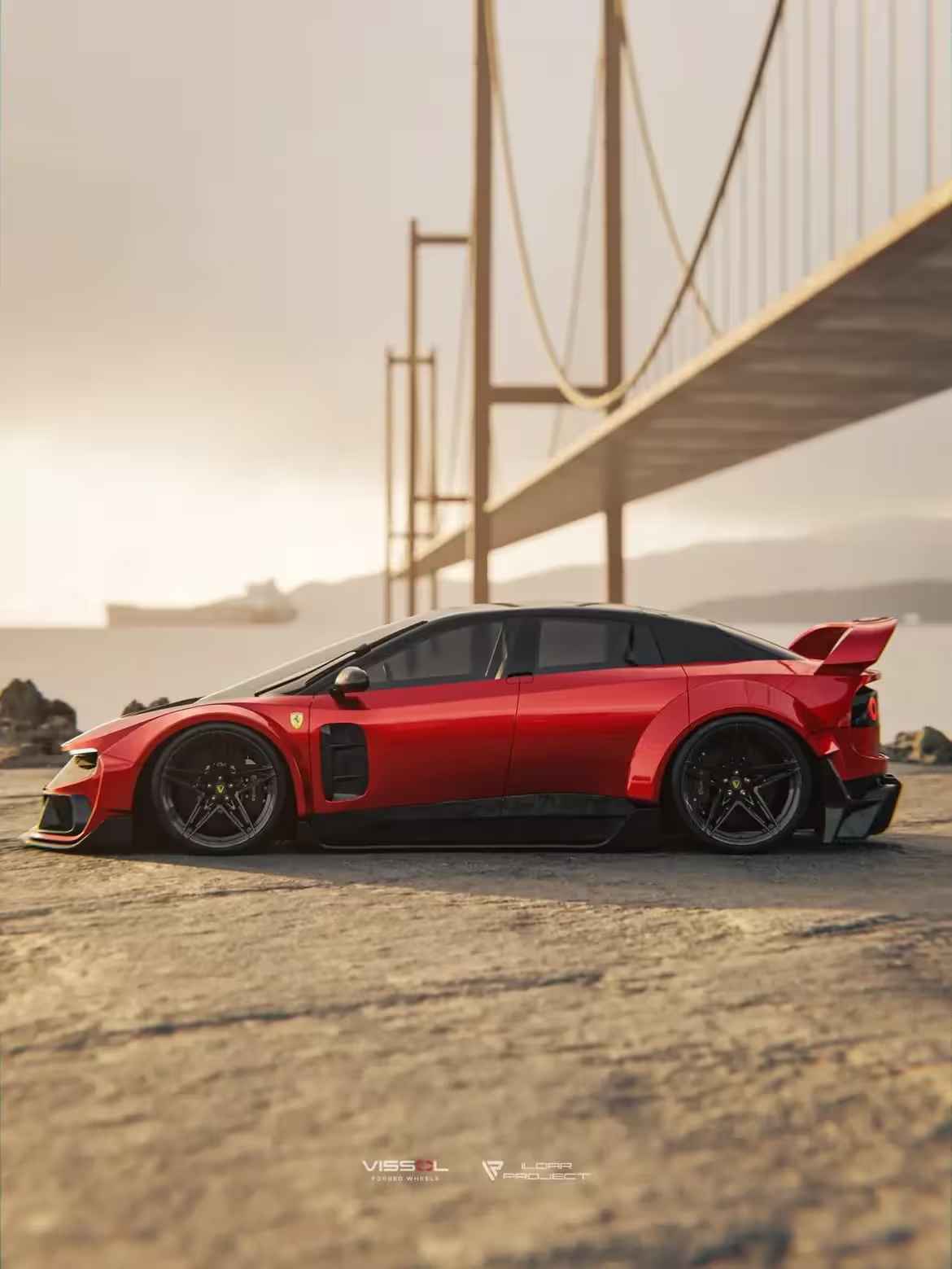
So does the widebody CGI work? If you like hyperbole, it absolutely does. If you prefer understatement, you will want to take this rendering with a healthy pinch of salt. Either way, Ferrari's electric experiment has become a canvas, and the aftermarket is already sketching on it. Will those sketches ever make it to asphalt? Time will tell.
Do you think the Luce looks better armored up and exaggerated, or should it stay sober and refined? Drop your verdict and tell us why.

“I cover automotive innovation, electric vehicles, and the future of mobility — where technology meets sustainability.”

Discussion
Leave a Comment
Comments
No comments yet. Be the first.