
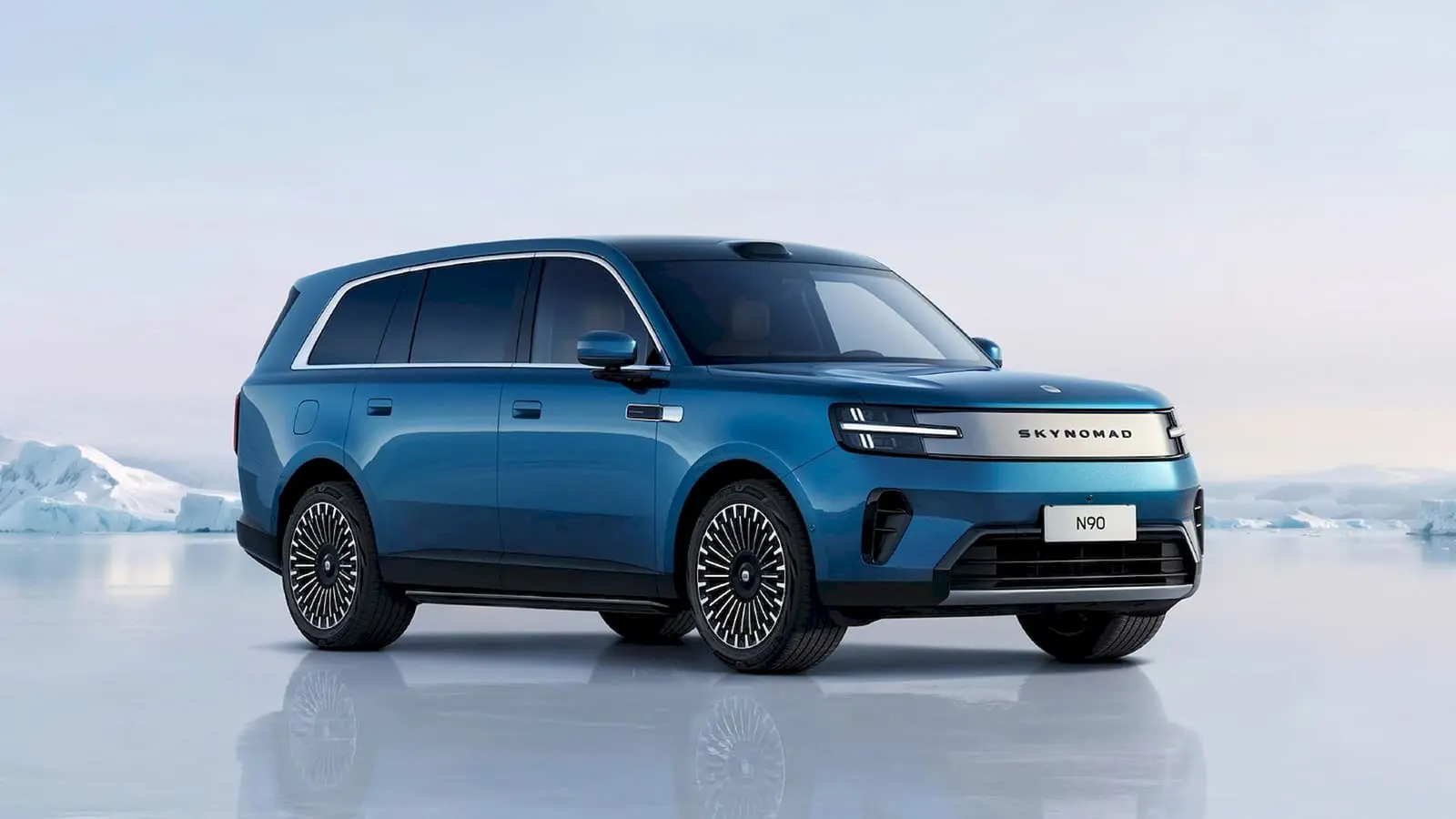
Xiaomi has quietly started taking preorders for its first SkyNomad-badged cars, and they arrive with a promise: luxury features, adaptive interiors and range-extender tech at prices that undercut established rivals.
The two models are the compact N70 Max and the full-size N90 Max. Both sit on Xiaomi's Kunlun EREV architecture and use a 1.5-liter turbo range extender that wakes up when the batteries run low. The aim is obvious. Offer electric driving most of the time, then add the confidence of a small petrol engine for long trips.

Room to rearrange
Step inside and the first thing you notice is how deliberately flexible the cabin feels. A completely flat floor stretches 2.90 meters from nose to tail at a very shallow 2.95 degree incline. Six seat rails give the interior a 2+2+3 layout with second- and third-row seats that slide almost freely. Want more cargo space? Slide. Need extra legroom? Slide the other way. It reads like SUV capability married to MPV practicality.
Two battery choices are on offer: a 50 kWh LPF pack supplied by Sunwoda and a larger 76 kWh ternary lithium pack from CALB. The N70 Max can be ordered as a single-motor rear-wheel-drive with 282 horsepower or as a dual-motor all-wheel-drive good for 416 horsepower. Under the CLTC cycle Xiaomi quotes up to 505 km of electric range for the smaller model and 464 km for the N90 Max. Fast charging claims are aggressive: 15 minutes of charging adds about 285 km of range.

When the battery is depleted the 1.5-liter range extender engages. It produces up to 112 kW, runs on a wide range of gasoline octanes and is tuned for low consumption. Xiaomi says combined consumption can be as low as 5.7 liters per 100 km and schedules engine service every three years or 30,000 km. The message is clear: maintain the EV experience while removing range anxiety.
Value is a deliberate plank of the SkyNomad strategy.
Preorders are open now for the top-spec Max trims. The N70 Max starts at about €33,800 while the N90 Max begins near €39,000. To put that into perspective the Tesla Model Y L sits higher at roughly €44,100 in China, and the Li Auto Li L6, a closer competitor on features and intent, launched around €32,500.

Pricing is one thing. Execution is another. Xiaomi has been building consumer trust with phones and smart home gear for years. Now it is asking buyers to trust it with something larger and more complicated: a family SUV that must do day-to-day electric work and also handle a holiday run across provinces.
Expect showroom demos to focus on cabin flexibility, the ease of switching between pure electric and range-extended driving, and how the different battery options change day-to-day usability. If Xiaomi gets those details right, SkyNomad could be an appealing middle ground between pure EVs and traditional hybrids.

“Cars are evolving faster than ever. I cover electric vehicles, smart mobility, and the future of transportation worldwide.”

Discussion
Leave a Comment
Comments (2)
Nice price but Xiaomi making cars? feels like phones to cars jump, kinda overambitious. cabin flexibility is smart tho, but will build quality hold up? quick thought
Wait so a 1.5L gas engine kicks in only when battery low? sounds handy but is this taxed as EV? any real world MPG figures yet, or just PR numbers...