
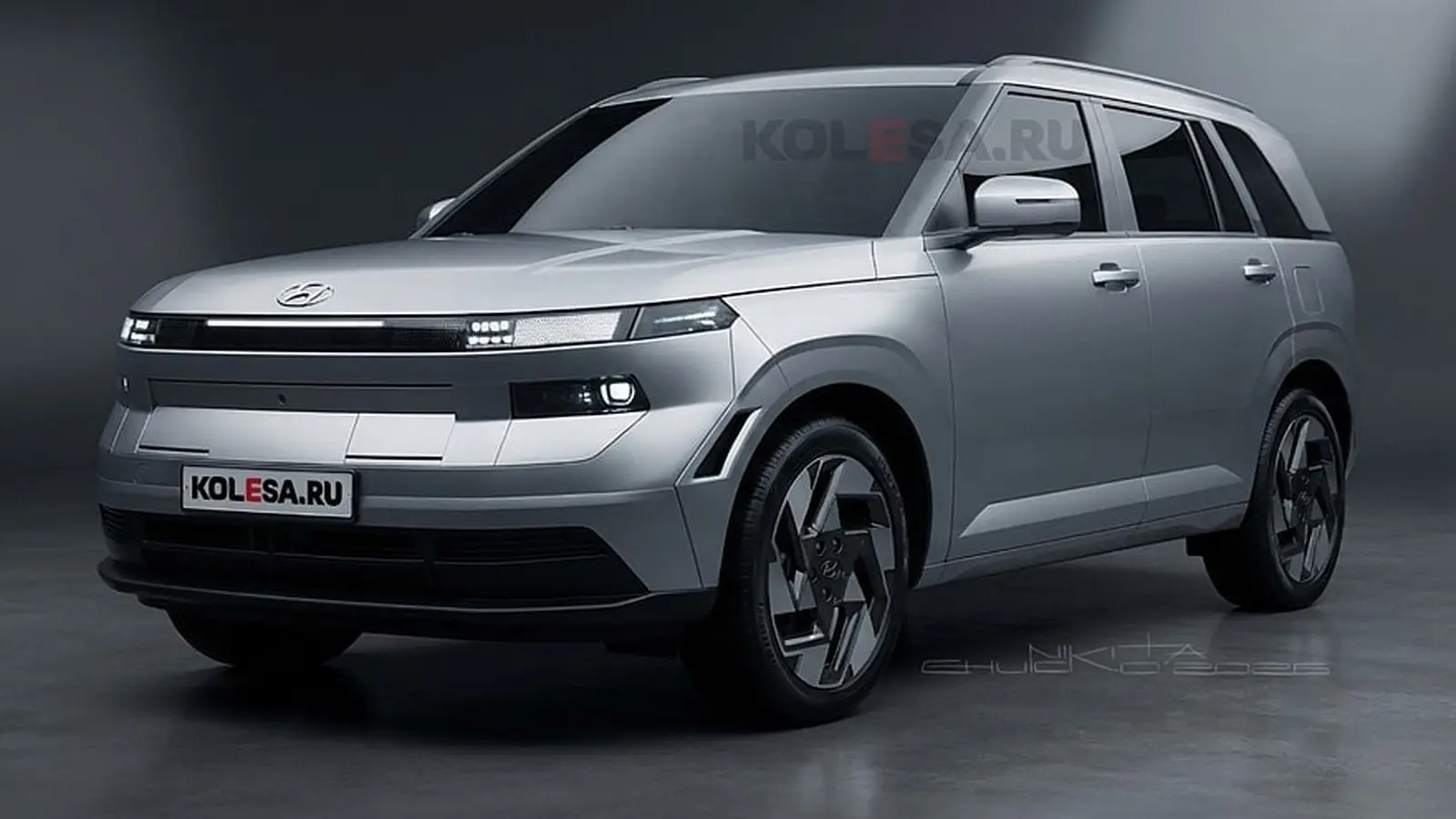
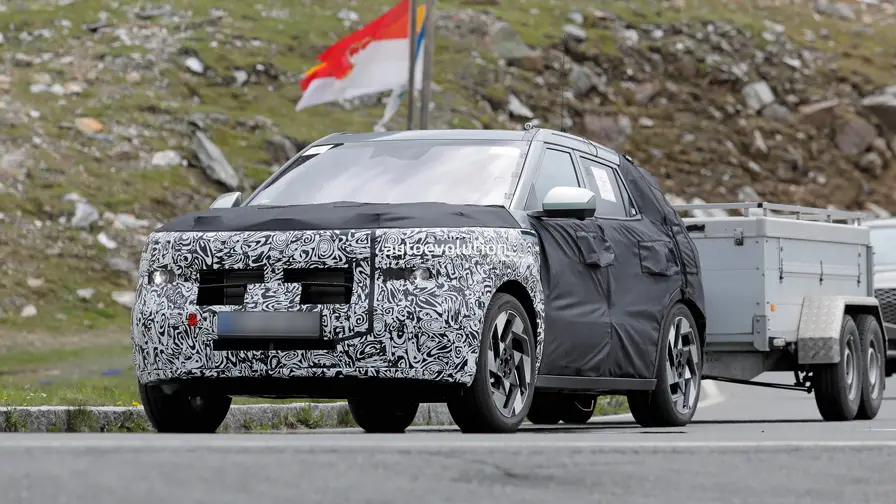
A silver prototype slips out of the night, its edges softened by thick camouflage but its new silhouette impossible to hide. Photographers spotted the test mule months ago, and a single leaked image finally peeled back the curtain: Hyundai's Kona is getting a clean-sheet redesign much sooner than most expected.
Sketches, spies and a surprisingly boxy turn
The current Kona only arrived in its second-generation form in 2023, yet Hyundai appears to have skipped the usual mid-cycle refresh and moved straight to a new generation. Why rush? The simplest answer is brand coherence. Hyundai’s crossover lineup has a fresh face and the Kona needed to fall in line. The result, based on prototypes and a recent social-media leak, is a noticeably more angular small crossover that borrows cues from the larger Tucson and the Crater Concept.
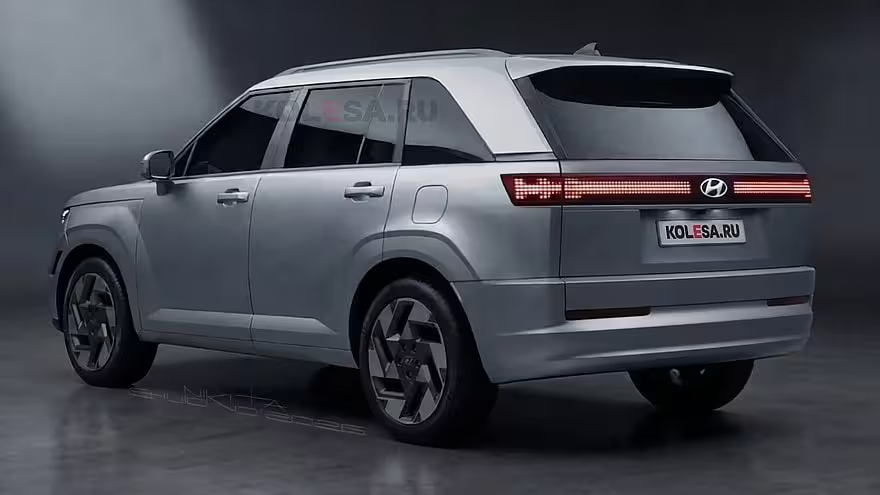
Seen without camouflage in a circulated photo, the front end is sharper, simpler, and more assertive. From certain angles the Kona reads like a compact Tucson—boxy, upright, and modern. The back remains mostly hidden, but the leaked illustration and a realistic rendering by Nikita Chuyko for Kolesa show split taillight graphics interrupted by the brand logo, a detail that suits the car’s geometric stance.

Yes, these are renderings. But they’re rendered from something real: the leaked imagery and multiple spy shots. Wheels, bodylines, and even some trim details come straight from the pre-production tester we saw naked at the end of July. When paint and production trim arrive, it may be close to what Kolesa’s artist imagined.
The new Kona is less about flashy curves and more about purposeful shape—and that could broaden its appeal.
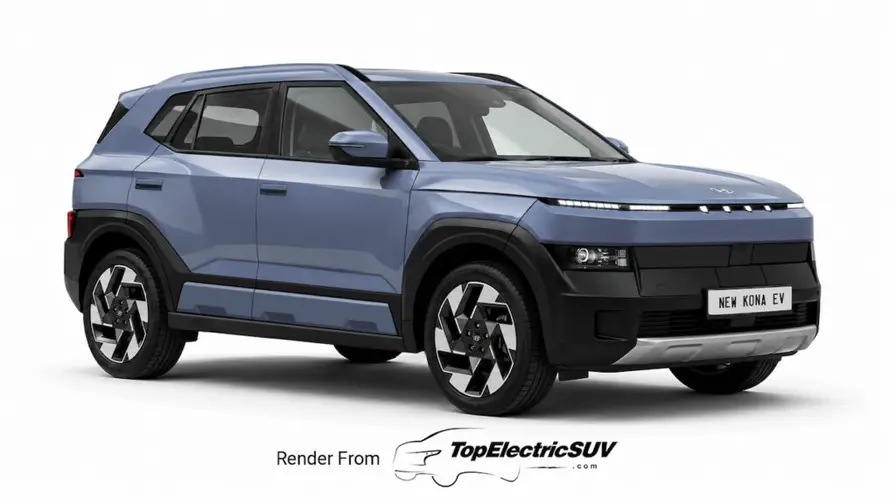
Under the skin, little is changing in philosophy. The outgoing Kona rides on the Hyundai-Kia K3 architecture and shares hardware with a long list of siblings. The current model is produced in South Korea, Indonesia, and the Czech Republic and coexists with gasoline, hybridized, and fully electric drivetrains in some markets. The new Kona looks ready to continue that flexible approach: expect an EV version, but also traditional internal-combustion engines and mild-hybrid options.
Whispers from the supply chain point to a mix of engines at launch: different flavors of a 1.6-liter turbo, a 2.0-liter naturally aspirated unit, and a partially electrified 1.6-liter package rated around 151 horsepower. Those are provisional figures, of course. Hyundai could still reshuffle the lineup before the formal reveal.
Dimensionally, the outgoing Kona is compact—about 4,385 mm long with a 2,660 mm wheelbase and a curb weight near 1,500 kg for gasoline versions. The leaked mule doesn’t suggest a dramatic change in footprint; instead, designers appear to be pulling the roofline and shoulder lines into a squarer, more substantial posture without radically increasing size.
That’s a clever move. Buyers want cabin space and visual presence without the penalties of a larger platform. A boxier shape can feel roomier and more SUV-like without the fuel or weight costs of a bigger car. It’s an argument Hyundai seems to be making with this redesign.
The timeline: when can we expect an official reveal?
No official unveiling date has been announced. Still, the production-readiness of the prototypes and the timing of the leak make a late-2026 reveal—or a 2027 model-year launch—a realistic bet. The outgoing Kona is listed as a 2026 model in the U.S., which lines up with the industry rhythm: when a model wears heavy camouflage on public roads, it usually isn’t far from being shown without it.
So, will the new Kona live up to the hype generated by spy shots and slick renderings? The early signs are promising. Clean design, a versatile powertrain menu, and clearer alignment with Hyundai’s current visual language give the little crossover fresh relevance. The one remaining mystery: how Hyundai will balance the EV and ICE variants in markets that are moving at very different speeds toward electrification.
Either way, the next Kona feels like a strategic reset rather than a simple refresh. A bold step for a model that, until now, played it safe in a crowded segment. Want a compact crossover with more presence? Hyundai appears ready to deliver.

“Cars are evolving faster than ever. I cover electric vehicles, smart mobility, and the future of transportation worldwide.”

Discussion
Leave a Comment
Comments
No comments yet. Be the first.