
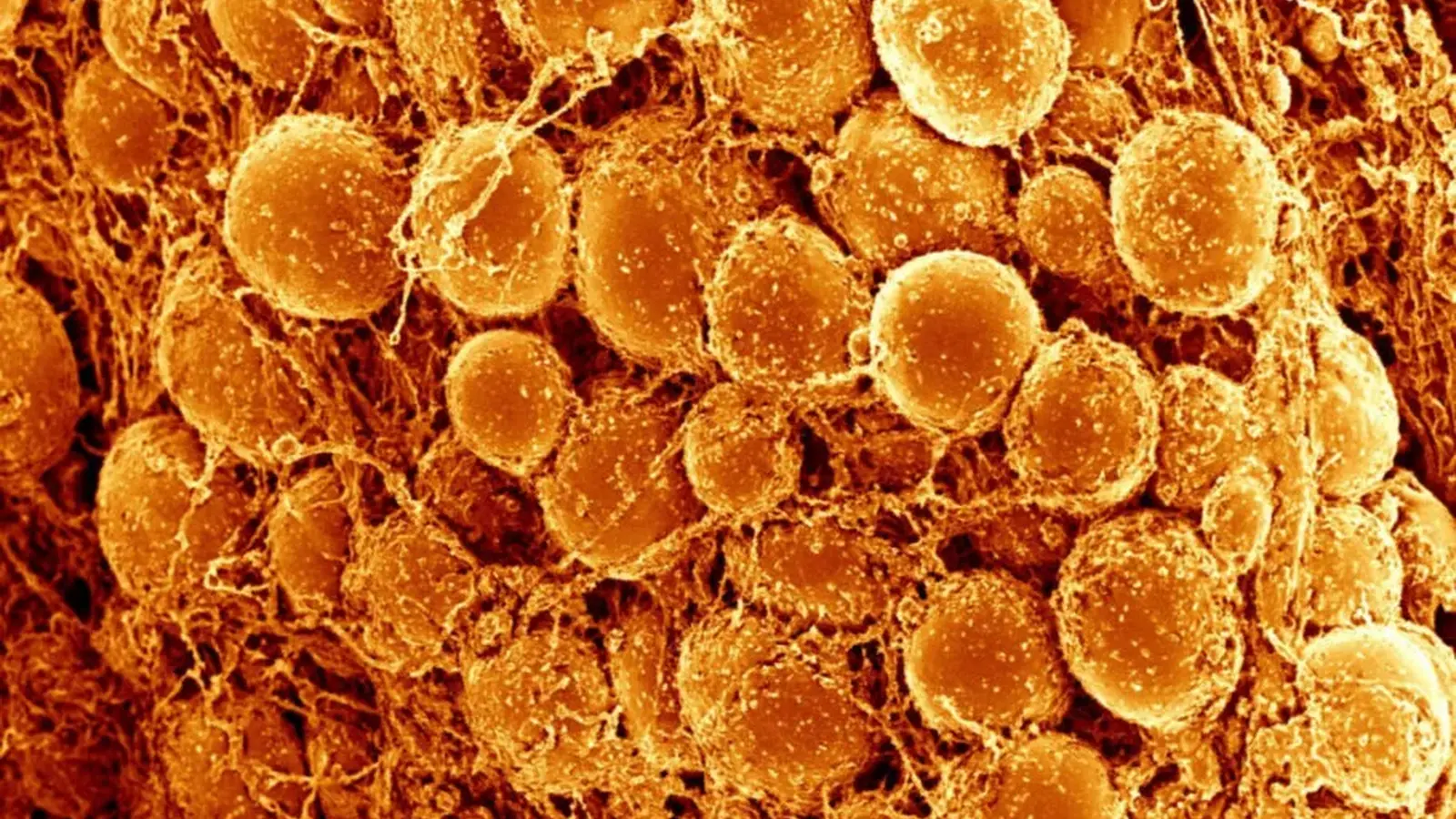
Think of it as an internal furnace, modest but persistent, tucked beneath the collarbones and around the armpits. It does not hoard calories like white fat. Instead, it burns them to make heat. New research suggests that where this tissue is active, chronic disease becomes less common.
Where brown fat lives and why scientists are watching it
Brown adipose tissue, often abbreviated BAT, was long thought to be important only in babies. Adults were assumed to have almost none. That belief has shifted as medical imaging improved. PET-CT scans can show which tissues consume glucose, and when brown fat lights up on those scans, it reveals a metabolic engine that shunts energy toward heat production rather than storage.
Researchers mining a vast archive of clinical images used artificial intelligence to sort and quantify BAT activity. The team reviewed medical records and PET-CT scans from 101,243 adults scanned between 2009 and 2024. AI sped through images that would have been prohibitively slow to evaluate by hand and identified active brown fat in a subset of patients, measuring activity at six anatomical sites including regions around the neck, clavicle, armpit, and spine.
Health signals that jump out of the data
The associations are striking. People with detectable, active brown fat had a 58 percent lower chance of developing type 2 diabetes and a 47 percent lower chance of coronary artery disease compared with matched peers of similar age, sex, body mass, and ambient temperature. They also showed reduced rates of hypertension and had blood tests that trended toward healthier profiles: lower fasting glucose, reduced levels of deleterious lipids, and fewer markers associated with systemic inflammation. Echocardiograms recorded less structural stress on the heart muscle in those same individuals.
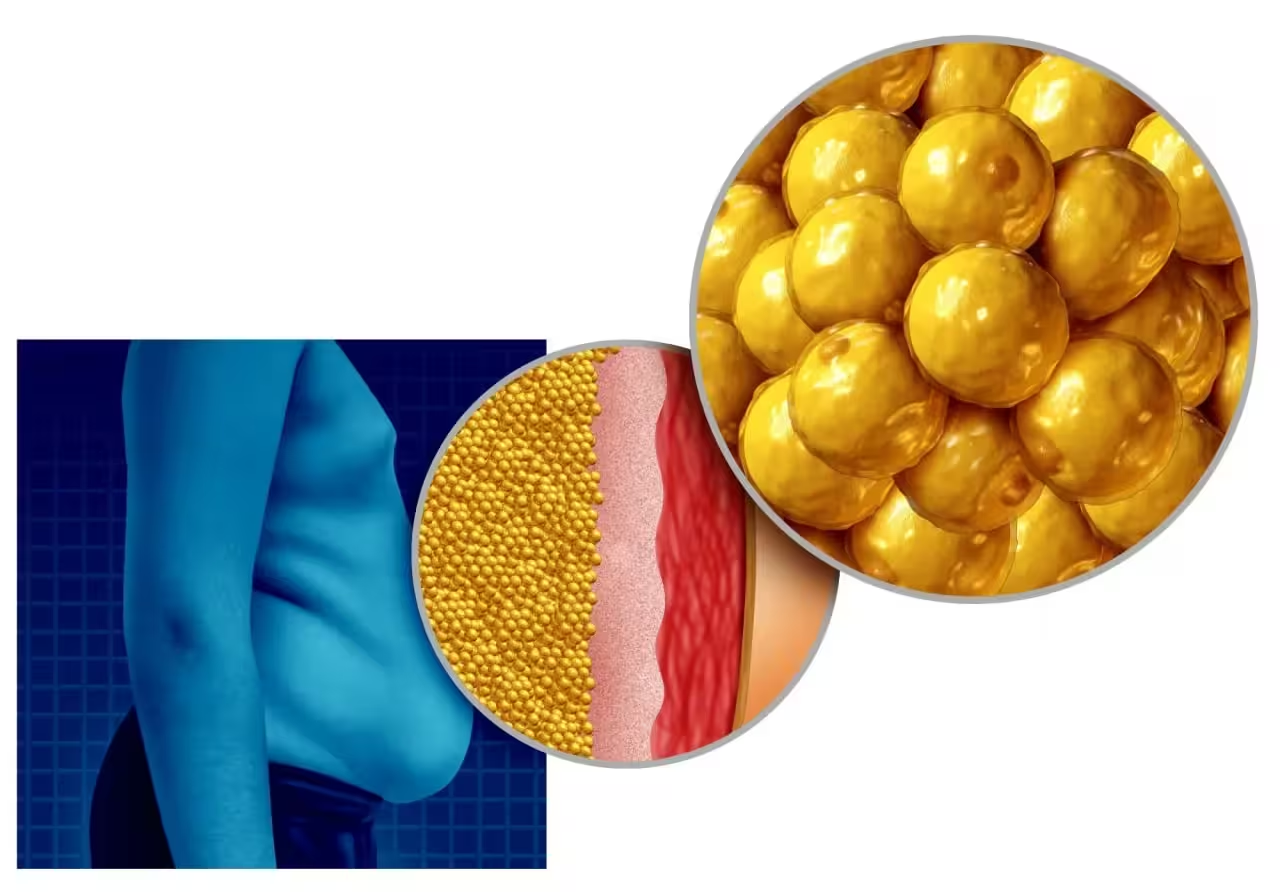

Surprising to some clinicians was a link between BAT and mental health. The study found lower recorded incidences of depressive and anxiety disorders among people with active brown fat. The mechanism is not yet clear, but the pattern emerged consistently across the large dataset.
Not all brown fat appears equal. Activity in the axillary region, the area under the arm, showed the strongest relationship with cardiac health and with lower amounts of harmful abdominal fat. That suggests location and perhaps volume or metabolic intensity of BAT matter for different health outcomes.
Lab work added another piece to the puzzle. In controlled experiments on mice, the common blood-pressure medication losartan appeared to stimulate BAT metabolism and increase overall energy expenditure. That raises the possibility that existing drugs might be repurposed to enhance brown fat activity. But animal biology does not always map cleanly onto humans, and the researchers were cautious: retrospective clinical data and animal findings cannot prove causation.
Why the caution? This study is retrospective and based on patients who underwent imaging for clinical reasons. The patterns are robust but observational. Confounding factors and selection biases can distort apparent protective effects. Randomized controlled trials are required to test whether activating brown fat directly reduces the incidence of metabolic and cardiovascular disease.
Expert Insight
"These results open a compelling line of inquiry," said Dr. Emily Carter, an endocrinology researcher not affiliated with the study. "The scale of the dataset is impressive, and the AI-driven image analysis gives us a sharper lens on BAT in adults. Yet the critical next step is intervention trials to see if we can safely harness brown fat for prevention or therapy."
Conclusion
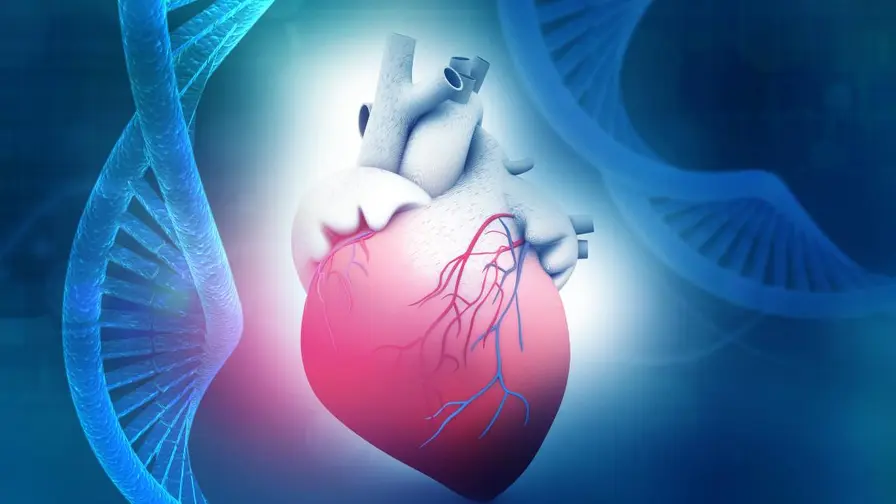
The study positions brown fat as more than a metabolic curiosity. Active BAT correlates with substantially lower rates of diabetes, coronary disease, and several markers of poor metabolic health, and it might also be linked to better mental-health outcomes. Artificial intelligence made the analysis possible by rapidly identifying BAT activity across tens of thousands of scans. The evidence points toward exciting possibilities: enhancing brown fat could become a strategy to reduce the burden of chronic disease. For now, the findings are a strong call to action for prospective clinical trials that can test cause and effect and, if successful, translate this insight into treatments that benefit patients.

“My work centers on sustainability, energy, and environmental science — examining how innovation can lead to a greener future.”

Discussion
Leave a Comment
Comments
No comments yet. Be the first.