

Imagine a veterinary diagnostic lab humming with equipment and a mountain of stool samples arriving from clinics across the continent. Each tube represents a household, a pet, a worry. The latest analysis, the largest of its kind in North America, turns that mountain into a clear signal: Giardia duodenalis is not rare in domestic cats.
Numbers that catch the eye
Researchers led by veterinarian Margaret Wingerd examined more than 157,000 feline fecal samples collected across the United States and Canada. They used PCR, a sensitive molecular test that detects parasite DNA, to search for Giardia. Positive detections appeared in 9,962 samples, an overall detection rate of 6.3 percent. Put another way, about one in every 16 tested cats carried the parasite.
Giardia duodenalis is a single-celled intestinal parasite. Many infected animals and people show no symptoms. When symptoms do occur they can include diarrhea, abdominal cramping, weakness, and in young animals, poor growth. The disease caused by the parasite is called giardiasis.
Among the positive samples, 1,840 (18.5 percent) belonged to assemblages A or B. These genetic groups have known zoonotic potential, which means they can infect humans. Translating those proportions to the full dataset gives a zoonotic-positive rate of roughly 1.2 percent of all samples tested. That is not a mass outbreak, but it is a measurable public health detail worth noticing.
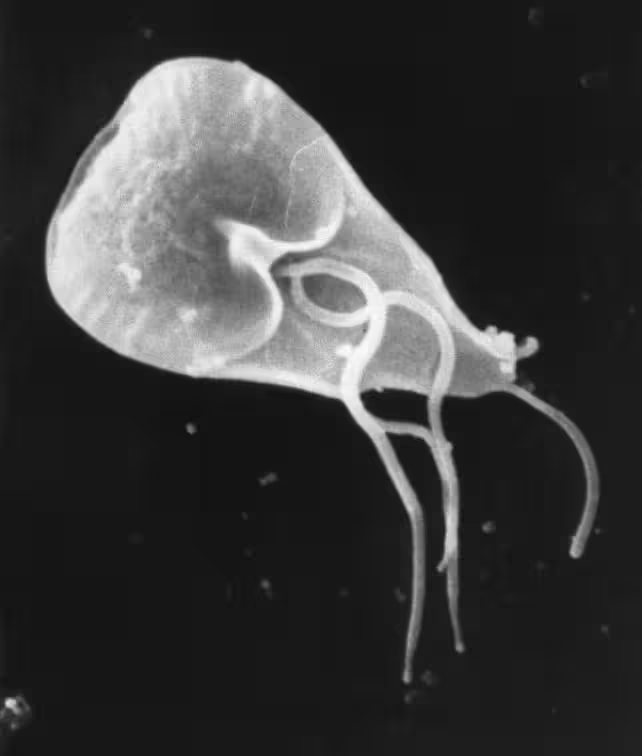
Scanning electron micrograph image of G. duodenalis.
Patterns in who carries the parasite and why it matters
The dataset did not look random; it showed clear patterns. Male cats were slightly more likely to test positive than females. Young cats carried substantially higher rates than older ones. Kittens had a 10.7 percent detection rate compared with only 1.3 percent for cats aged 10 years or more. Kittens also showed the highest proportion of the A or B assemblages, near 20 percent of positives.
Neuter status correlated with infection odds, but not in a simple way. Adult intact cats were generally more likely to test positive than neutered adults, which may reflect more roaming, outdoor access, or differences in social behavior and immune stress. In kittens the pattern flipped, suggesting that age, housing, and caretaking practices interact in complex ways.
Geography and season are part of the story

Geography mattered. Cats in the US Midwest had the highest overall detection rate at 7.8 percent, while the Northeast had the largest share of potentially zoonotic variants among positives, at 21.6 percent. Seasonality showed a clear signal too: testing detected Giardia less often in summer, around 4.6 percent, and more often in winter, around 8.1 percent. The team notes that Giardia cysts survive longer in cool, moist environments, which helps explain the seasonal shift.
The authors emphasize that exposure risk likely depends on housing and behavior. Outdoor access, interactions with other animals, and litterbox hygiene can all influence whether a cat encounters infectious cysts. At the same time, older cats may have acquired partial immunity from previous exposures, lowering detection rates with age.
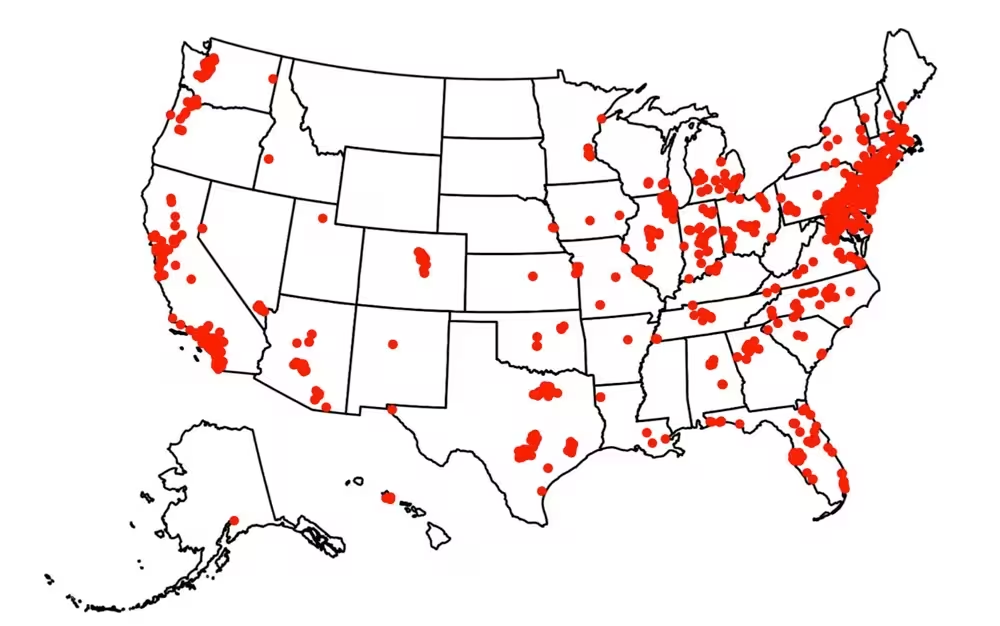
Map of zoonotic potential G. duodenalis detected in cats in the US.
Public health perspective and practical takeaways
What does a 1.2 percent zoonotic-positive rate mean outside the lab? It means that while most cats do not carry a variant likely to infect people, a small but steady portion do. For households with young children, elderly family members, or people with weakened immune systems, that fraction is significant enough to demand attention.
- Routine fecal screening in clinical care can identify infected animals early.
- Good litterbox hygiene and hand washing reduce transmission risk.
- Limiting unsupervised outdoor access where parasites may persist lowers exposure.
The researchers call for targeted screening of cats at higher risk and for households where human vulnerability is present. Their recommendation is pragmatic: testing is a low-cost way to spot infections and guide treatment and hygiene measures.
Expert Insight
"Large datasets like this help veterinarians and public health officials move from guesswork to concrete guidance," says Dr. Samantha Ruiz, a fictional veterinary epidemiologist who has worked on zoonotic surveillance. "The absolute risk to people is low, but not negligible. Identifying which animals carry zoonotic assemblages lets clinics focus testing and education efforts where they will do the most good."
Conclusion

The study does not sound an alarm bell for mass transmission from cats to people. Instead it offers a fine-grained map of where Giardia appears, who is most likely to carry it, and when it is more persistent in the environment. For veterinarians and pet owners the message is clear: thoughtful screening, sensible hygiene, and awareness of risk factors reduce the chances of infection crossing the species barrier. Science has quantified the scale. Now clinical practice and household habits can close the gap between detection and prevention.

“The cosmos has always fascinated me. I write about space missions, astronomy, and the technologies pushing humanity beyond Earth.”

Discussion
Leave a Comment
Comments (2)
Is PCR on random clinic samples really representative? could be bias in who gets tested... curious, not convinced yet
Whoa, 1 in 16 cats? didnt expect that. Kittens especially, yikes. Makes me rethink litterbox habits... kinda worried now