
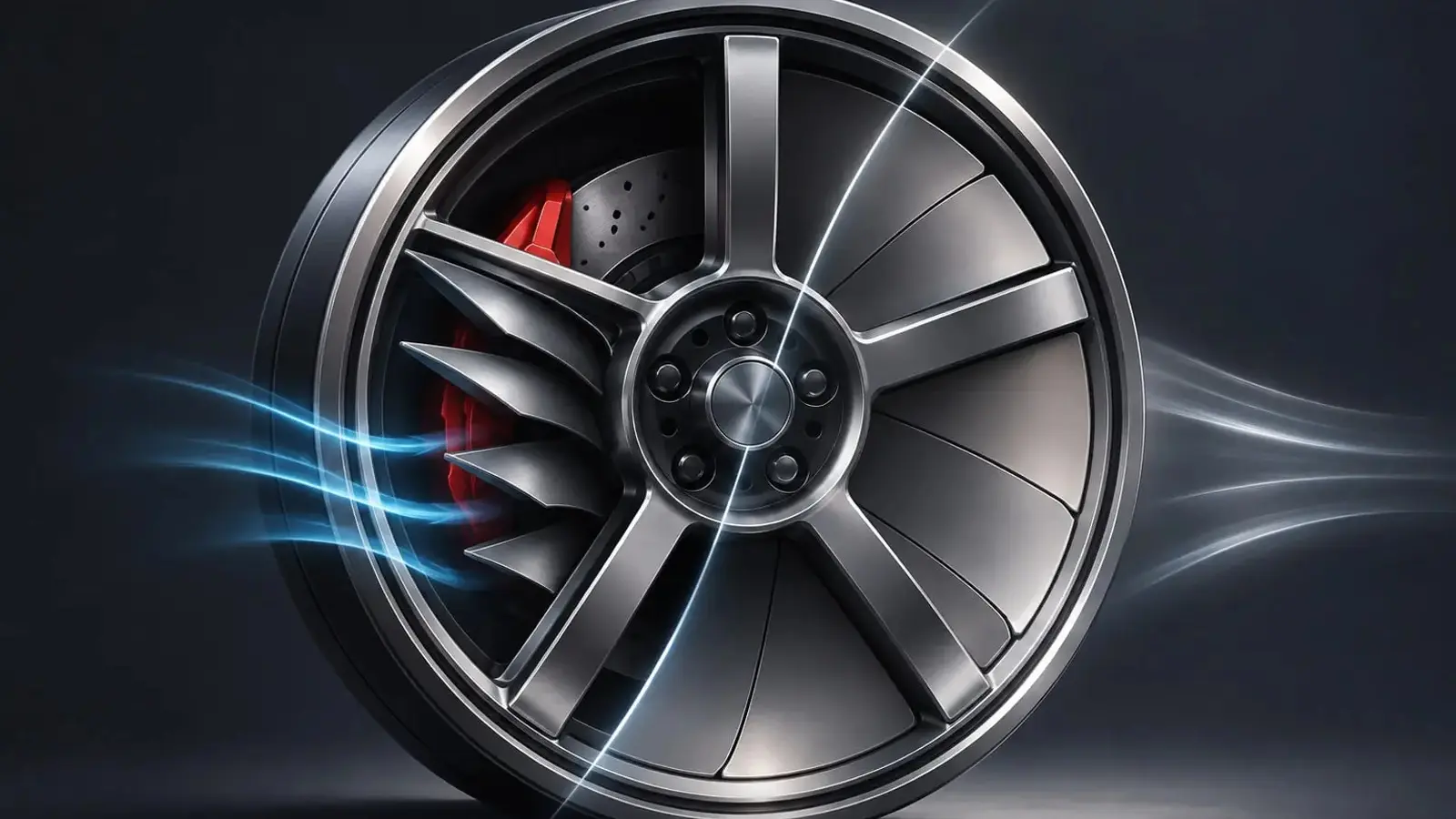
Hyundai and Kia have been granted a United States patent for an adjustable wheel design that uses movable blades to balance brake cooling and aerodynamic drag. The United States Patent and Trademark Office issued patent US 12,779,902 B2 to the two automakers for a wheel assembly that can close the openings between spokes at speed in order to reduce wind resistance while allowing airflow to the brakes when needed.
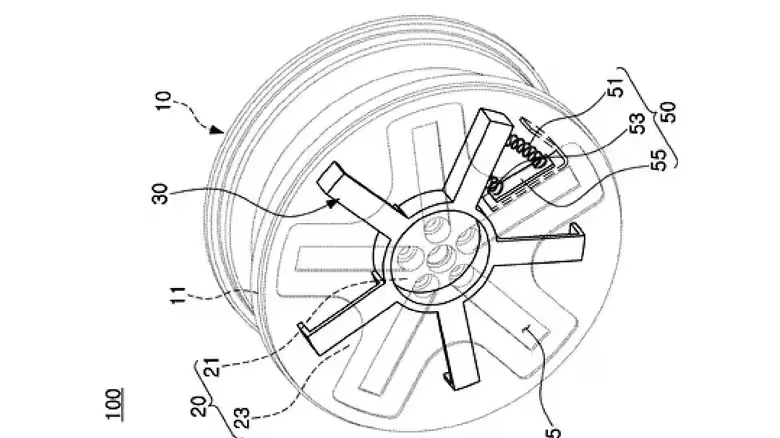
The patent describes a separate mechanism mounted behind the wheel's fixed structural spokes: a rotatable ring carrying multiple blades that can be driven into or out of the wheel vents to change the wheel's effective shape.
How the system works
According to the patent, the wheel keeps its structural spokes stationary; the variable behavior comes from an internal assembly positioned behind those spokes. Rotating the ring in one direction pushes the blades behind the spoke openings and presents a more closed, aerodynamic wheel face. Rotating or returning the ring moves the blades away from the vents so air can reach the brake components for cooling. The blades therefore control the tradeoff between reducing aerodynamic drag and maintaining brake airflow.
Activation methods and implications
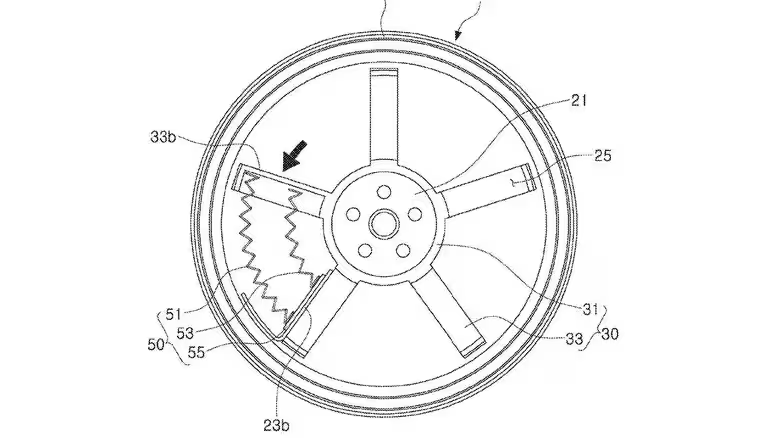
The patent lists several activation options, including an electric motor, a hydraulic system, pneumatic actuators, or actuators made from a shape-memory alloy. The shape-memory alloy option would change length when an electric current is applied to close the blades, with elastic springs returning the blades to the open position when the command is removed. The filing describes the blades as internal to the wheel assembly so that the visible structural spokes remain fixed.
Hyundai's filing includes an estimate that wheels and tires account for roughly 25 percent of total aerodynamic drag at highway speeds. The patent frames control of that drag as relevant to improving overall vehicle efficiency for both battery electric and internal combustion vehicles. As with any patent, the grant documents a technical concept and does not by itself confirm production intent or timing.


“I cover automotive innovation, electric vehicles, and the future of mobility — where technology meets sustainability.”

Discussion
Leave a Comment
Comments
No comments yet. Be the first.