
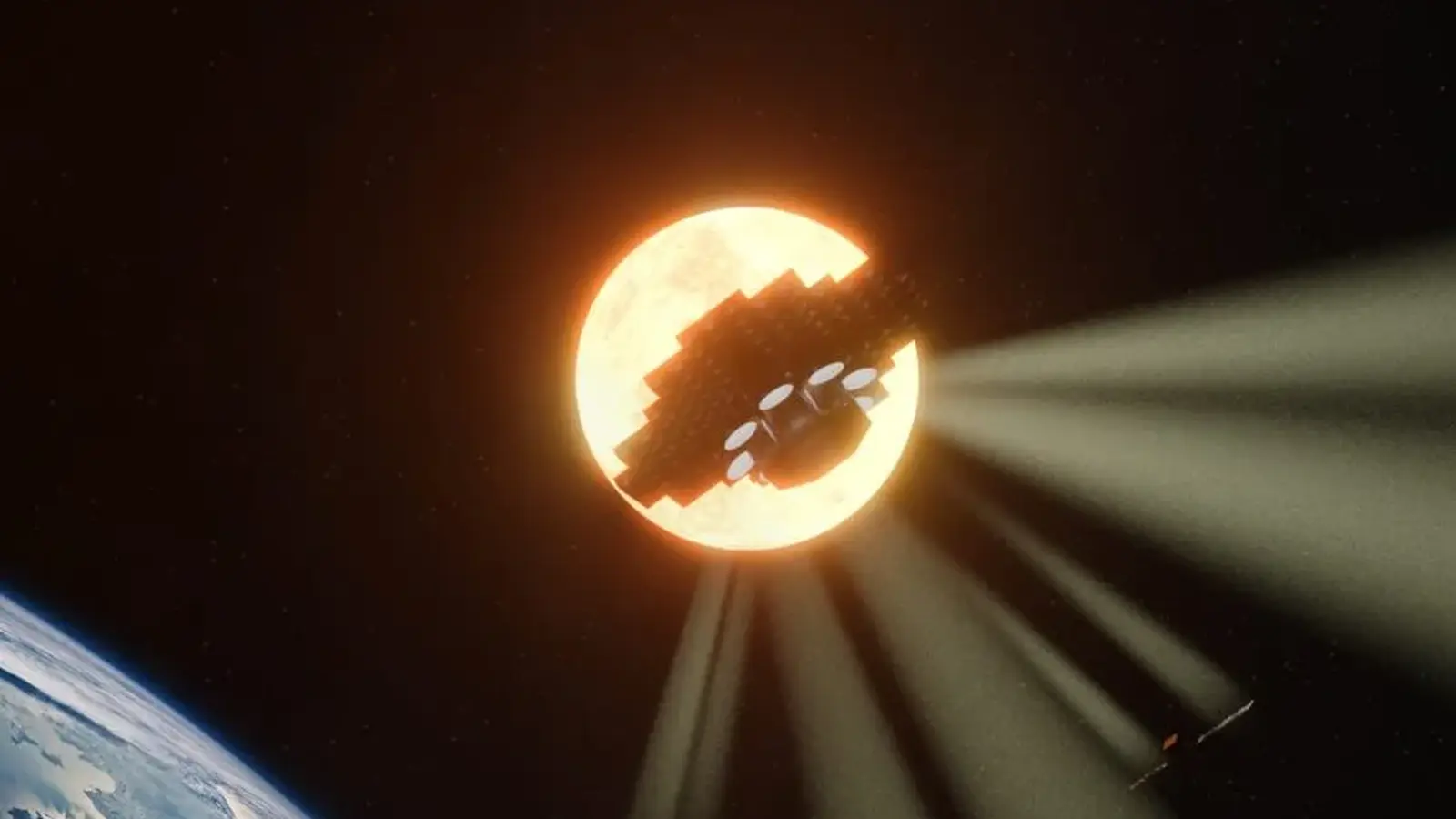
A focused beam of light could be the next kind of spacecraft fuel. In October 2026, Star Catcher Industries plans to launch a test craft named Protostar on SpaceX's Transporter-18 from Vandenberg, aiming to demonstrate what would be the first wireless transfer of power between two independent spacecraft in low Earth orbit.
A tight-beam experiment with real orbital stakes
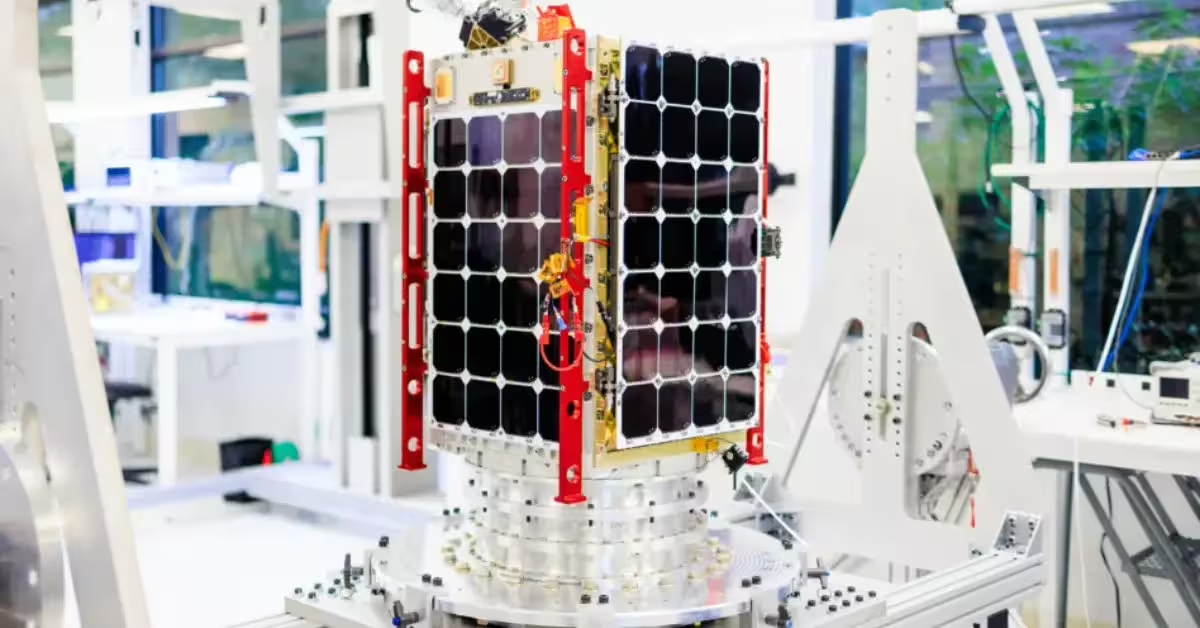
The mission is designed to send optical energy from Protostar to a small CubeSat fitted with commercial solar panels. Protostar will find and track the CubeSat, then concentrate and aim a beam of light at the receiver panels so engineers can measure how much energy actually arrives. Wired reported the upcoming test as a critical step for Star Catcher, which says the data will inform the development of a network to shuttle energy between satellites.
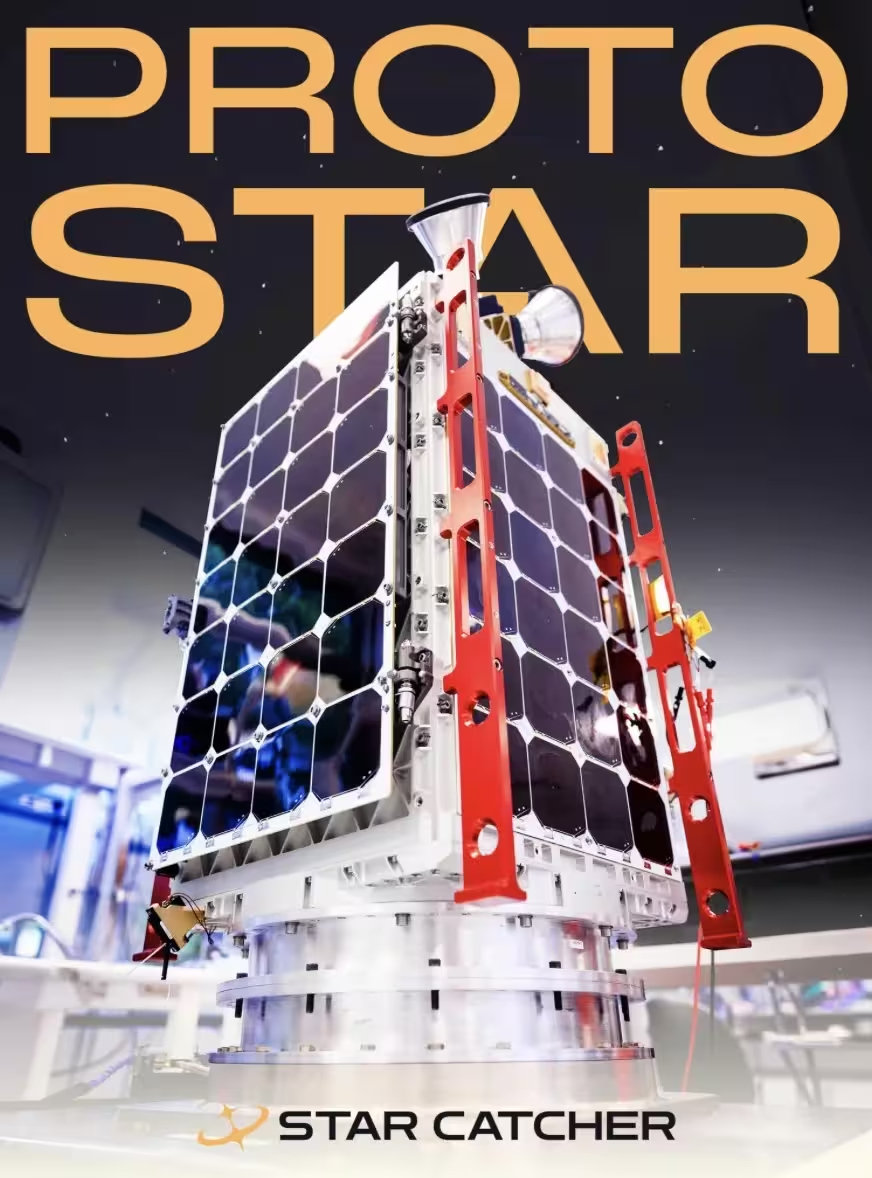
Star Catcher has not sprung this idea from nowhere. The company staged ground demonstrations at NASA's Kennedy Space Center, where it delivered more than one kilowatt of optical power to commercial solar panels, a quantity the team likened to powering a microwave oven. In late 2025, a mission named Sextant Alpha tested the software for target identification and tracking in orbit, paving the way for Protostar's in-space experiment.
How the system is supposed to work
At the heart of Star Catcher's approach are orbiting collectors called Power Nodes. These nodes use arrays of lenses to harvest sunlight and concentrate it, then convert and repackage that energy into narrow optical beams. The company says those beams can produce irradiance comparable to, or many times greater than, diffuse sunlight at the receiver when properly focused. The energy is sent as a laser-like beam toward a receiving satellite, which converts the incoming light back into electrical power via its solar arrays.
Key technical pieces
- Precision pointing and tracking to keep the beam on a small, fast-moving target.
- Efficient optical conversion both at the transmitter and the receiver.
- Thermal management for equipment exposed to intense, concentrated light.
- Long-term durability of optics and electronics in vacuum and radiation environments.
"The mission will give us operational data we cannot get from ground tests," said Michael Snyder, co-founder and chief technology officer of Star Catcher. "Seeing how the system behaves when both platforms are in motion is essential for designing a practical power-beaming network."
What could go right, and what could hold it back
Success would supply the first in-orbit measurements for scaling up a commercial service that moves energy where it is needed without physical contact. Imagine satellites that receive bursts of power during critical operations, or a constellation of Power Nodes that replenish other spacecraft, keeping instruments alive longer and enabling more ambitious missions.
But the road to routine wireless power in space is not short. Conversion losses are still significant when photons are converted to electricity and back. Tracking errors accumulate when both sender and receiver orbit at thousands of meters per second. Heat buildup and component degradation under concentrated light present engineering and materials challenges. And any commercial rollout would need to satisfy safety, regulatory, and collision-avoidance rules.
Even so, the Protostar flight could change how mission planners think about energy logistics in space. Small, targeted demonstrations often determine whether a technology is a curiosity or a platform for widespread change. If Protostar delivers useful data, companies and agencies will be able to make informed decisions about power-beaming architectures, standards, and investment priorities.
Outlook
Protostar will not supply a global power grid in orbit. It will, however, test whether narrow-beam optical transfer can be controlled and measured at operational distances and relative velocities. For now, the experiment is a focused step: from lab demonstrations and short-range tests toward the day when satellites can share energy as routinely as they exchange data. That future is possible, but only if Protostar and the teams that built it succeed in hitting a very small target with a very bright light.

“My work centers on sustainability, energy, and environmental science — examining how innovation can lead to a greener future.”

Discussion
Leave a Comment
Comments
No comments yet. Be the first.