

Imagine a tumor vanishing from a scan
For patients and clinicians who long ago stopped expecting quick wins against pancreatic cancer, a single line on a radiologist's report can feel seismic. In a recent clinical trial of a targeted oral drug called Daraxonrasib, researchers reported that tumor growth halted in nine out of ten participants, and in a small but notable fraction the malignancy became undetectable on CT images.
The study enrolled 61 people with advanced pancreatic cancer that had already spread beyond the pancreas. After treatment, about 60 percent experienced measurable tumor shrinkage or disappearance, roughly 8 percent had tumors that could no longer be seen on scans, and 76.6 percent were still alive one year after starting therapy. Those numbers stand in sharp contrast to the typical one-year survival of around 40 to 45 percent for patients receiving only standard chemotherapy.
How Daraxonrasib stops tumor growth
Daraxonrasib belongs to a class of medicines known as KRAS inhibitors. KRAS is a protein that, when mutated, drives relentless cell division in many cancers including most pancreatic tumors. The drug locks onto specific mutant forms of KRAS and suppresses the signaling that fuels cancer growth.
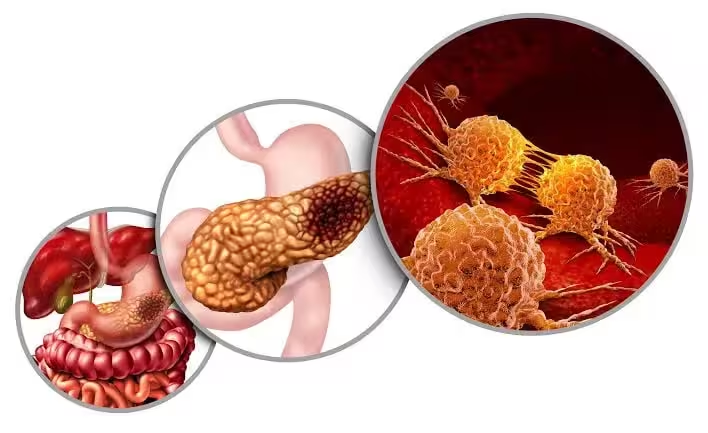
Put simply: it interrupts the engine that makes tumor cells multiply. Because similar KRAS mutations appear in several other cancer types, researchers are hopeful that this therapeutic approach could reach beyond pancreatic disease.
Why this matters clinically
Pancreatic cancer is notoriously aggressive. Many patients receive a diagnosis only after the tumor has spread, leaving limited treatment options and short median survival times. In this trial the median follow-up was 18 months. During that window, some patients showed sustained responses with no signs of recurrence. While the investigators caution that longer studies are needed to confirm how durable these remissions are, the current data suggest a meaningful extension of disease control for a condition that has seen few advances.
Dr. Wongki Park, a gastroenterologist at Memorial Sloan Kettering Cancer Center, who presented the findings at the EORTC-NCI-AACR symposium in Barcelona, said he had never seen such a number of tumors disappear in patients whose cancer had already metastasized. His comments underscored both the clinical surprise and the cautious optimism that accompanied the results.
What the numbers really say
Clinical trials translate hope into probabilities. In this study, growth was arrested in roughly 90 percent of patients. More than 60 percent experienced tumor reduction. One in 12 patients had disease that became radiologically undetectable. Those are headline figures, but interpretation requires care. The trial was relatively small and early phase. The duration of benefit beyond the follow-up period is unknown. Side effect profiles, optimal combination therapies, and which patients benefit most still need clarification.
Health agencies will demand larger, randomized studies before recommending Daraxonrasib for routine practice. In the United Kingdom Cancer Research UK executive director Michelle Mitchell framed the news as the most significant step forward in decades for pancreatic cancer treatment, while emphasizing the need for further research and regulatory assessment before any widespread adoption in health systems such as the NHS.

Expert Insight
Dr. Elaine Turner, a clinical oncologist and translational researcher, commented:
"Targeting KRAS has been a long-standing goal in oncology because these mutations are so central to many cancers. What makes this study important is not only the response rate but the depth of response in a disease that rarely yields such results. We must now test durability, combinations with chemotherapy or immunotherapy, and how to identify biomarkers that predict which patients will derive the most benefit."
Her perspective highlights the typical path from an encouraging phase 1 or 2 signal to broader, practice-changing evidence: replicate, refine, and validate.
Conclusion
Daraxonrasib represents a promising targeted strategy against a cancer that has resisted progress for years. Early results show tumor control and survival outcomes that exceed historical expectations, but they do not yet equate to a cure. The next steps are larger trials, longer follow-up, and regulatory review. If those efforts confirm the initial findings, this class of KRAS inhibitors could reframe treatment for pancreatic cancer and possibly other tumors driven by the same mutations.
For patients, that potential translates into more time and, possibly, a new pathway toward durable disease control. For researchers and clinicians, it provides a renewed, evidence-based direction to pursue.

“My work centers on sustainability, energy, and environmental science — examining how innovation can lead to a greener future.”

Discussion
Leave a Comment
Comments
No comments yet. Be the first.