
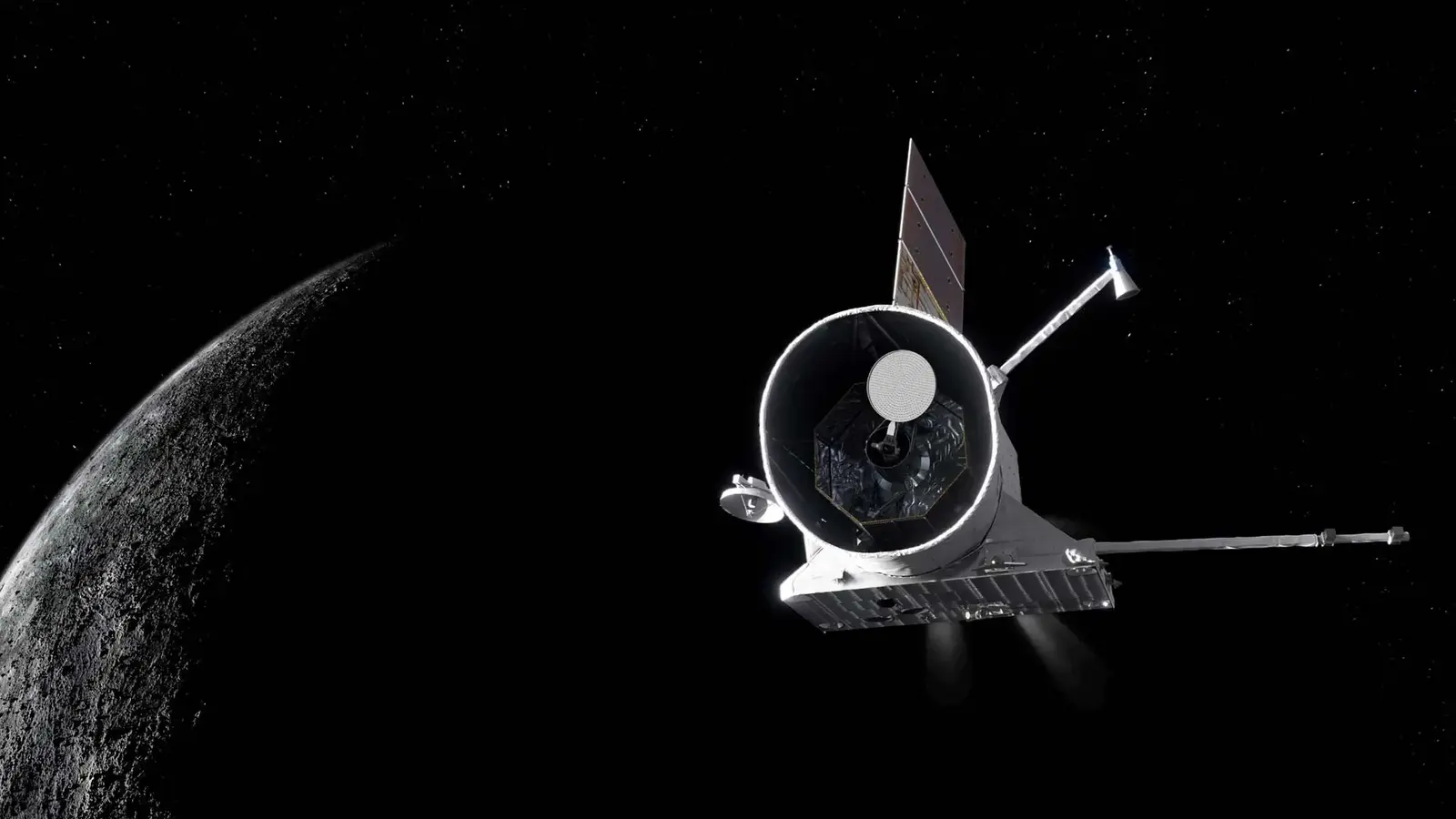
The sky over mission control did not erupt in cheers. The mood was quieter, more focused: engineers watching dots on screens, fingers tracing telemetry, a slow collective exhale when the data confirmed what months of planning aimed for. After more than eight years and a gauntlet of gravity assists, the BepiColombo spacecraft has achieved Mercury orbit, becoming only the second mission in history to circle the Solar System's innermost planet.
Why getting into Mercury orbit is so fiendish
Mercury sits deep in the Sun's gravity well. That simple fact turns any approach into a physics problem with painful tradeoffs. Spacecraft arriving from Earth pick up enormous speed as the Sun's pull accelerates them. To be captured by Mercury's comparatively tiny gravity the probe must shed most of that kinetic energy. No single engine burn can do this efficiently. Instead, mission designers rely on a choreography of flybys and long-duration electric propulsion to bleed off energy gradually.
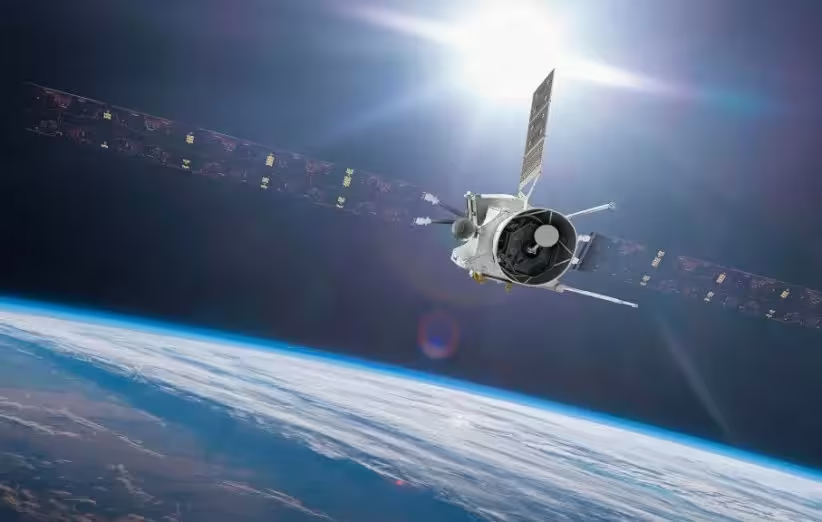
BepiColombo's route reads like a travelogue: one Earth flyby, two Venus flybys, and six careful passes past Mercury itself before the final insertion. Launched in October 2018 aboard an Ariane 5 rocket from Kourou in French Guiana, the mission combined conventional chemical propulsion with high-efficiency ion drives on the Mercury Transfer Module, or MTM. When a problem with the spacecraft's solar arrays reduced available power to the electric thrusters, engineers recalculated and extended the cruise by roughly one year. Flexible planning kept the mission alive.
What happened during the orbit insertion
The critical maneuver lasted 37 minutes. The main engines fired as scheduled at 13:24 Eastern Time, steering the combined stack into a capture trajectory around Mercury. A few hours later mission control confirmed the spacecraft was now orbiting the planet, but not yet in its final configuration. During the burn, a software anomaly caused the thrusters to operate for a shorter interval than planned. The European Space Agency reported the spacecraft entered a safe configuration and that ESOC teams are analyzing telemetry to determine the root cause.
At this stage the spacecraft remains connected: the two science orbiters sit attached to the MTM. Separation is planned roughly two weeks after capture, with the Japanese Mercury Magnetospheric Orbiter, known as Mio or MMO, heading to a highly elliptical polar orbit that will sweep over the planet's poles. The European Mercury Planetary Orbiter, MPO, will assume a less eccentric polar orbit. Those final adjustments will take time; the mission team expects the spacecraft to complete its commissioning and arrive in their mission orbits over the coming months, with scientific operations beginning in earnest in 2027.
Two orbiters, two perspectives
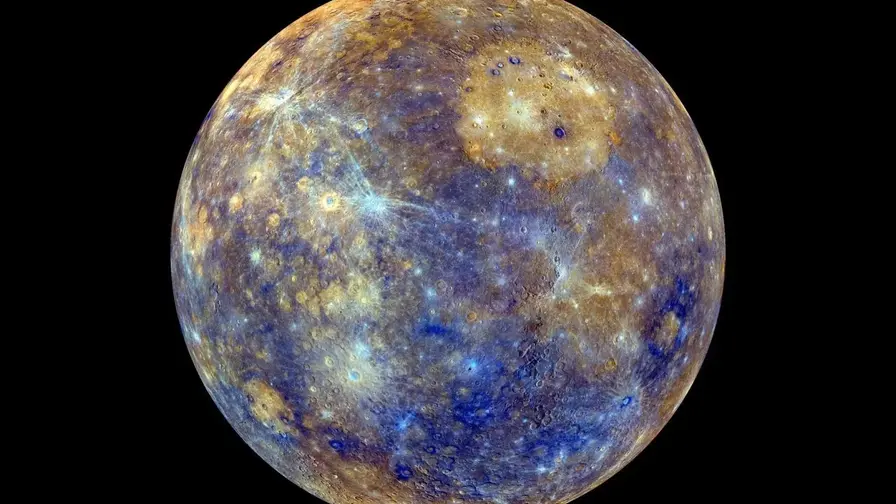
BepiColombo is not a single spacecraft but a twinset. MPO will study geology, surface composition, and Mercury's internal structure, while Mio will probe the planet's magnetosphere and its interaction with the solar wind. Working together, the orbiters will deliver complementary datasets that ground-based telescopes and past missions could not provide. The only previous mission to orbit Mercury, NASA's MESSENGER, mapped the planet from March 2011 to April 2015 and transformed our understanding of Mercury's chemistry and magnetic field. BepiColombo builds on that legacy with modern instruments and multi-point measurements.
Scientific aims and why they matter
Scientists hope BepiColombo will address some persistent puzzles. Why does Mercury have a magnetic field despite its slow rotation and small size? What is the structure and state of its enormous iron-rich core? How has the planet's surface recorded a history of impacts and solar weathering unlike that of other rocky worlds? And what can Mercury tell us about planet formation close to a star, a scenario increasingly relevant as exoplanet surveys reveal many close-in rocky worlds?
Answers will come from measurements of the magnetic environment, gravity field, surface mineralogy, and exospheric particles. By combining data from MPO and Mio, researchers can separate internal processes from external drivers like the solar wind, yielding a fuller picture of Mercury as a dynamic system.
Expert Insight
"This mission is a study in patient engineering," said a project operations official at ESA. "Getting a spacecraft to survive and operate so close to the Sun requires careful power management, thermal design, and precise navigation. We are pleased with the capture, and our teams are focused on diagnosing the anomaly so we can move to routine science operations."
Dr. Maria Delgado, a fictional planetary scientist used here to illustrate the mission's scientific promise, added: "Dual orbiters are the real strength of BepiColombo. With simultaneous measurements of magnetic fields and surface composition, we can start to untangle how Mercury's interior and space environment influence each other. That will reshape models of how rocky planets evolve near their stars."
Conclusion
BepiColombo's arrival at Mercury is a major milestone for European and Japanese planetary exploration. The path here was neither short nor simple: years of trajectory planning, a mix of propulsion technologies, and rapid problem-solving when hardware behaved differently than expected. As the orbiters separate and settle into their science orbits, the mission will begin a detailed investigation of Mercury's structure, magnetosphere, and history. For scientists curious about how planets form and change in extreme conditions close to a star, the data to come will be invaluable.

“The cosmos has always fascinated me. I write about space missions, astronomy, and the technologies pushing humanity beyond Earth.”

Discussion
Leave a Comment
Comments (2)
Is a single burn really impossible? sounds legit but I wanna see the delta-v numbers or how the flybys shaved energy, anyone got links? gotta learn fast
wow, didn’t expect the control room to be that calm, kinda poetic. 8 years, gravity boogaloo, and a software hiccup? hope its minor, fingers crossed