

Breast cancer risk increases with age, with most cases diagnosed in women over 50. As the body ages, changes in immune function, hormone levels, and chronic inflammation can influence how breast cancer develops and progresses.
It began as an accidental advantage. During the COVID-19 slowdown, a colony of laboratory mice was left to age beyond the usual window for experiments. What scientists found next shifted how they think about cancer and the body that hosts it.
When the host changes, cancer behaves differently
In experiments from Georgetown University’s Lombardi Comprehensive Cancer Center, older mice developed far more lung metastases from breast tumors than their younger counterparts, even when primary tumors grew at similar rates. The common factor? Inflammation tied to a cell-surface receptor called RAGE, short for Receptor for Advanced Glycation End-products.
RAGE acts like an amplifier. Certain ligands — notably proteins in the S100 family and HMGB1 — increase with age and bind to RAGE, setting off inflammatory signaling that alters local tissue environments. Tumor cells exploit that inflammation, invading surrounding tissue more successfully and escaping into the bloodstream to colonize distant organs such as the lung.
Genetic deletion of the gene that encodes RAGE, known as AGER, almost erased the age-related rise in metastasis in the mouse models used by the team. That finding suggests the receptor is not merely associated with worse outcomes in older hosts but is actually a central driver of the process in these preclinical models.

Why this matters for research and patients
Most laboratory cancer research uses young adult mice. That choice makes sense for cost and logistics, but it can blind investigators to how aging—the immune changes, the chronic low-grade inflammation, the altered stromal tissue—reshapes cancer biology. These experiments show aging itself can make tumors more aggressive by altering the host environment.
To explore clinical relevance, the researchers examined human breast cancer datasets involving over 1,000 patients. Tumors with higher AGER expression and elevated inflammatory-gene activity correlated with poorer outcomes. Correlation does not prove causation, but the parallel between patient data and mouse experiments strengthens the case that RAGE-related inflammation matters in people as well as in mice.
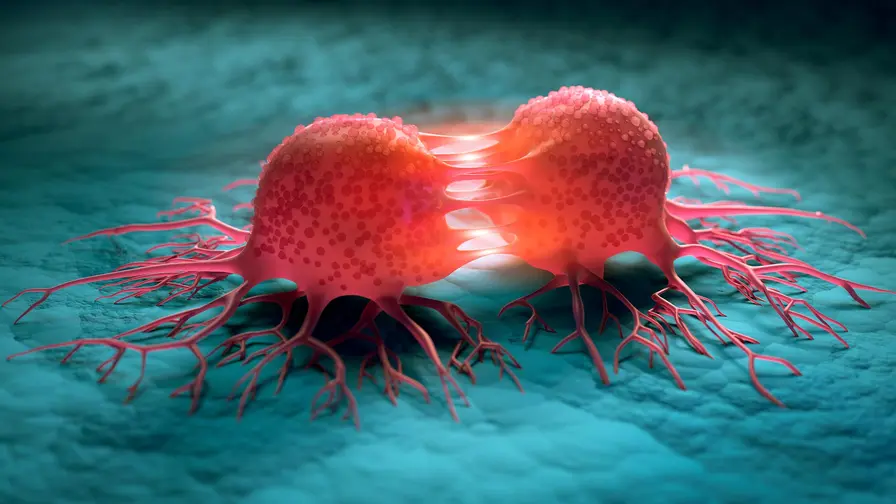
The study focused on models of triple-negative breast cancer, a particularly aggressive subtype with limited targeted treatments. If aging-related inflammation amplifies metastatic risk in this subtype, it could help explain why older patients sometimes fare worse and why standard preclinical models may underrepresent the true biology of disease in older adults.
Therapeutic possibilities and current trials
RAGE is already on the radar as a therapeutic target in age-related disease. The small-molecule inhibitor TTP488, also known as azeliragon, has been tested for safety in humans previously. Georgetown’s earlier preclinical work showed this inhibitor reduced metastatic behavior in animal studies. In the latest experiments, serum from aged mice made tumor cells more invasive in culture, but exposure to TTP488 blunted that effect.
Those promising signs have led to a clinical study at Georgetown Lombardi testing TTP488 in breast cancer patients receiving chemotherapy. Investigators are focusing on safety and cognitive outcomes as primary measures while also watching for signals that the drug might limit spread. The drug’s safety profile in prior studies is reassuring, but its ability to prevent metastasis in patients remains unproven.
Practical implications are immediate and clear. Targeting RAGE or its ligands could become part of a strategy to reduce metastasis risk, particularly in older patients. But clinical translation will require careful trials, patient selection, and biomarkers that show who might benefit most.
Expert Insight
"This work highlights a crucial shift in perspective," says Dr. Elena Morales, an oncologist and researcher unaffiliated with the study. "Cancer does not arise in a vacuum. The aging host rewires immune and inflammatory networks that can either restrain or accelerate tumor spread. Targeting host factors such as RAGE opens a new front in metastasis prevention, but we must move cautiously. Animal models, while informative, only approximate human aging."
Her comment underlines both the excitement and the caution that accompanies host-directed therapies: promising mechanistic biology, yet real-world translation will be incremental.
Conclusion

The Georgetown findings reshape a simple narrative. Aging is more than a risk multiplier for cancer incidence. It actively remodels tissues and immune responses in ways that can favor metastasis. RAGE sits at the intersection of aging, inflammation, and tumor spread, and it is now a compelling candidate for therapeutic intervention. Whether blocking RAGE will translate into fewer metastatic events in patients remains an open and testable question. In the meantime, the study is a strong reminder that models must reflect the biology of the people we aim to treat, including their age.

“The cosmos has always fascinated me. I write about space missions, astronomy, and the technologies pushing humanity beyond Earth.”

Discussion
Leave a Comment
Comments
No comments yet. Be the first.