
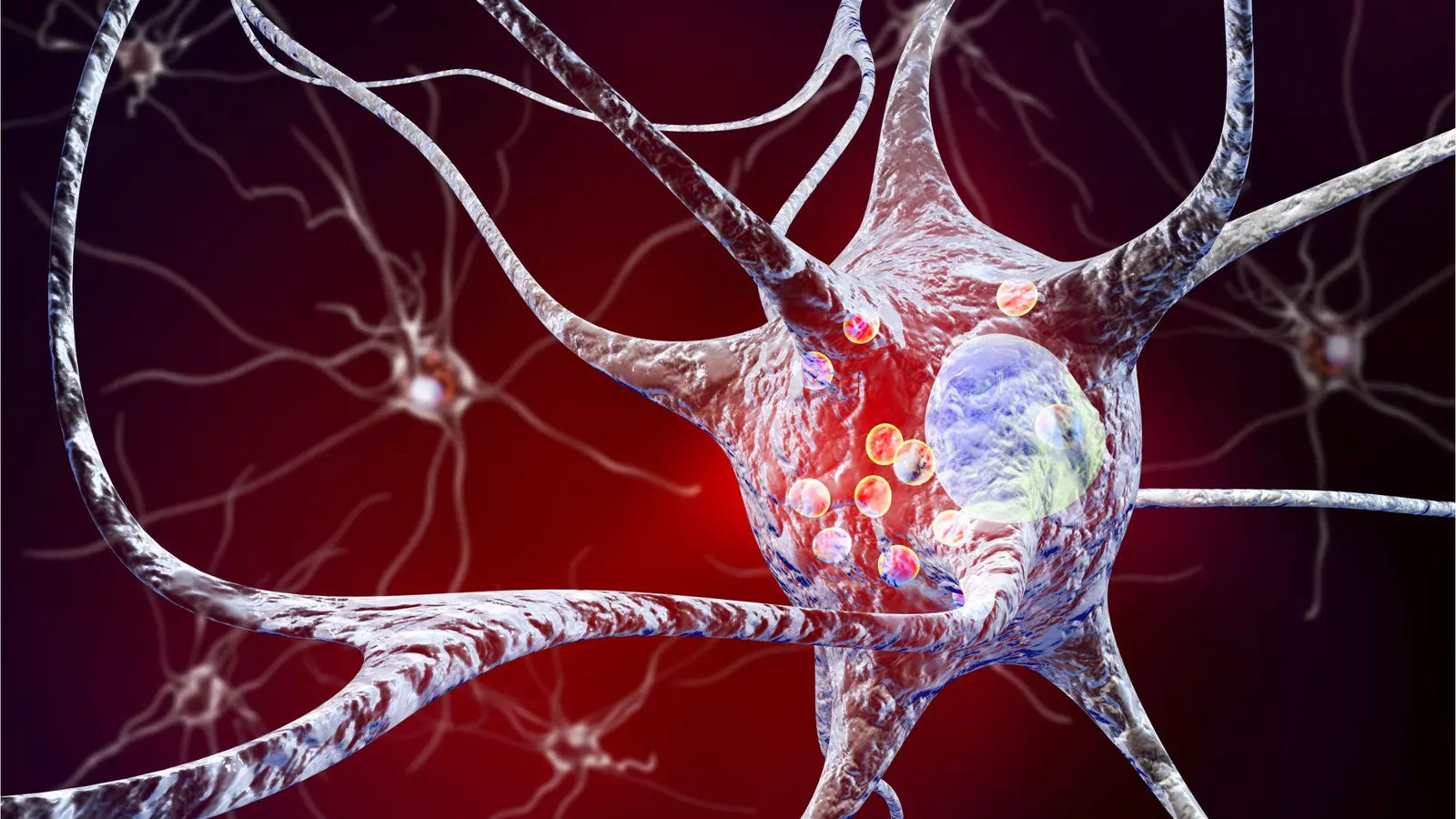
In a quiet lab at the Federal University of São Paulo, researchers watched a small peptide change how brain cells responded to injury. The result was not a miracle cure, but a clear signal: inflammation may be a target worth following if we want to slow Parkinson’s disease.
Rethinking Parkinson’s: beyond dopamine replacement
Parkinson’s disease is usually framed around one chemical: dopamine. Loss of dopamine-producing neurons explains tremors, stiffness and the slow, halting movements that mark the disorder. Treatments often focus on replacing what is lost, most commonly with levodopa, which the body converts into dopamine. That approach works well at first. Over years, however, its benefits can fade and complications can arise.
What if the damage begins before symptoms show? What if the immune environment of the brain, the ongoing inflammation, drives neurons toward death long before motor problems appear? A team at UNIFESP has been pursuing that question by testing a naturally derived fragment of a human protein called Annexin A1. The fragment, known as Ac2-26, has anti-inflammatory properties in other contexts. Could it slow neurodegeneration?
How the experiment worked
To model Parkinson’s disease, the scientists used a well-established method: they injected a neurotoxic compound into the brains of mice to produce selective loss of dopaminergic neurons and behavioral changes similar to the human condition. At the same time, they administered Ac2-26 systemically via intraperitoneal injection. Then they watched for two things: whether neurons survived, and whether the animals showed improved movement.
What they measured
- Neuronal survival in regions that control movement, assessed with immunofluorescence and histology.
- Motor performance using standard behavioral tests.
- Markers of inflammation in brain tissue to link cellular protection with an anti-inflammatory effect.
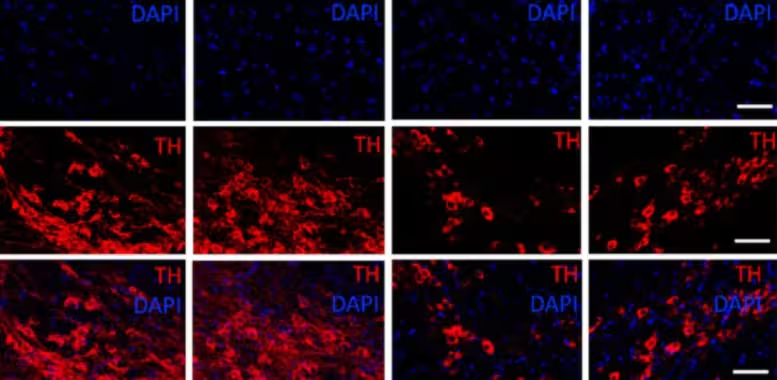
Immunofluorescence analysis shows dopaminergic neurons (in red) preserved after treatment with the Ac2-26 peptide
The results were encouraging but nuanced. Male mice showed clearer neuronal loss after the toxic insult, and in those males the peptide produced a measurable protective effect: more surviving dopamine neurons and better performance on motor tasks compared with untreated animals. Female mice displayed a surprising resilience early on, performing better initially even when Annexin A1 was absent. That advantage diminished over time, and the illness also disrupted female reproductive cycles, hinting at endocrine consequences of neurodegeneration.
Why inflammation matters

Inflammation in the brain is not the same as the swelling you feel under the skin. It is a complex interplay among microglia, astrocytes and signaling molecules that can either help clear debris or, if unchecked, harm neurons. Annexin A1 helps to switch inflammatory responses toward resolution. The peptide fragment Ac2-26 mimics that regulatory role, tamping down harmful signals. By doing so, the peptide appears to reduce the cascade that leads to cell death.
The study does not claim a cure. It offers a different strategy: protect neurons by calming inflammation at early stages. That could complement dopamine replacement, or perhaps delay the point at which replacement becomes essential.
Next steps and clinical relevance
There are two obvious questions after a study like this. First, can the peptide reverse existing damage rather than simply prevent it? Second, is it safe and effective in humans? The team plans to test reversal in animal models next. Safety and delivery also matter: Ac2-26 has not been developed as a drug, so researchers must study how long it lasts in the body, how it reaches the brain and whether its effects vary by sex or genetic background.
Translating preclinical results into human therapies is slow and uncertain. Still, targeting neuroinflammation sits alongside other emerging strategies for neurodegenerative diseases: immune modulation, glial cell targeting, and treatments that protect synapses rather than only replacing neurotransmitters.
Expert Insight
"This study adds weight to the idea that neuroinflammation is not a side effect but a driver in Parkinson’s," says Dr. Mara Jennings, a neuroimmunologist who is not connected to the study. "Peptides like Ac2-26 offer a precise way to nudge inflammatory responses toward healing. The challenge will be delivery and timing: treat too late, and neurons are gone; treat too early, and you might interfere with useful immune functions."
Key takeaway: targeting inflammation may broaden the toolkit against Parkinson’s, but rigorous testing is required to move from mice to patients.
Conclusion
The UNIFESP study does not rewrite what we know about Parkinson’s, but it redraws one of its margins. Ac2-26, a fragment of Annexin A1, reduced markers of inflammation and protected dopaminergic neurons in a preclinical model. The findings underscore the importance of viewing neurodegeneration as an interaction between neurons and their immune environment. For patients and clinicians, that means future therapies might combine symptom control with treatments that preserve neural circuits by calming inflammation.


“My work centers on sustainability, energy, and environmental science — examining how innovation can lead to a greener future.”

Discussion
Leave a Comment
Comments (2)
Wow, this hits home. My uncle had Parkinsons, inflammation always mentioned but never targeted. If this holds up in humans, that could change timelines. fingers crossed
Is this even real? cool peptide effect in mice, but delivery to humans sounds huge hurdle. Sex differences too, weird. Hope they test reversal, not just prevention…