
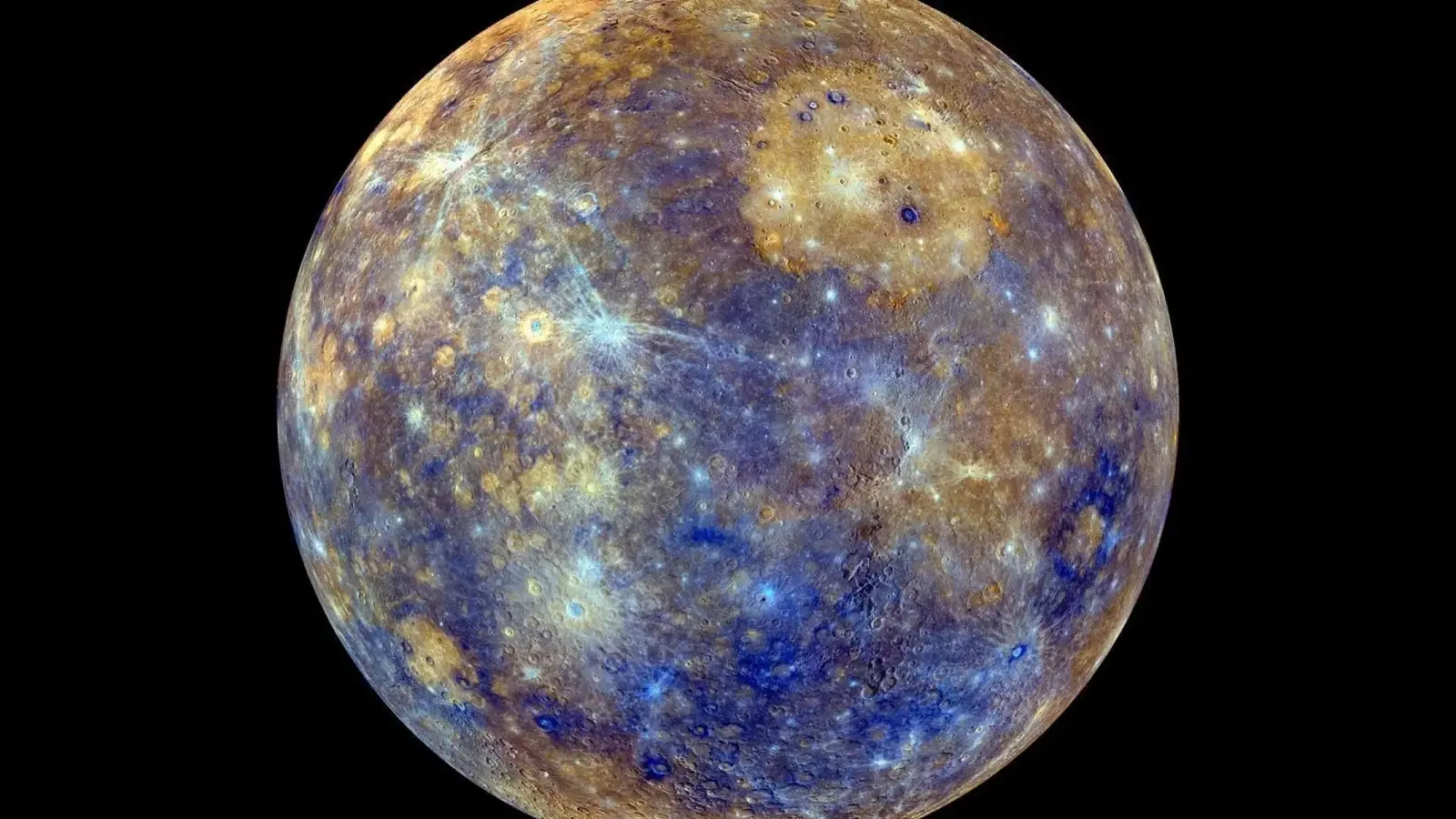
Imagine standing on a world the size of a large moon, the sky black even at noon, the Sun a blinding coin three times larger in diameter than from Earth. Temperatures swing from furnace to freezer each Mercury day. Craters, scarps and a vast basin the size of Texas tell a violent history. This is Mercury: compact, extreme and surprisingly instructive about how rocky planets form and evolve.
How Mercury formed and why it puzzles astronomers
Mercury sits closest to the Sun and often feels like an outlier. Yet its story begins with familiar building blocks: a protoplanetary disk of gas and dust that collapsed under gravity about 4.6 billion years ago. Small grains stuck together, clumps became planetesimals, and some of those bodies accreted into the terrestrial planets we know. Still, Mercury refuses to fit neatly into the textbook account.
Two broad ideas compete to explain Mercury's peculiarities. One emphasizes giant impacts. In this scenario, a massive collision early in the solar system stripped much of Mercury's original silicate mantle, leaving a disproportionately large metallic core. The other proposes that when the young Sun was hotter and its wind stronger, volatile and lighter elements were preferentially removed from the inner disk, so the surviving planet was metal-rich by default. Both paths remain plausible, and both shape the questions scientists push at Mercury with spacecraft and models.
Why the uncertainty? Because Mercury's density is the second highest in the solar system after Earth. That density demands either an unusually large iron fraction or unusual interior chemistry. We have measurements of its mass and size, and those numbers force geophysicists to infer a core that occupies roughly three quarters of the planet's diameter. Yet we lack a definitive record that tells which process - violent stripping or high-temperature sorting - made Mercury the way it is.
An iron heart and a wafer-thin outer shell
Peel Mercury like an onion in your imagination and you find a central solid inner core, surrounded by a liquid outer core rich in iron and perhaps nickel, then a silicate mantle and a crust that is extraordinarily thin compared with larger terrestrial planets. Estimates put Mercury's metallic core diameter at about 3,600 to 3,800 kilometers, nearly 75 percent of the planet's total diameter, while the silicate outer shell may be only 500 to 600 kilometers thick. That geometry changes everything about Mercury's thermal evolution, tectonics and magnetic behavior.
A dense iron-rich interior also helps explain the planet's high bulk density despite its relatively small size. But composition matters too. Remote sensing and spectral data indicate Mercury's surface contains higher-than-expected amounts of elements such as sulfur and other volatiles in places, complicating the simple picture of a fire-swept world stripped of everything light. The result is a nuanced portrait: a body with an unusually large metallic fraction and pockets of volatile-rich material near the surface.
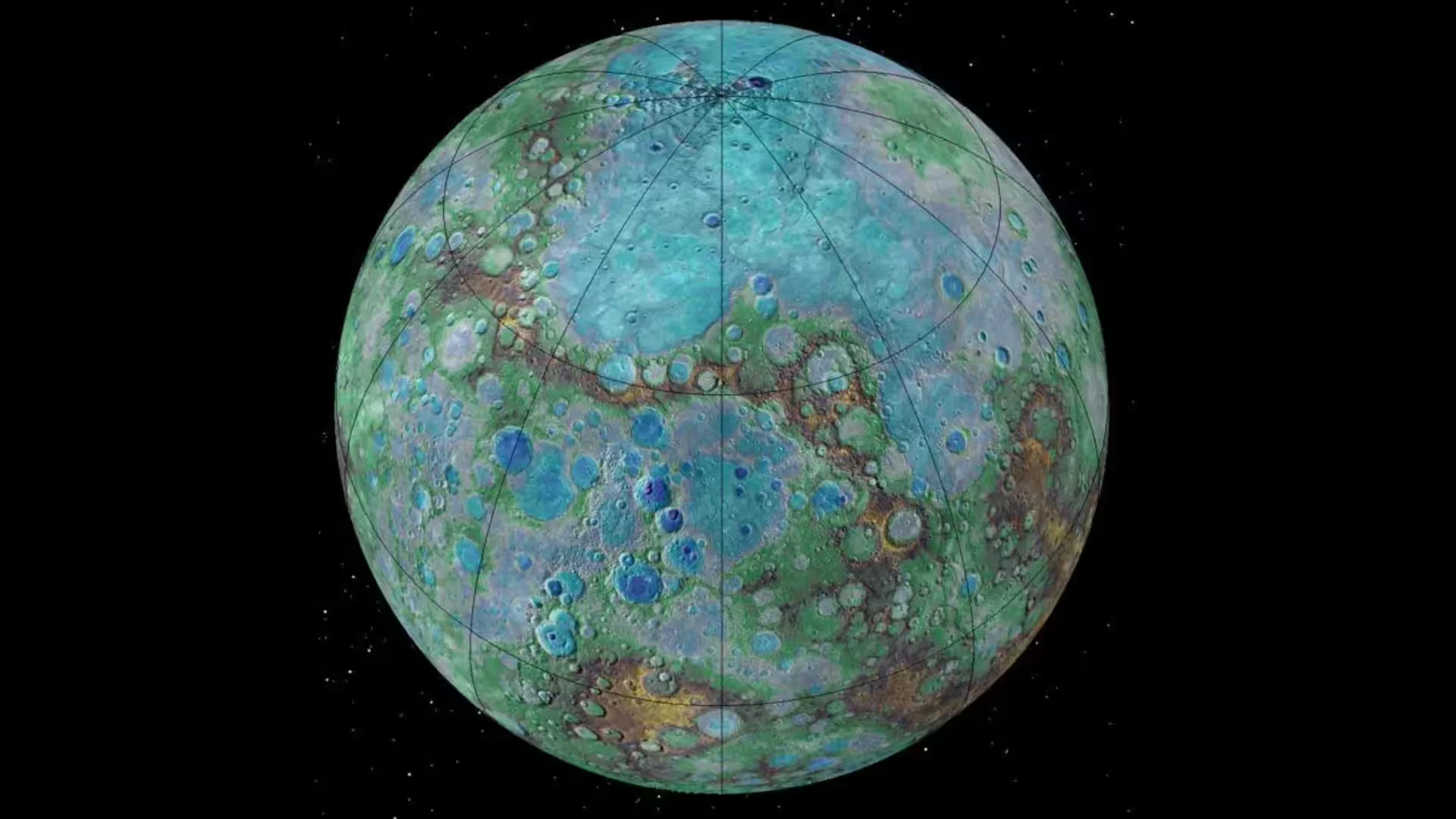
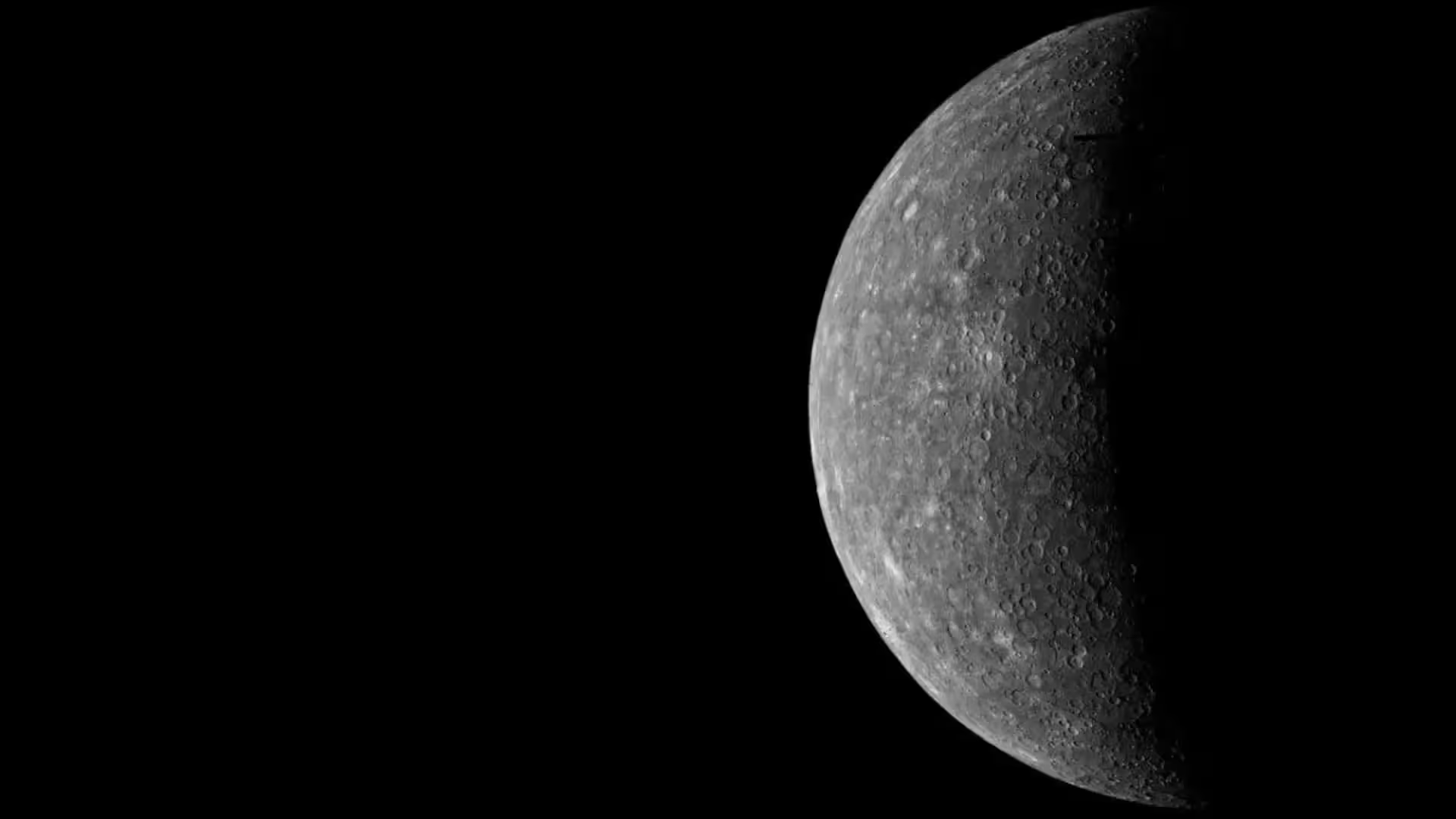
Mercury does not host a thick atmosphere. Instead it has an exosphere - an ultrathin envelope formed by a combination of solar wind sputtering, micrometeorite impacts and thermal desorption. Atoms of sodium, potassium, oxygen, hydrogen and helium have been detected, but the total mass of this exosphere is vanishingly small. It cannot retain heat, nor can it shield the surface from the steady drizzle of interplanetary particles. That is why Mercury's landscape is so cratered - a record book of impacts much like the Moon's.
Scars on a small world: craters, basins and scarps
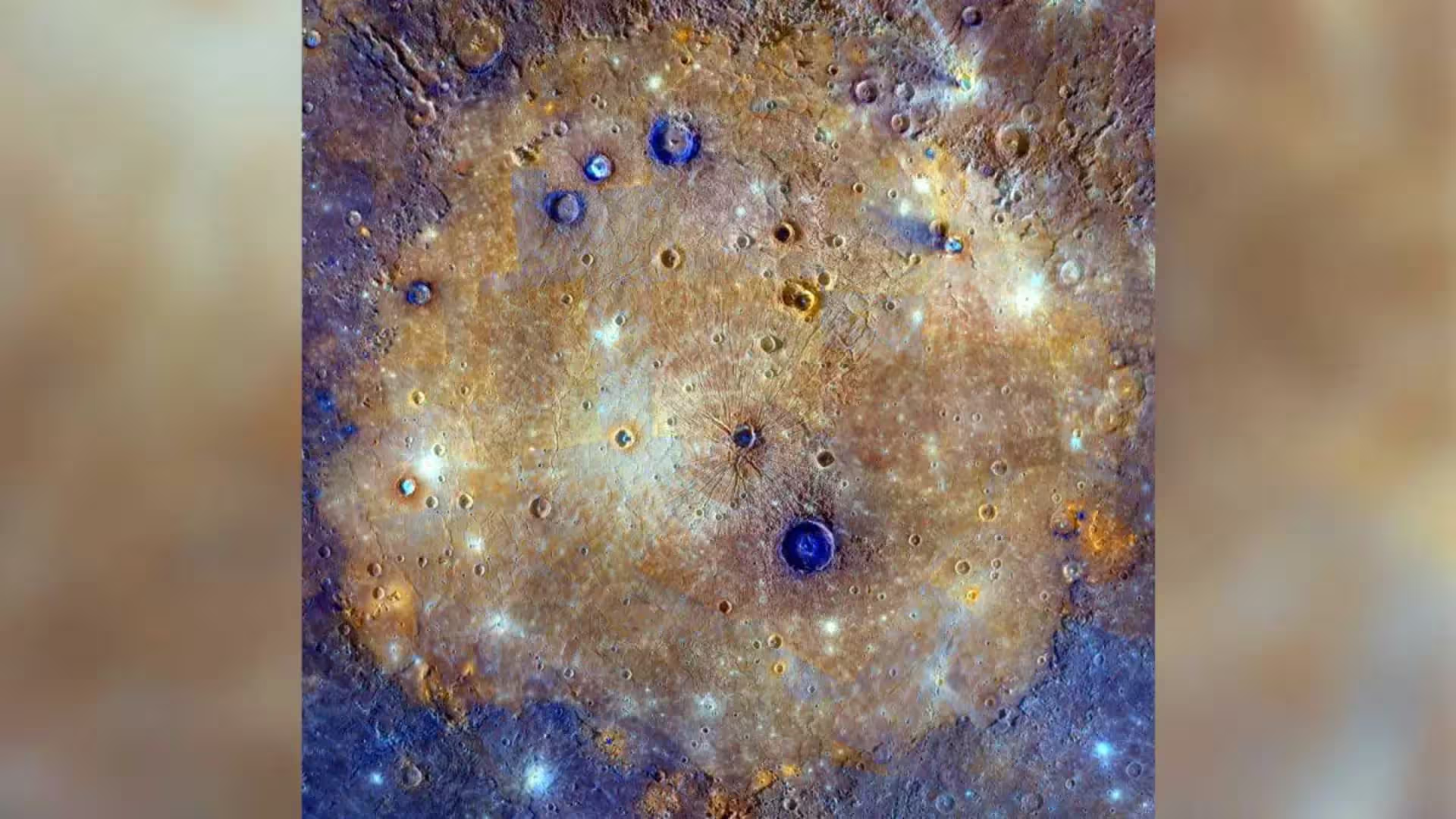
Visit Mercury and you would be stepping on an archive of collisions. The surface is dominated by impact features, from small craters to gigantic basins. The most famous is the Caloris Basin, a roughly 1,550-kilometer-wide depression formed by an impact powerful enough to liquefy rock on a planetary scale. Surrounding terrains bear radial patterns and chaotic terrains formed by seismic shaking from the same event. Caloris is a marker for the cataclysmic early era of planet formation when collisions reshaped planetary surfaces across the inner solar system.
Another striking landform on Mercury is the population of lobate scarps - steep, cliff-like features hundreds of kilometers long and sometimes rising a few kilometers high. They are the visible scars of planetary contraction. As Mercury's iron core cooled and crystallized over billions of years, the planet's volume decreased and the crust crumpled. The pattern is global: scarps cut across older craters, proving that Mercury has been shrinking long after its early bombardment period.
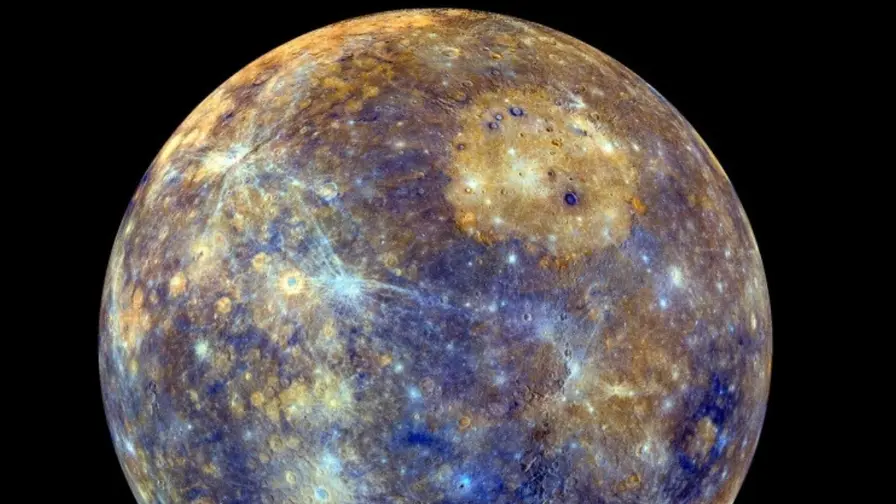
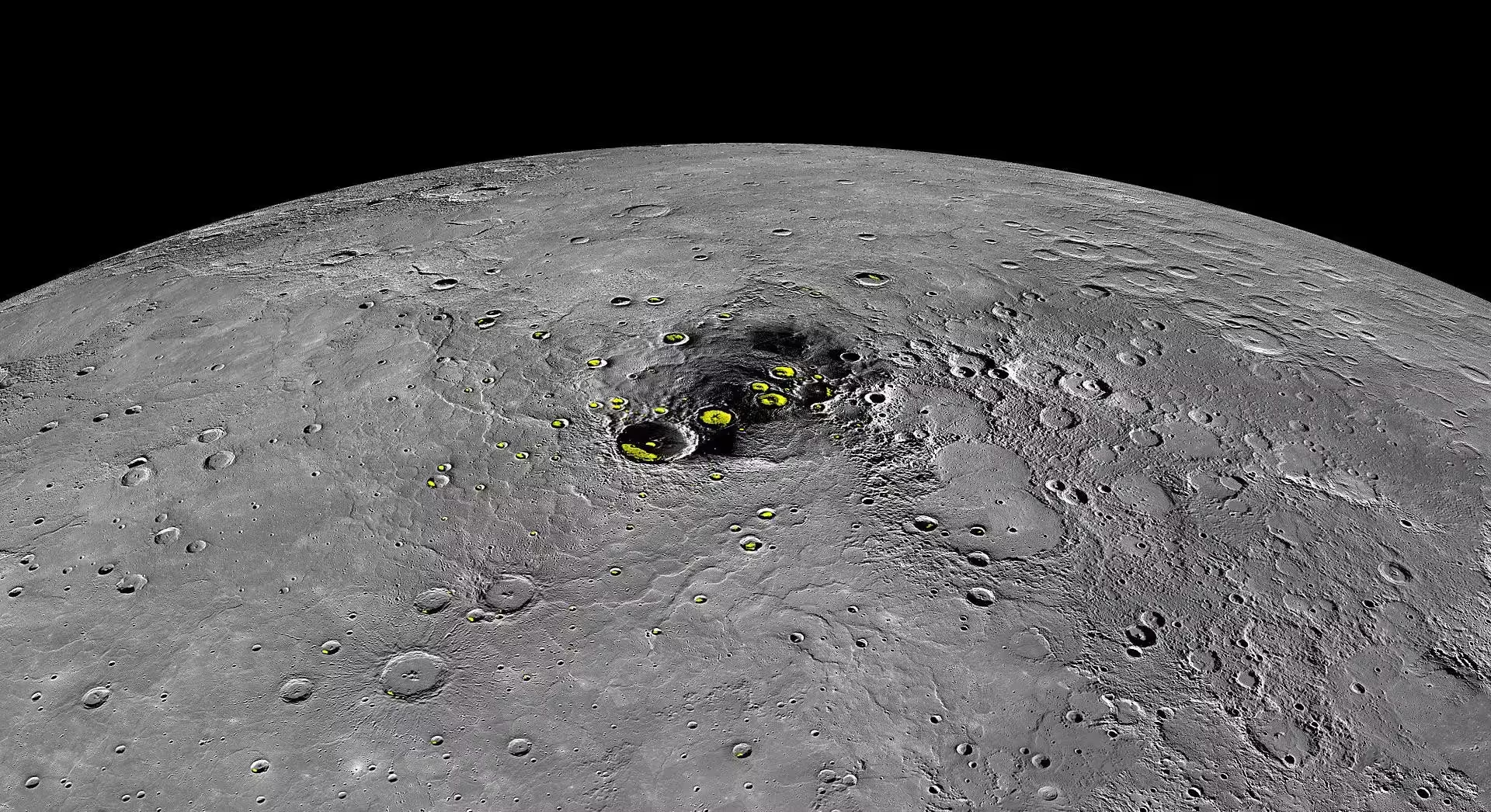
Surface albedo and color tell their own story. Much of Mercury appears brownish-gray, but bright rays extend from young craters where fresh material was excavated. Some terrains show high-reflectance patches near the poles, initially puzzling scientists until orbital radar and spacecraft data confirmed stable water ice lodged in permanently shadowed craters.
Polar ice and the paradox of a hot neighbor with cold traps
Mercury's proximity to the Sun makes the discovery of water ice there one of the more counterintuitive findings of recent planetary science. Polar regions on Mercury host craters that never receive direct sunlight because the planet's axial tilt is nearly zero. Temperatures in these permanently shadowed regions can remain below 100 kelvin, cold enough to trap and preserve water ice delivered by comets or outgassed from the interior and then transported to shadowed cold traps.
Radar observations from Earth first hinted at bright deposits near the poles. Later, MESSENGER's instruments provided chemical context, detecting hydrogen-rich signatures and confirming concentrations compatible with water ice. In some places, radar-bright deposits sit beneath a thin layer of darker, volatile-rich material - a lag deposit that insulates and hides ice from direct detection by visible-light cameras.
Water on Mercury is not abundant compared to Earth, but its existence has outsized scientific importance. It tells us that volatile delivery and retention processes operate even in extreme thermal environments, and it provides clues to the flux of comets and asteroids in the inner solar system across geologic time.
Temperature extremes and the rhythm of Mercury days and years
Another way Mercury keeps surprising is with its clockwork. A Mercury year - one full orbit around the Sun - takes 88 Earth days. Its rotation period on its axis is about 59 Earth days. The planet is locked into a 3:2 spin-orbit resonance: it rotates three times for every two orbits. The interaction between this resonance and Mercury's elliptical orbit produces a complicated pattern of solar illumination across the surface.
Temperatures on sunlit hemispheres can exceed 430 degrees Celsius. At night, with no atmosphere to hold heat, temperatures plunge to around -180 degrees Celsius. The net swing can top 600 degrees Celsius between day and night. Those are extreme conditions for materials and for any theoretical probes or landers that might attempt to operate there. They also constrain the kinds of volatiles that can survive and where they can be stored - hence the importance of permanently shadowed craters as refuges for ice.
A magnetic field where none was expected
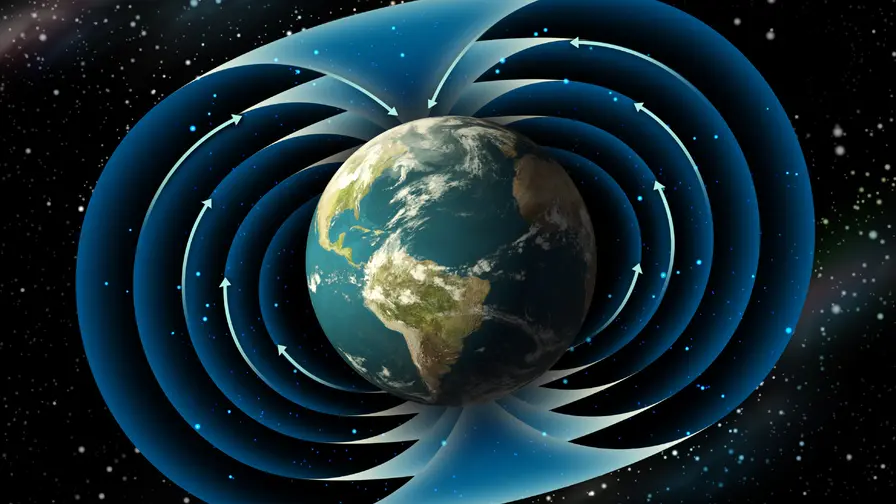
Mercury possesses a global magnetic field, albeit weak when compared to Earth's. It is about one percent of Earth's field strength but strong enough to generate interesting space-weather interactions with the solar wind. The field indicates that at least part of Mercury's core remains molten today, generating a dynamo mechanism that sustains magnetism. That is slightly surprising for a small planet, because small bodies usually cool and solidify faster, shutting down any dynamo early in their history.
MESSENGER revealed complexities in Mercury's magnetosphere. Under the bombardment of the solar wind, the planet develops flux transfer events, reconnection sites, and rapid, localized injections of solar particles. These dynamics contribute to sputtering and the maintenance of the exosphere. They also give researchers natural laboratories for understanding magnetic reconnection and plasma physics in extreme regimes.
How we explored Mercury: missions and milestones
Mercury is a difficult destination. Its closeness to the Sun makes spacecraft navigation and thermal control challenging, and lowering orbital energy near the planet requires a significant delta-v. For these reasons, only a few missions have visited: Mariner 10, MESSENGER and now the twin spacecraft of the BepiColombo mission.
Mariner 10 was the first. Launched in 1973, it used gravity assists at Venus to reach Mercury and imaged roughly 45 percent of the surface during three flybys in 1974-1975. Mariner 10 changed our image of Mercury from a vague point of light to a cratered world with scarps and high-density structure.
Three decades later, NASA's MESSENGER mission entered Mercury orbit in 2011 and spent more than four years mapping the planet in unprecedented detail. MESSENGER's payload combined cameras, spectrometers and magnetometers that clarified composition, measured the magnetic field, confirmed polar ice, and produced the first global geologic maps. It found evidence for volcanic activity in Mercury's past, identified regions with anomalous chemistry, and recorded an active magnetosphere. When MESSENGER's fuel ran out in 2015, mission planners intentionally crashed it into Mercury to collect final data and to avoid leaving a derelict spacecraft in orbit.
European Space Agency and Japan Aerospace Exploration Agency teamed up for BepiColombo, launched in 2018. BepiColombo is a dual-spacecraft effort: the Mercury Planetary Orbiter will study the surface and composition, while the Mercury Magnetospheric Orbiter focuses on magnetic and plasma phenomena. The mission uses multiple Earth and Venus gravity assists to brake into Mercury orbit by 2025 and will carry a suite of 16 instruments designed to answer persistent questions about Mercury's interior, surface processes and magnetosphere.
Key discoveries and their scientific implications
Each mission has left Mercury with more mysteries than it started with, but also with clearer constraints. The recognition of an oversized metallic core reshapes models of planetary differentiation and migration. The detection of water ice in permanently shadowed craters demonstrates that volatile materials can be delivered and preserved close to the Sun. The composition of Mercury's surface - including unexpectedly high sulfur levels in some regions - suggests complex chemical processes during formation.
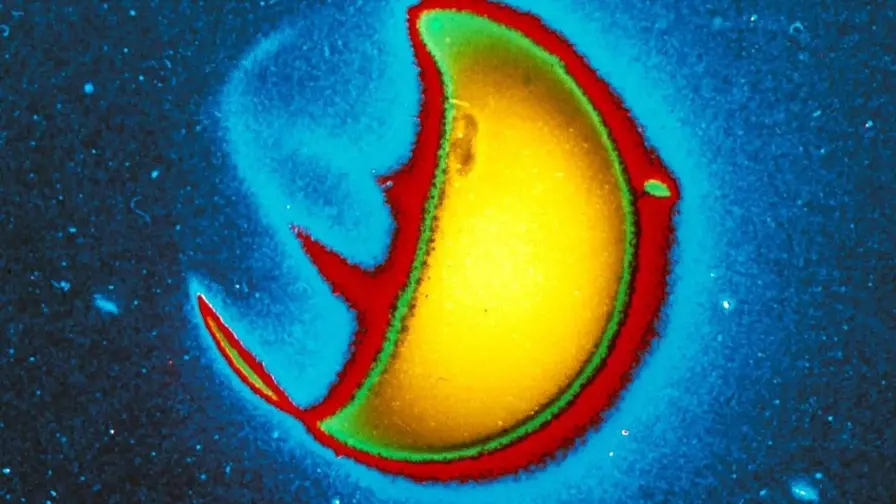
MESSENGER's observations of hollows - shallow, rimless depressions with high-reflectance materials - hint at volatile loss processes not seen elsewhere. These features may result from the sublimation of volatile-rich minerals, leaving behind pitted terrain. If so, they provide a direct window into volatile abundance and behavior on Mercury's surface.
Magnetically, Mercury informs dynamo theory for small cores. The planet's weak but globally organized field constrains models of its interior temperature gradient, core composition and convective vigor. Combined with contractional scarps and surface geology, these data form the basis for integrated models of thermal evolution that bridge planetary formation and long-term tectonics.
Exploration challenges and technology developed for Mercury
Designing instruments and spacecraft that can operate near the Sun requires both thermal innovation and careful trajectory planning. Mariner 10 and MESSENGER used thermal blankets, radiators, and sunshade strategies to survive the heat. BepiColombo carries a heat-shielded transfer module and separates into two orbiters once in Mercury orbit, allowing instrument suites to be optimized for their respective tasks.
Propulsion strategies are equally inventive. Because carrying the propellant to slow down at Mercury would be prohibitively expensive, missions instead use gravity assists to bleed off orbital energy gradually. These complex interplanetary gymnastics require precise navigation and long mission timelines - BepiColombo's cruise will take several years with multiple flybys before orbital insertion.
Why Mercury matters for understanding rocky planets
At first glance Mercury might seem like an extreme case best studied for curiosity's sake. But its extremes are exactly why it matters. The planet offers a laboratory for testing theories of planetary accretion, differentiation and volatile evolution under conditions distinct from Earth or Mars. By comparing Mercury to Venus, Earth and Mars, scientists can isolate the roles of size, proximity to the Sun, composition and impact history in shaping planetary outcomes.
Mercury pushes models to the limit. Its large core fraction challenges simple accretion models. Its polar ices show that delivery of volatiles is not limited to the colder outer solar system. Its dynamo provides constraints on core composition and thermal history that are hard to obtain from more geologically active, larger planets. In short, Mercury is an essential data point in the comparative planetology toolkit.
Expert Insight
Dr. Elena Vargas, a planetary geophysicist who has worked on magnetometer data from orbital missions, offers a concise perspective: "Mercury forces us to rethink how small planets retain heat and generate magnetic fields. Its large metallic core and active, if weak, dynamo suggest compositional gradients or light elements in the core that slow solidification. That has direct implications for how rapidly other small bodies cool and when their dynamos cease - a crucial factor for atmospheric retention and surface conditions."
She adds, "The discovery of polar volatiles on a planet so close to the Sun also reframes our assumptions about volatile delivery. We used to assume inner-system worlds would be bone dry. Mercury shows that delivery mechanisms and cold traps can preserve volatiles in surprising ways."
Future research and what to watch for
BepiColombo's arrival and months to years of orbital science will refine many of these answers. Scientists expect better measurements of Mercury's gravity field, which will tighten constraints on the size and state of the core. High-resolution spectral mapping could resolve the distribution of sulfides and other surface minerals; that, in turn, informs models of formation temperature and chemistry. Improved magnetospheric datasets will allow plasma physicists to probe reconnection and particle transport in a system dominated by the most intense solar input in the inner solar system.
Beyond BepiColombo, the next steps could include focused landers or sample-return missions, though the thermal and delta-v penalties make these expensive and technologically challenging. Nevertheless, targeted landers to polar shadowed regions would be compelling: they could sample icy deposits, characterize organic content if any, and directly measure the subsurface structure that remote sensing can only infer.
There are also theoretical avenues. New high-resolution models of early solar-system dynamics may further clarify whether Mercury is a survivor of selective stripping by giant impacts or the product of preferred accretion of refractory materials. Laboratory experiments and improved equations of state for iron alloys at extreme pressures will help interpret seismically inferred density profiles and magnetic signatures.
Conclusion
Mercury is small but disproportionally informative. Its oversized iron core, record of impacts, polar ice deposits and active magnetosphere combine to make it a unique natural experiment. Studying Mercury sharpens our understanding of how planets differentiate, how atmospheres and exospheres evolve, and how volatile materials survive near a star. With the continuing flow of data from BepiColombo and the archive from MESSENGER, Mercury will stay in the spotlight as both a challenge and a teacher for planetary science.
In the end, Mercury reminds us that extremes often provide the clearest tests of scientific ideas. This compact world, crisscrossed by scarps and bathed in fierce sunlight, will keep steering research and debate about the earliest chapters of the solar system for decades to come.

“My work centers on sustainability, energy, and environmental science — examining how innovation can lead to a greener future.”

Discussion
Leave a Comment
Comments (6)
Feels a bit dramatic about Mercury being a 'teacher' of planets. Still solid science, but wanna see clearer evidence on mantle stripping.
Seems plausible, tbh. Love the polar ice detail, updates our inner-system views 🙂
Pretty balanced take, lots of angles covered. BepiColombo will settle some stuff but also raise new qs.
Worked on thermal models once, those contraction scarps make sense. But operating probes there... haha, brutal temps, if they'd try landers
Hmm is it really a giant impact or just high-temp sorting? The sulfur and volatiles bit makes me skeptical, doesnt add up
Wow, Mercury feels more alien than I thought. A huge iron core, ice in shadows? Mind blown. If that giant impact story is true...