
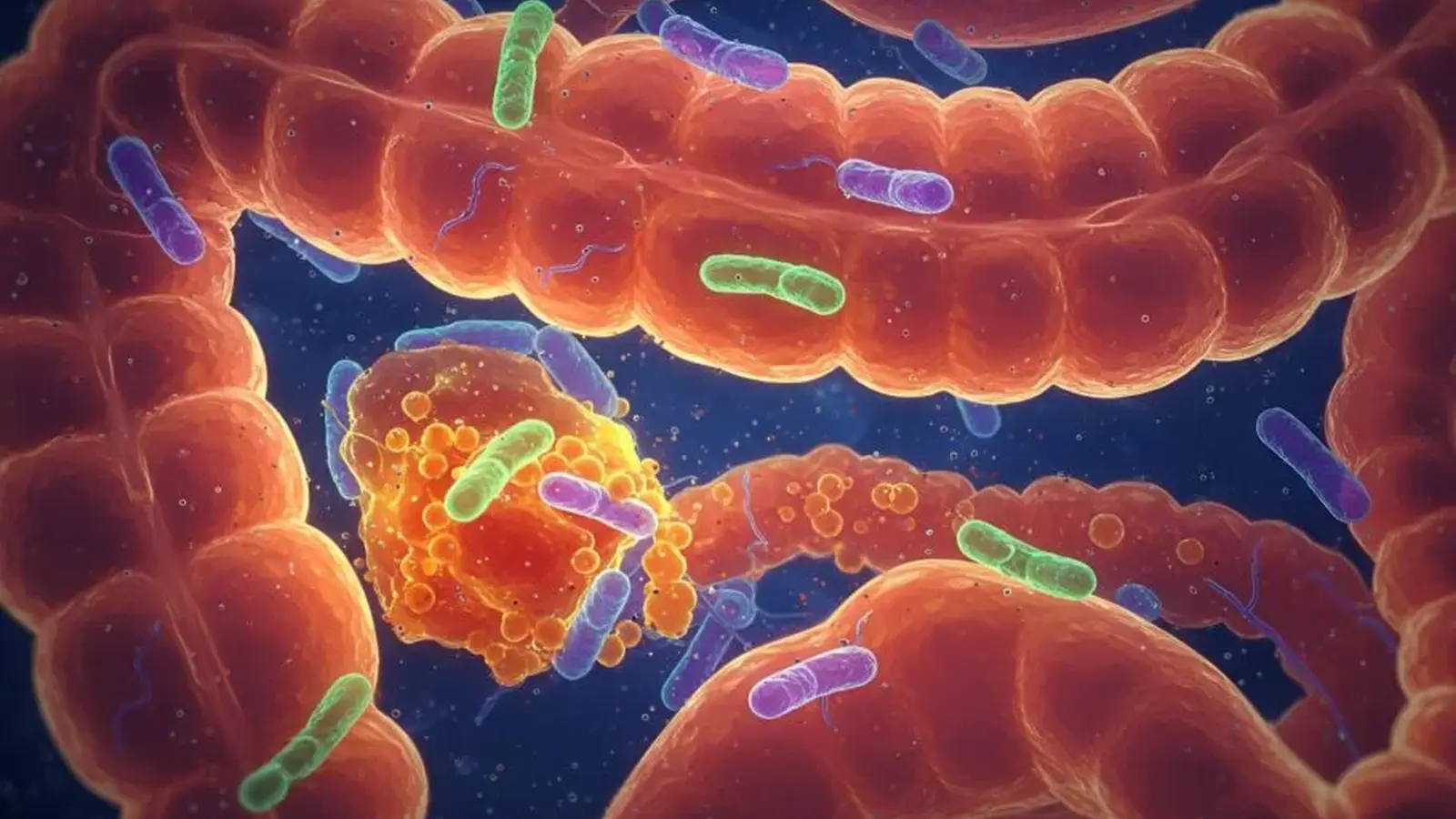
Imagine a microscopic passenger boarded in childhood that quietly nudges the trajectory of health decades later. For many people around the world, that passenger is Helicobacter pylori, a bacterium best known for causing stomach inflammation and peptic ulcers. New pooled evidence now suggests its reach may extend beyond the stomach: exposure to H. pylori could be raising the risk of colorectal cancer in a sizeable fraction of cases worldwide.
H. pylori infections are often silent. Most carriers never feel a symptom. Yet when the bacterium persists, it provokes chronic inflammation and alters the local microbial environment. Those changes can have ripple effects. Could they also alter how the colon ages or how cells in the large intestine respond to damage? That question motivated an international team of researchers to re-examine decades of clinical data and public cancer registries.
What the new analysis shows
The researchers pooled 43 studies covering more than 48 million people and combined those findings with global cancer incidence figures from 2022. Their headline result: people exposed to H. pylori had about a 1.6-fold higher risk of developing colorectal or rectal cancer compared with unexposed individuals. Translating that relative risk into population impact, the team estimates that roughly 22 percent of colorectal cancer cases worldwide could be linked, in part, to prior exposure to H. pylori.
Those percentages are not uniform across time or place. The analysis calculated population-attributable fractions for birth cohorts: roughly 9.5 percent of colorectal cancers in people born before 1947, about 10 percent for those born between 1948 and 1962, and approximately 15 percent for people born between 1963 and 1977 were estimated to be associated with H. pylori exposure. In other words, younger birth cohorts showed a higher estimated share.
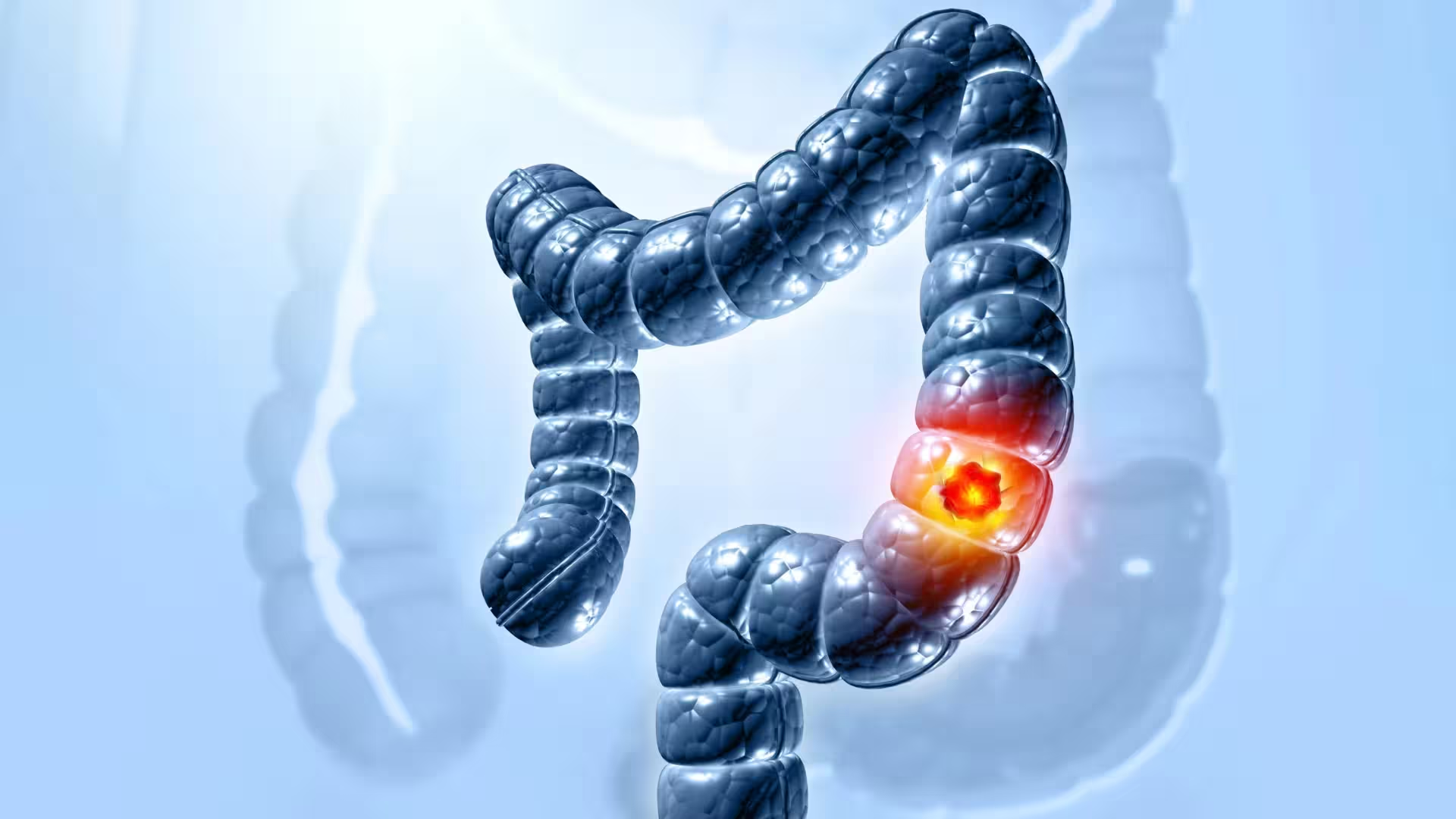
Geography matters too. Regions in the Western Pacific and Mongolia showed the highest estimated shares of colorectal cancer linked to H. pylori — about 25 percent and 36 percent respectively. China had the largest absolute number of cases attributed to exposure, with nearly 140,000 cases estimated in 2022 alone. Curiously, areas with high H. pylori prevalence such as parts of Africa and Southeast Asia did not always show equivalently high attributable fractions for colorectal cancer, pointing to complex interactions between the bacterium, host factors, environment, and lifestyle.
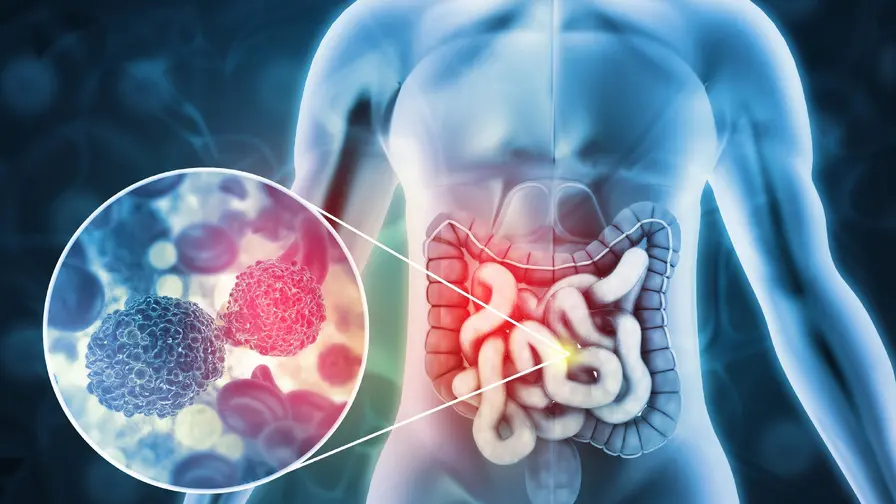
How might a stomach bug influence the colon
The mechanism remains speculative. Chronic inflammation is one plausible route: persistent infection in the upper digestive tract can trigger systemic immune changes and produce metabolites that shift the gut microbiome. Shifts in microbial communities can then influence mucosal immunity and carcinogenic processes in the large intestine. Another possibility involves bacterial toxins and metabolic byproducts that circulate or alter bile acids and local epithelial behavior. At present, the evidence is associative, not definitive. Observational studies and pooled analyses can detect patterns. They cannot, on their own, prove causation.
Importantly, researchers emphasize that colorectal cancer has many drivers. Age, genetics, diet, physical inactivity, obesity, and smoking together explain a larger share of cases than H. pylori alone. Still, if even a fraction of colorectal cancers are influenced by a modifiable infectious exposure, the finding opens new directions for prevention research and risk modelling.
Expert Insight
"These results do not yet change clinical practice," says Dr. Emma Lai, a gastroenterologist and epidemiologist familiar with infectious causes of cancer. "But they sharpen a question we've long suspected: infections shape cancer risk in more ways than we appreciated. The next step is rigorous prospective studies and laboratory work to test mechanisms. If we can identify who is most at risk, targeted eradication or surveillance strategies might one day complement existing colorectal cancer prevention efforts."
Conclusion
The study, published in eGastroenterology, adds a provocative piece to a complex puzzle. H. pylori remains a confirmed cause of gastric cancer and a likely contributor to other gastrointestinal diseases. Its possible role in colorectal cancer invites careful follow-up: mechanistic experiments, well-designed cohort studies, and regional analyses that account for lifestyle and genetic background. For now, clinicians and public-health planners should view these findings as an important signal — one that points toward new research priorities rather than immediate changes in screening or treatment guidelines.

“My work centers on sustainability, energy, and environmental science — examining how innovation can lead to a greener future.”

Discussion
Leave a Comment
Comments (2)
Had H pylori cleared when I was 30, weird to think it might affect colon too. Hope this leads to targeted screening, if that pans out
Is that 22% real? Sounds huge given all the confounders. Observational, assoc not causation... more studies pls, stat nerds