
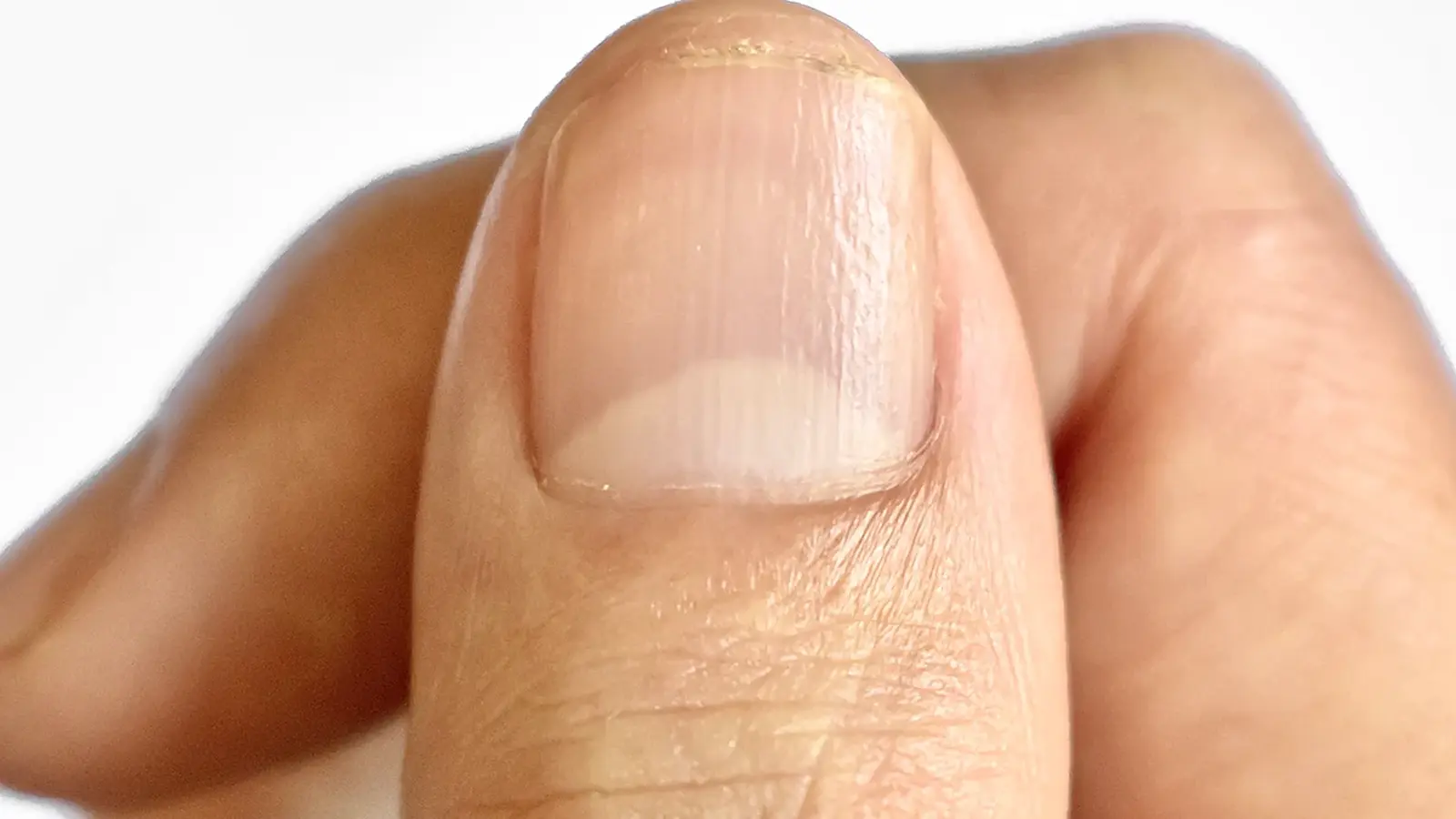
You notice it without meaning to: a faint, reddish half-moon at the base of a fingernail. Small. Easy to miss. Yet for clinicians who study skin and systemic disease, that little crescent—called the lunula—can be a meaningful clue.
What the lunula does and why its color matters
The lunula is the visible portion of the nail matrix, the tissue where keratin-producing cells are born and then pushed forward to form the nail plate. Most lunulae are pale white. Sometimes they change hue. Blue, brown, and red tints have all been reported, and each can point toward different physiological processes.
Red lunulae are rare. But rarity does not mean insignificance. A recent review led by physicians at Rutgers New Jersey Medical School, published in the American Journal of the Medical Sciences, collected decades of case reports and clinical observations that link red lunulae with a surprising range of conditions. Heart failure, liver cirrhosis, autoimmune and rheumatologic diseases, and certain hematologic and dermatologic disorders appear repeatedly in the literature.
Why do those small crescents flush red? The most plausible explanation is capillary vasodilation—tiny blood vessels in and under the matrix widen, increasing blood flow and producing a reddish tint. That mechanism also explains one practical bedside test: pressing gently on the lunula. If it blanches and then returns to red when pressure is released, capillary dilation is likely involved. Simple. Informative.
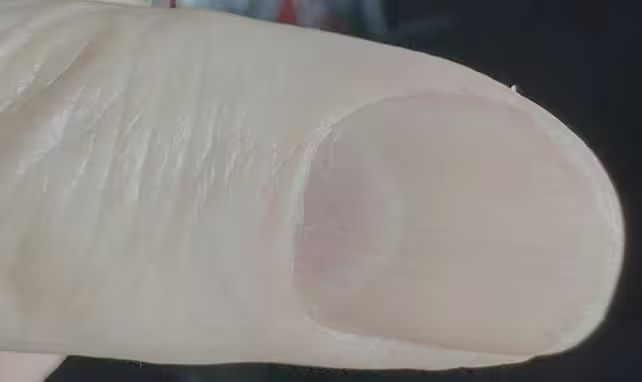
When a red lunula points beyond the nail
Clinical context matters. A red lunula on multiple digits raises suspicion for systemic disease. When several nails show the sign, researchers say clinicians should consider cardiovascular, hepatic, autoimmune, and rheumatologic causes. Single-nail discoloration is more often local: subungual tumors, infections, hemorrhage under the nail, or other localized pathology.
Case studies span the spectrum. Some patients with connective tissue disease had striking lunular reddening; others showed the sign alongside alopecia areata or after carbon monoxide exposure. Not every person with one of these conditions will have red lunulae. Nor does every red lunula mean serious illness. The review emphasizes the sign’s diagnostic value as an indicator prompting further assessment, not as a standalone diagnosis.

From a clinician’s perspective, the next steps are straightforward. If red lunulae are observed, examine the pattern: how many nails are involved and whether the discoloration extends beyond the lunula into the nail plate. Check for local causes such as infection or trauma. If multiple nails are affected or if the clinical picture suggests systemic involvement, order targeted testing—cardiac evaluation, liver panels, autoimmune serologies, or hematologic workups as appropriate.
Researchers note that descriptions of red lunulae date back to the mid-20th century; cataloging has expanded since. This recent review is the most comprehensive synthesis to date, pulling together scattered reports to show recurring associations and to press for broader awareness among frontline clinicians.
Expert Insight
"A red lunula is a small physical clue with outsized diagnostic value," says Dr. Elena Morales, a dermatologist who teaches at a university medical center. "It rarely appears in isolation. When it does show up on several nails, it tells you to look beyond the skin. Simple bedside maneuvers—like blanching—paired with a targeted history can speed diagnosis and prevent missed systemic disease."
The authors of the review suggest clinicians incorporate lunular inspection into routine physical exams. Why? Because lunulae are easy to see and changes often precede symptoms elsewhere. Early detection matters for conditions such as heart failure or liver disease, where interventions can alter the course of illness.
There remain unknowns. The precise biological pathways linking capillary dilation in the nail matrix to diverse systemic disorders need clarification. Are inflammatory mediators driving the vascular changes in autoimmune disease? Does hepatic dysfunction alter nail-bed perfusion in a specific way? Future research should explore these mechanisms and test whether lunular changes correlate with disease severity or treatment response.
For lay readers: if you spot a new red crescent on more than one nail, take note. Do not panic. But do bring it to your primary care provider or dermatologist. A focused history and a few simple tests are usually enough to decide whether deeper investigation is warranted.
In short: nails are not just cosmetic. Those small, pale half-moons are windows to physiology. When they turn red, they can point the way to the body’s hidden stories—if clinicians and patients take the time to look.


“The cosmos has always fascinated me. I write about space missions, astronomy, and the technologies pushing humanity beyond Earth.”

Discussion
Leave a Comment
Comments (2)
I actually saw this once after a CO incident, patient had red lunulae on several fingers. Small clue but it pushed us to test further, weird but handy
Wait, red lunulae can signal heart or liver stuff? hmm, sounds useful but is there robust data or just case reports? feels anecdotal, still i'll check my nails lol