

Imagine a common blood pressure pill doing double duty: calming arteries one moment and stoking the body's internal furnace the next. That is the unexpected hint emerging from an analysis of tens of thousands of medical scans and the laboratory experiments that followed.
Losartan is already familiar to clinicians. It belongs to a class of drugs called angiotensin II receptor blockers, often shortened to ARBs. Doctors prescribe it to lower blood pressure and to protect heart and kidney function. What researchers at Rockefeller University and Memorial Sloan Kettering Cancer Center uncovered is a potential second role for this medicine: activating brown adipose tissue, the heat-generating fat known for burning calories and improving metabolic health.
Losartan is a widely prescribed medication used to treat high blood pressure and help protect the heart and kidneys. It belongs to a class of drugs called angiotensin II receptor blockers (ARBs), which relax blood vessels and improve blood flow.
From clinical scans to molecular clues
The lead observation came from an unlikely source: PET/CT scans taken for cancer surveillance. Researchers at Memorial Sloan Kettering examined records for more than 100,000 patients and noticed a pattern. People taking ARBs, including losartan, showed higher rates of detectable brown adipose tissue, or BAT, on their scans than patients not on these drugs.
Rather than stopping at correlation, the teams used a reverse translation approach. They took the clinical pattern back to the bench, asking whether the drug itself could change brown fat behavior. In cell cultures, losartan increased metabolic activity in brown fat cells. In mice, the drug raised whole-body oxygen consumption and carbon dioxide production without weight loss, suggesting an increase in energy expenditure driven by BAT activation.
Crucially, the mechanism by which losartan affects brown fat appears distinct from the pathway that lowers blood pressure. That separation matters. If the metabolic and cardiovascular effects travel along different molecular routes, it may be possible to design therapies that stimulate brown fat without altering blood pressure in people with normal readings.
What brown fat tells us about health
Brown fat is not a curiosity. In adults, it remains concentrated in regions such as the neck, armpits, and around vital organs. Unlike white fat, which stores energy, brown adipose tissue burns fuel to generate heat, a process called thermogenesis. Prior studies have linked higher BAT activity with lower rates of cardiometabolic disease, including coronary artery disease and type 2 diabetes.
In the new, larger cohort, the researchers broadened their lens. They used a machine learning tool to quantify BAT activity by anatomical region and then compared those regional measures against more than 500 diagnostic codes, blood markers, and heart function tests. The results were heterogeneous. For example, brown fat detected in the axillary area correlated more strongly with lower blood pressure than BAT in other sites. Overall, however, patients with measurable BAT tended to have better glycemic control, healthier lipid profiles, improved echocardiographic indices, and lower inflammatory markers.
There were surprises. The analysis uncovered links between BAT and psychiatric outcomes: patients with detectable brown fat had lower rates of anxiety and depression. The study also found associations between BAT and higher reported rates of osteoporosis and some skin conditions. Those signals are provocative but not definitive. They point to complex biology and the need for more focused studies to determine cause and effect.
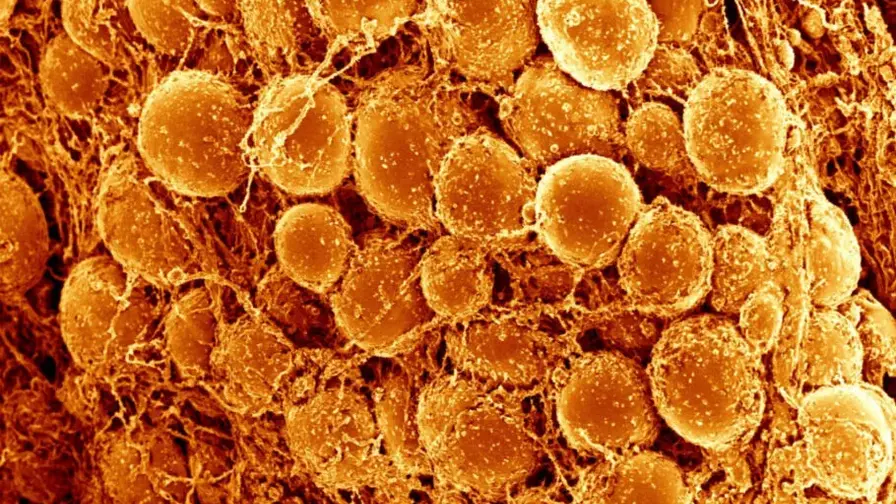
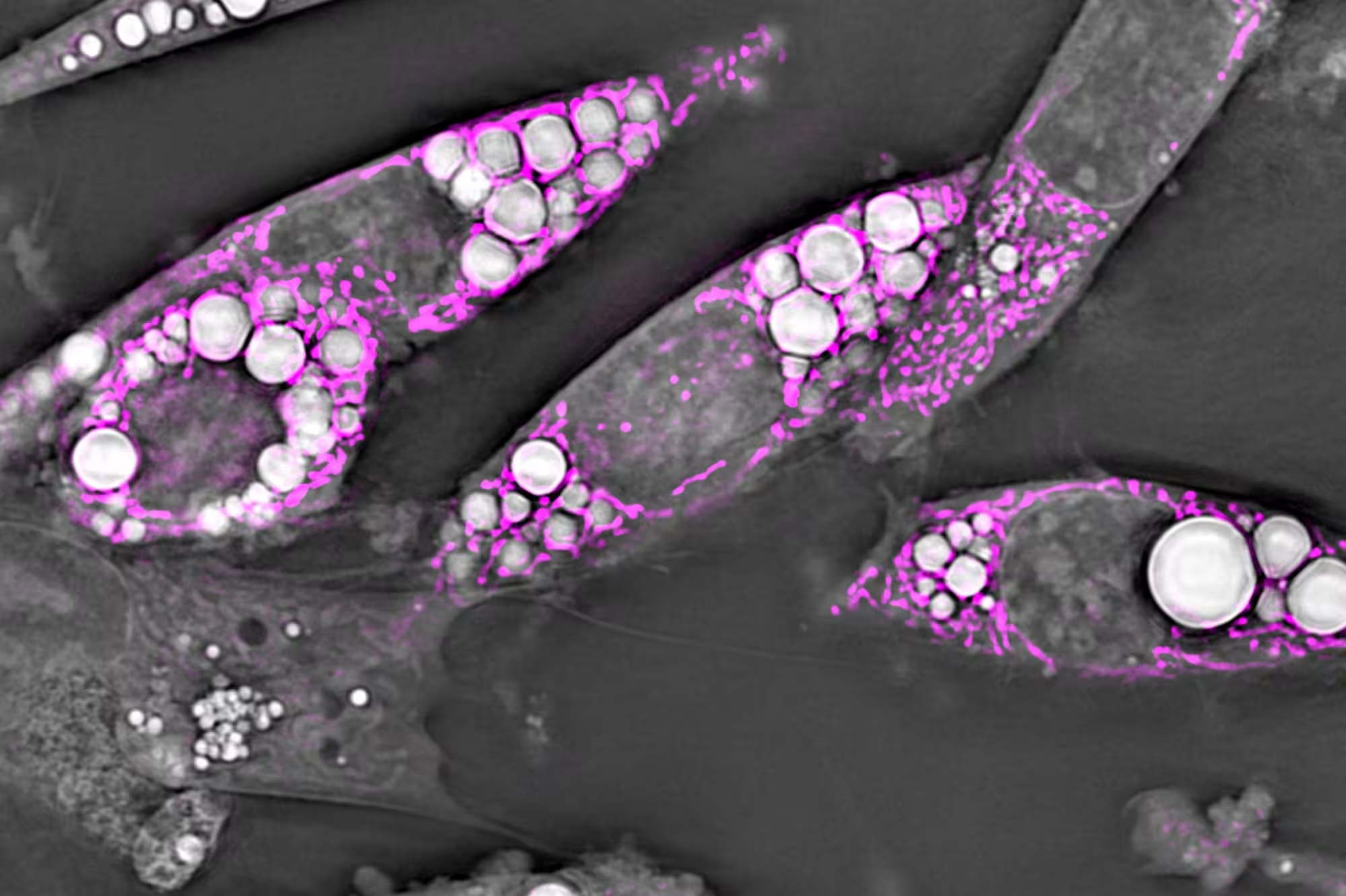
Brown fat cells with mitochondria labeled in magenta. (Image acquired on a CSR Biotech Cell Xtreme microscope on demo at Rockefeller's Bio-Imaging Resource Center.)
Translating observation into therapy
Repurposing a widely used medicine is appealing. Losartan has a well characterized safety profile accumulated over decades. That makes it a pragmatic candidate for clinical trials to test whether deliberately stimulating brown fat improves metabolic or cardiovascular outcomes in people who do not need blood pressure lowering.
But there are precautions. The experiments in cells and mice do not prove benefit in humans. The observational link could reflect confounding factors. For example, people with detectable BAT may have lifestyle or genetic traits that protect against both metabolic and psychiatric disease. The analysis also flagged other medications that correlate with BAT activity, including selective serotonin reuptake inhibitors, which were associated with reduced brown fat detection. How medications, genetics, and environment intersect with brown adipose function remains an open question.
Designing human trials will require careful endpoints. Do we aim for improved insulin sensitivity? Lower incidence of heart disease? Better mood? Each target demands different study designs, participant selection, and biomarkers. The separation of losartan's blood pressure and BAT pathways offers flexibility, but it also raises regulatory and safety questions: how to stimulate thermogenesis without unwanted cardiovascular effects?
Expert Insight
Dr. Elena Marquez, a metabolic physiologist at a university center not involved in the study, says, "This work is an elegant example of bedside-to-bench science. Observational data from routine imaging gave a clue, and the teams followed it with targeted experiments. If losartan or similar ARBs can be tuned to activate brown fat safely, we could open a new avenue for treating metabolic dysfunction. But the human trials must define who benefits and how much."
The path forward will combine epidemiology, molecular biology, and clinical trials. Investigators will need to parse regional BAT effects, patient genetics, medication interactions, and long-term outcomes. The payoff could be significant: a well-tolerated drug with a new indication, or at least fresh targets for novel medicines that harness the body's own heat-generating machinery.
Conclusion
What began as a pattern spotted in cancer surveillance imaging now points to a more ambitious possibility: redirecting a familiar cardiovascular drug toward metabolic health. The evidence so far is intriguing but preliminary. Losartan's apparent ability to activate brown adipose tissue opens testable hypotheses. The next steps are rigorous clinical trials, deeper mechanistic studies, and a careful look at unintended effects. If those efforts succeed, a tiny pill might help more than just blood pressure; it could help reawaken the body's internal furnace.


“The cosmos has always fascinated me. I write about space missions, astronomy, and the technologies pushing humanity beyond Earth.”

Discussion
Leave a Comment
Comments
No comments yet. Be the first.