

Imagine turning down a dial inside your cells. Not a metaphorical dial, but the actual oxygen supply that mitochondria rely on to make energy. It seems counterintuitive. Oxygen sustains life. Yet new work from Gladstone Institutes suggests that, in some neurological and mitochondrial disorders, less oxygen can be healthier.
Researchers led by Isha Jain have been exploring hypoxia therapy for more than a decade. Their experiments mimic the oxygen levels people experience at high altitude and test whether those conditions can protect tissues when mitochondrial machinery breaks down. The latest study, published in Nature Metabolism, traces a clear chain of events from a broken protein to oxygen buildup to brain damage, and it shows that dialing oxygen down can reverse the harm in animal models.
How a single protein leaves oxygen stranded
Mitochondria are tiny power plants. They consume most of the oxygen we inhale and use it to generate ATP, the cell's energy currency. The respiration chain is their core hardware, and Complex I is a major component. When Complex I fails, mitochondria stop using oxygen efficiently. Oxygen then accumulates in tissues instead of being consumed, creating oxidative stress and cellular injury.
The Gladstone team homed in on a quality-control protein called HTRA2. Using a genetic screen that revisited large datasets, they compared gene vulnerabilities in normal air versus low-oxygen conditions and cross-referenced those genes with known human diseases. HTRA2 and its partner CLPB surfaced as top candidates. Together these proteins act like an internal maintenance crew, clearing misfolded proteins so Complex I can keep working.
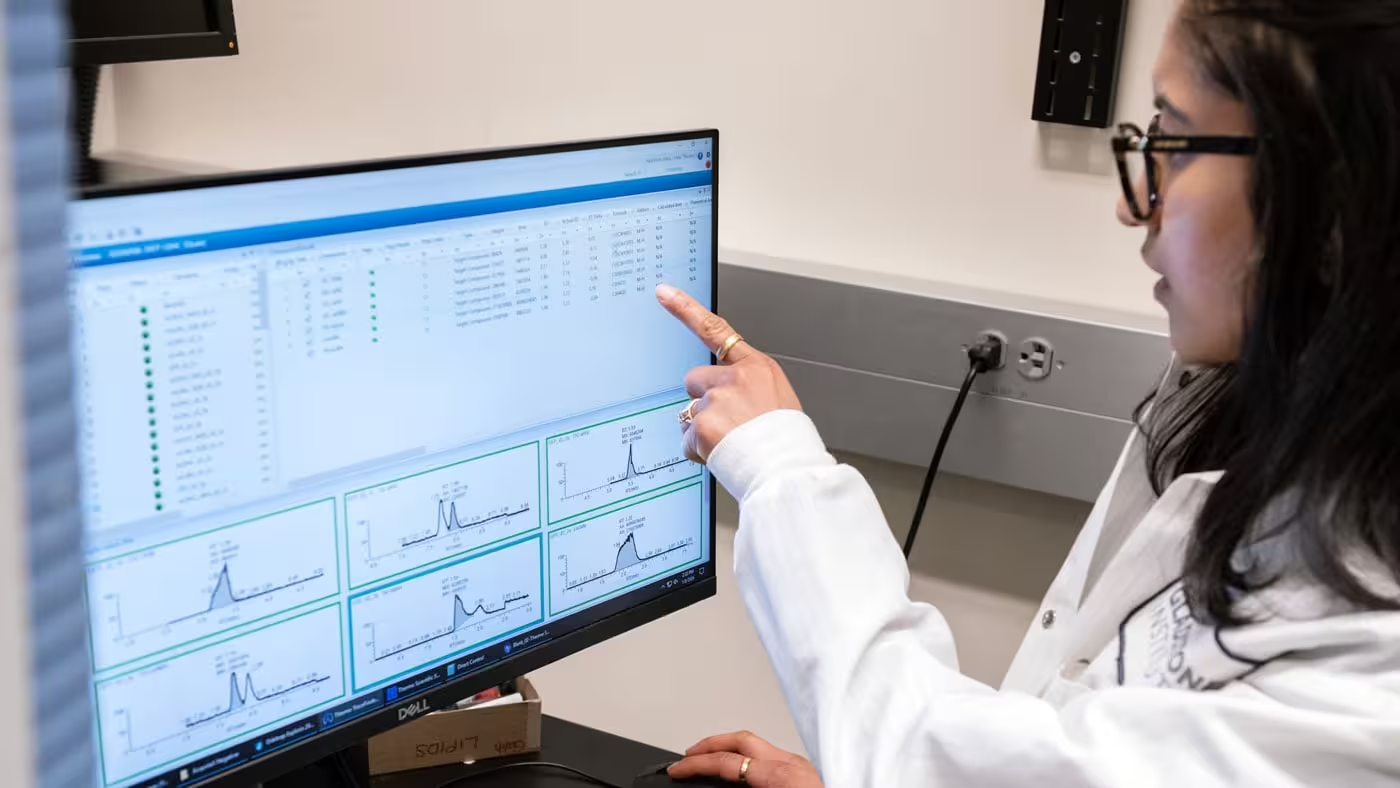
When HTRA2 or CLPB is missing or defective, that cleanup process stalls. Misfolded proteins accumulate and a critical subunit of Complex I stops functioning. The result is paradoxical: cells still have oxygen available, but mitochondria cannot use it. Excess oxygen becomes a toxin. The authors link this mechanism to multiple conditions, including 3-methylglutaconic aciduria, Leigh syndrome, and other mitochondrial or neurodegenerative diseases where Complex I is impaired.
From cells to animals: flipping the oxygen switch
Cell-based genetic screens pointed the team to candidate genes. The real test was whether adjusting environmental oxygen could change outcomes at the organismal level. In mice engineered to lack HTRA2 and that develop motor neuron degeneration, researchers reduced the fraction of oxygen in the air the animals breathed. The effect was striking. Lifespan roughly tripled and neuroinflammation in regions such as the striatum decreased. Motor symptoms improved. The result was not a subtle shift. It was a robust rescue of a disease course previously devastating in mice.
Why does lowering oxygen help? Think of it as restoring balance. If mitochondria cannot oxidize fuel normally because Complex I is clogged, giving tissues less oxygen reduces the buildup and the downstream oxidative damage. The intervention does not repair the broken protein directly. Instead, it changes the chemical environment so cells no longer drown in unused oxygen.

This strategy extends prior work in which hypoxia-like conditions benefitted models of diabetes and solid tumors. The new study expands that scope and proposes that many diseases tied to Complex I dysfunction might respond to carefully controlled hypoxia therapy.
Implications, therapies, and practical hurdles
Translating a low-oxygen breathing regimen into human treatment is not straightforward. Long-term hypoxia can have side effects. Not every patient will tolerate it. Yet the concept opens multiple clinical avenues. One approach is controlled hypoxia chambers or tailored respiratory therapy. Another is pharmacological: Jain's team is developing a compound called HypoxyStat designed to reproduce the protective cellular response without subjecting patients to prolonged atmospheric hypoxia. A pill or injection would be easier to manage in a clinic than daily time spent in a low-oxygen room.
There are additional scientific questions. Which specific mutations or syndromes will benefit? What oxygen level is therapeutic but safe? Can intermittent hypoxia produce the same benefit as continuous exposure? And how will these interventions interact with other treatments? Rigorous clinical trials will be essential.
The potential reach is significant. Complex I dysfunction appears in rare pediatric mitochondrial disorders such as Leigh syndrome and 3-methylglutaconic aciduria, and it also plays roles in more common neurodegenerative diseases like Parkinson's. A therapy that targets the underlying oxygen imbalance could therefore have broad impact, turning one physiological liability into a therapeutic opportunity.
Expert Insight
'This work reframes how we think about oxygen in disease,' says Dr. Elena Morales, a neurologist and mitochondrial specialist unaffiliated with the study. 'We have assumed that more oxygen is always better. These results show that cellular context matters. If the machinery that uses oxygen is broken, lowering the supply can be protective.' She adds, 'The challenge now is translating an elegant animal result into safe, effective human protocols.'
Other scientists emphasize caution mixed with optimism. Animal models can overstate effects, and patient heterogeneity is large. Still, the mechanistic clarity of the HTRA2–CLPB–Complex I pathway gives researchers a concrete set of biomarkers to follow in early clinical studies.
Conclusion
Lowering oxygen is not a universal remedy. It is, however, a surprising and biologically grounded strategy to counteract damage when mitochondrial respiration fails. The Gladstone study links a defective protein to oxygen accumulation and demonstrates that tuned hypoxia can reverse disease signs in mice. If future research validates safety and efficacy in humans, hypoxia-based treatments or HypoxyStat-like drugs could offer new hope for patients with mitochondrial and certain neurodegenerative disorders. For now, the finding invites a shift in perspective: oxygen is vital, but its value depends on whether the cell can actually use it.

“My work centers on sustainability, energy, and environmental science — examining how innovation can lead to a greener future.”

Discussion
Leave a Comment
Comments (3)
Quick thought: promising rescue in mice, yet mice arent humans. HypoxyStat pill is clever but longterm hypoxia side effects worry me, hope they go slow.
Interesting, but is this even translatable to humans? High altitude style therapy for kids seems risky, needs solid trials..
Whoa, mind blown, oxygen as the enemy? This flips what I thought about mitochondria. Crazy results, but curious how they'd do in people