
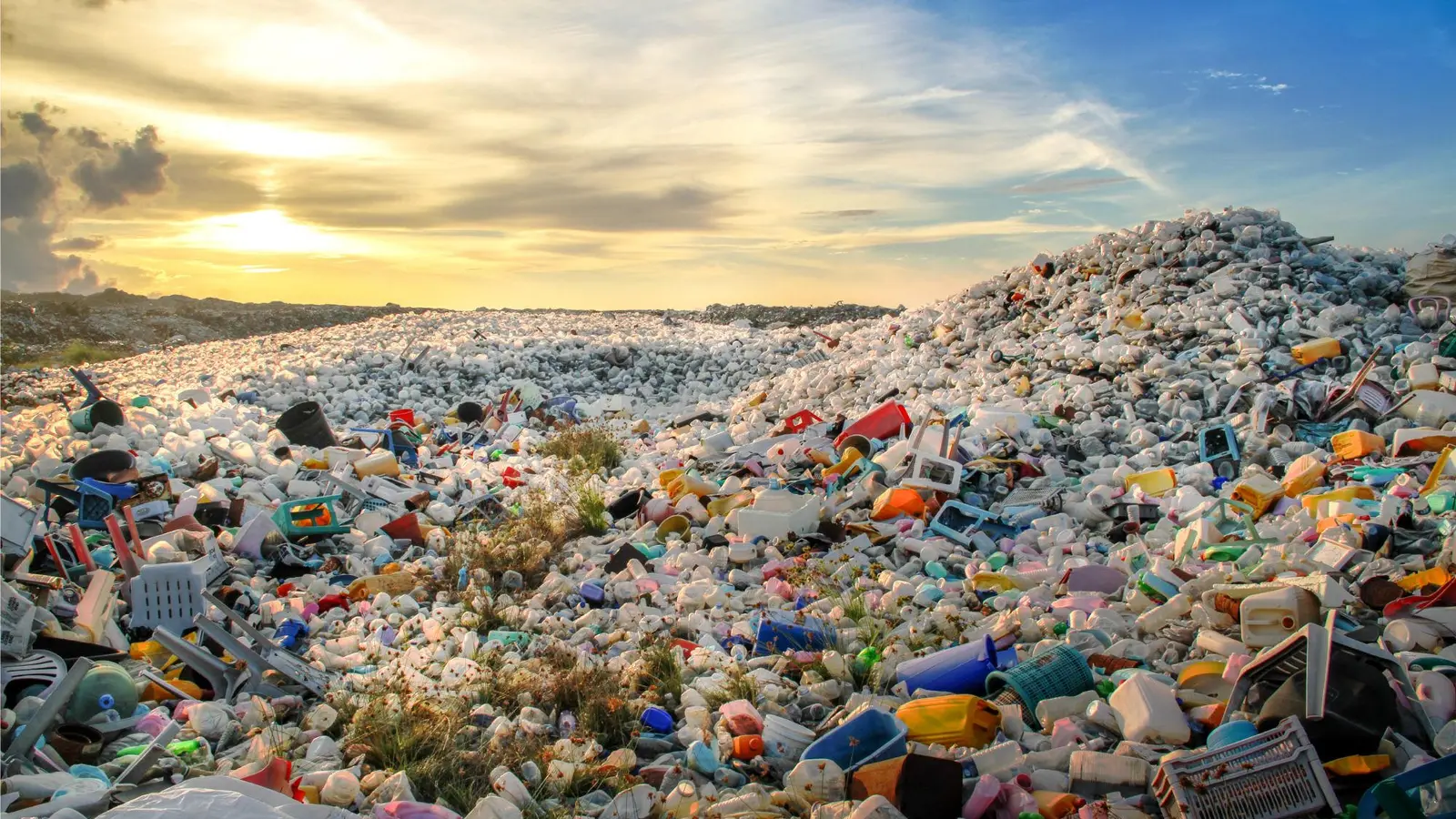
A pot of hot salt, not a furnace at blistering temperatures, is now at the center of a surprising route to convert everyday plastic into fuel. The method, developed by researchers at Oak Ridge National Laboratory and collaborators, uses molten salts to break down polyethylene into gasoline-like and diesel-like hydrocarbons at temperatures below 200 degrees Celsius.
Salt, chemistry, and a low-temperature turn
Polyethylene is everywhere: shopping bags, packaging films, cutting boards, and many single-use items. It is chemically robust, which explains both its utility and its persistence once discarded. Traditional thermal recycling techniques such as pyrolysis require intense heat, typically 450 to 500 degrees Celsius, to crack those long carbon chains into useful small molecules. That high temperature means heavy energy inputs and materials challenges for reactors and catalysts.
The ORNL team followed a different instinct. Heat a mixture of inorganic salts until it liquefies. Add aluminum chloride sites into that molten medium. Drop in polyethylene. The liquid salt acts as the reaction environment and as the catalytic agent, enabling chain scission and molecular rearrangements at far lower temperatures. In lab trials, the process yielded roughly 60 percent gasoline-like product by mass, with other fractions resembling diesel-range compounds.
The advantage is threefold. First, the required temperatures are unusually modest for plastic cracking. Second, the molten salts eliminate the need for expensive noble metal catalysts. Third, there is no external hydrogen supply or organic solvent required. Taken together, these features make the approach chemically lean and potentially cheaper to operate if it can be scaled.
What the team found at the atomic level
Understanding why the salt works requires looking at what happens to the polymer chains. Polyethylene consists of long chains of carbon and hydrogen. The aluminum-containing molten salt creates strongly acidic sites that can induce the formation of positively charged carbon centers. Once those carbocations form, the chain becomes vulnerable and can fragment into smaller hydrocarbon fragments typical of fuels.
To track these transformations, investigators used deuterium labeling. Deuterium, a heavier isotope of hydrogen, serves as an excellent tracer in reaction studies. Neutron scattering at ORNL’s Spallation Neutron Source helped the team follow how hydrogen atoms moved and redistributed during the breakdown, because neutrons are highly sensitive to light elements like hydrogen and its isotopes.
Complementary measurements at Lawrence Berkeley National Laboratory’s Advanced Light Source used soft X-ray spectroscopy to probe changes at the aluminum sites. Those experiments suggested that electron-rich intermediates form and interact with aluminum, supporting a mechanistic picture in which aluminum coordinates with transient aromatic or carbocation intermediates and thereby steers the reaction pathway.

Analytical evidence and reproducibility
The group reinforced the spectroscopic findings with nuclear magnetic resonance, X-ray diffraction, gas chromatography-mass spectrometry, and computational modeling. Together, those methods clarified why simpler polyethylene chains were more likely to produce gasoline-range molecules while more branched or complex polymers yielded heavier, diesel-like fractions.
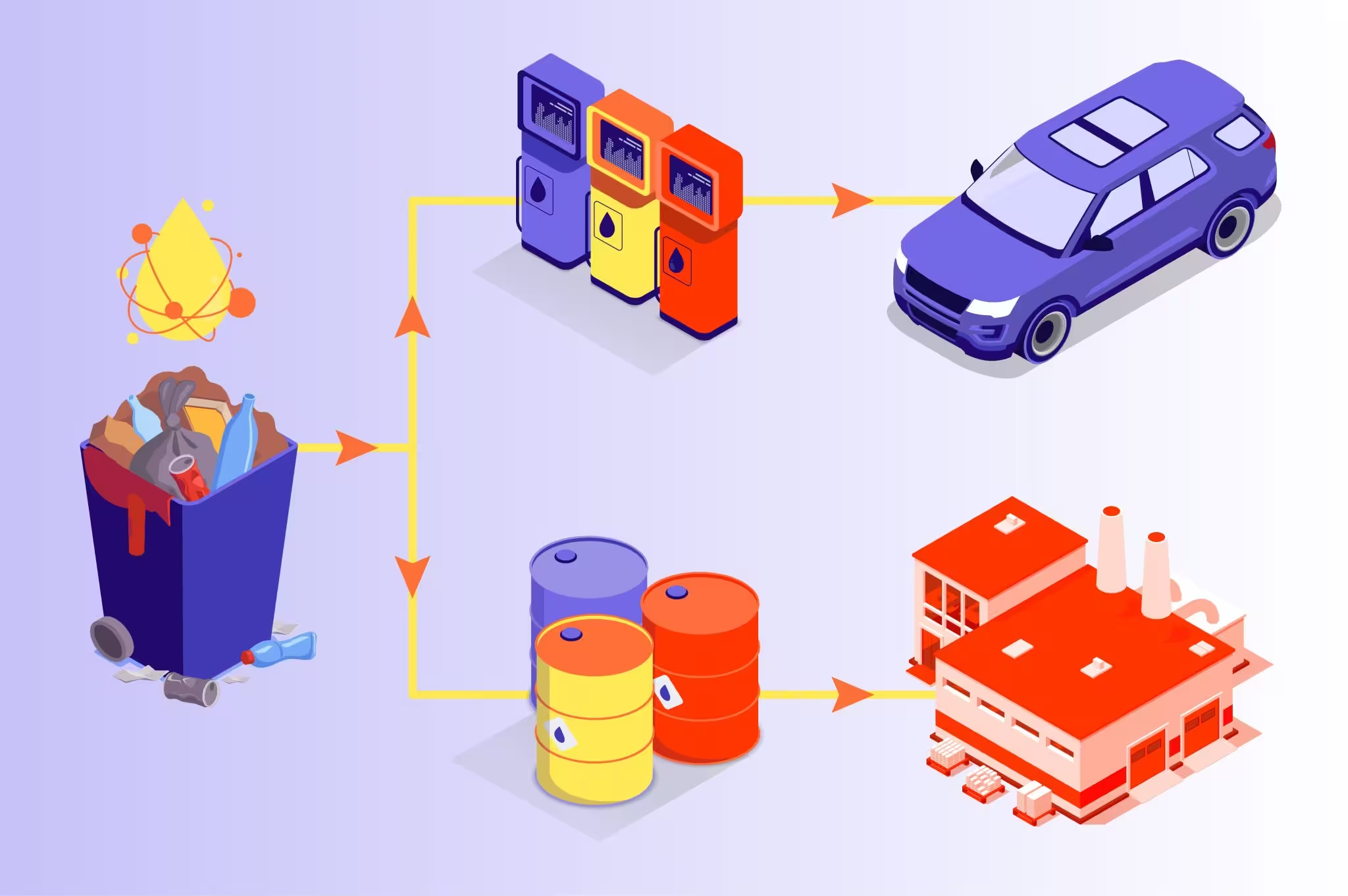
A novel molten salt-based system converts polyethylene waste into gasoline- and diesel-like fuels for transportation and manufacturing.
Why decades of molten salt research mattered
Molten salts are not new to chemistry. ORNL’s work with these materials dates back to at least the 1960s, when molten salt reactors were tested for nuclear applications. Those historical investments established deep expertise on handling, characterizing, and modeling salt systems under challenging conditions. That background proved useful when Dai and colleagues repurposed molten salt chemistry for polymer conversion.
Molten salts tolerate corrosive chemistries and high ionic strength, so they can remain stable where organic solvents or gas-phase catalysts struggle. If the current method can be engineered into continuous processes, the stability of the salt medium could simplify reactor design and reduce some scale-up hurdles that plague thermal conversion technologies.
There are still practical obstacles. The aluminum-containing salt absorbs water, and that hygroscopic behavior undermines stability. The team is exploring containment strategies and salt formulations that resist moisture uptake, potentially by adding halogen components or protective carbon-based layers that improve phase separation and downstream handling.
Potential impact and industrial prospects

If the chemistry survives engineering scrutiny, the implications are notable. Polyethylene is the most abundant commodity plastic and a consistent component of municipal waste streams. Turning that polymer into value-added hydrocarbon liquids could create feedstocks for chemical manufacturing or blended transportation fuels, reducing reliance on virgin fossil feedstocks and offering a path for some types of plastic waste to reenter industrial use.
The economics look promising on paper: the catalyst system relies on inexpensive aluminum salts rather than costly noble metals, and the lower temperature reduces energy demands. The team has applied for a patent on the technique and says the next steps are pilots that can demonstrate continuous operation and robust salt management under realistic feed conditions.
Expert Insight
"This approach stands out because it rethinks the reaction medium as an active participant rather than a passive container," says Dr. Elena Rios, a materials chemist and waste-to-chemical specialist unaffiliated with the study. "Molten salt media can provide unusual acid-base landscapes and ion coordination that simply are not available in gas-phase pyrolysis. The challenge will be designing engineering solutions that keep the salts dry and controllable at scale."
Dr. Rios adds a practical caveat: "Pilot tests with real municipal feedstocks are essential. Mixed plastics, contaminants, and additives change reaction chemistry and product composition. If the team can maintain selectivity with realistic inputs, the process could be transformative."
Conclusion
The ORNL-led work demonstrates a plausible and chemically elegant route to convert polyethylene into fuel-like hydrocarbons using molten aluminum salts at unusually low temperatures. Analytical studies point to aluminum-driven carbocation chemistry as the key driver, and the approach sidesteps expensive catalysts and hydrogen supplies. Still, water sensitivity and the complexities of feeding real-world plastic waste into the reactor remain practical hurdles.
If engineering solutions can manage the salts and preserve catalyst activity in continuous operations, molten-salt conversion could become one tool in a larger portfolio of waste-to-resource technologies. It will not be a single solution to the plastic waste crisis, but it could shift some polyethylene from landfill or incinerator into a feedstock that industry can reuse.
Researchers at ORNL and partner institutions continue to refine the chemistry and evaluate scaling pathways. The combination of decades of molten salt science and modern analytical tools has opened a new avenue worth watching as the global effort to close material loops intensifies.

“My work centers on sustainability, energy, and environmental science — examining how innovation can lead to a greener future.”

Discussion
Leave a Comment
Comments (1)
Whoa, molten salt under 200°C? Mind blown. If they fix the water uptake and handle mixed waste streams this could scale — skeptical but curious.