

Imagine two towns with similar gyms, grocery options, and job markets. In one town a larger share of residents regularly sleep fewer than seven hours a night. Over time, that community shows noticeably shorter life expectancy than its twin. The difference is not small. It held up even after researchers accounted for exercise, education, employment, and other familiar health factors.
How the researchers arrived at sleep's outsized role
Scientists at Oregon Health & Science University analyzed county-level survey data collected across the United States between 2019 and 2025 and compared those results to local life-expectancy estimates. Their exposure of interest was simple: self-reported sleep duration, with fewer than seven hours per night treated as insufficient. The outcome: average life expectancy for each county.
The investigators built statistical models that gradually introduced potential confounders. First they adjusted for smoking, physical inactivity, employment, and educational attainment. Even then, insufficient sleep was one of the strongest predictors of lower life expectancy. In an expanded model that also included obesity and diabetes, obesity rose ahead of short sleep, and diabetes also contributed, but sleep still showed a robust, independent association.
Because the work used observational, ecological data, it cannot prove causation. County-level correlations can hide individual differences. Still, the signal was consistent and sizable enough to merit attention: sleep duration tracked with longevity more closely than many behaviors we typically prioritize, including diet and exercise.
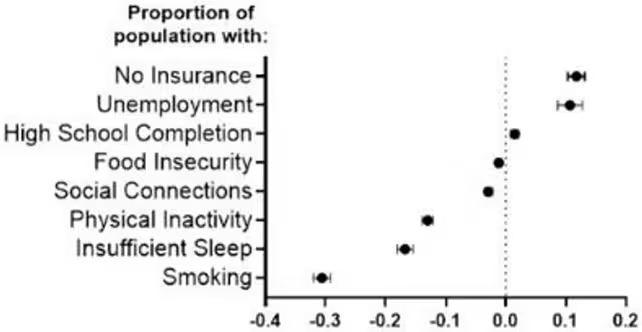
Life expectancy's association with sleep is stronger than with many other factors, including diet and exercise. Although, as this graph shows, physical activity and social connections also influence life expectancy.
Why sleep might matter more than we usually admit
Sleep weaves through nearly every physiological system. One missing night affects brain networks that govern decision-making and mood. Repeated short sleep disrupts immune function, glucose metabolism, appetite regulation, and the hormonal rhythms that coordinate repair and inflammation. Over years, those small disruptions may accumulate into chronic disease.

The study highlights obesity and diabetes as likely mediators. Poor sleep can increase hunger hormones, blunt insulin sensitivity, and reduce the energy available for physical activity. So insufficient sleep may both directly harm bodily systems and indirectly amplify risks tied to weight and metabolic disease.
Public-health implications are immediate. Unlike some structural determinants of health, sleep habits are often modifiable within the limits of work schedules and caregiving responsibilities. Small policy changes—later school start times, workplace flexibility, clearer guidance on shift rotations—can shift population sleep patterns. At the individual level, small, consistent practices matter: a fixed sleep window, dimming lights before bedtime, and avoiding screens in the hour before sleep can help preserve nightly rest.
Practical limits and a cautious take
Keep in mind the study uses self-reported sleep and county averages. Self-report can over- or understate actual sleep time for individuals. And ecological associations do not untangle causation: people sleeping less might also face stressors, noise pollution, or economic insecurity that shorten lives in other ways. The study authors acknowledged these limits while stressing the persistence of the relationship across multiple models.
Clinical guidance remains unchanged: the American Academy of Sleep Medicine and the Sleep Research Society recommend adults aim for seven to nine hours nightly. Where that is not possible on weeknights, some evidence suggests partial recovery during weekends may help, but regularity appears to be important.
Expert Insight
"Seeing sleep appear so consistently across counties was striking," said Andrew McHill, a sleep physiologist affiliated with OHSU. "We have long known sleep matters for health, but the degree to which sleep sufficiency correlated with life expectancy surprised even those of us in the field."
Dr. McHill added that public messaging around health often privileges diet and exercise while treating sleep as a private luxury. "This study suggests sleep should be part of population-level prevention strategies, not an afterthought," he said.
Conclusion

Food and exercise matter. They remain pillars of long-term health. But this large-scale, observational analysis signals that sleep deserves equal billing in public-health conversations about longevity. If communities want to push life expectancy upward, improving nightly rest across populations offers a concrete target.

“My work centers on sustainability, energy, and environmental science — examining how innovation can lead to a greener future.”

Discussion
Leave a Comment
Comments (2)
Is this even causal tho? counties differ in poverty, noise, stress etc. Sleep might be a marker not the cause. want individual level data, not just averages
wow really? the size of the effect surprised me, if towns actually shifted school times and work schedules big wins possible. but selfreport sleep... still, kinda hopeful, also costs??