
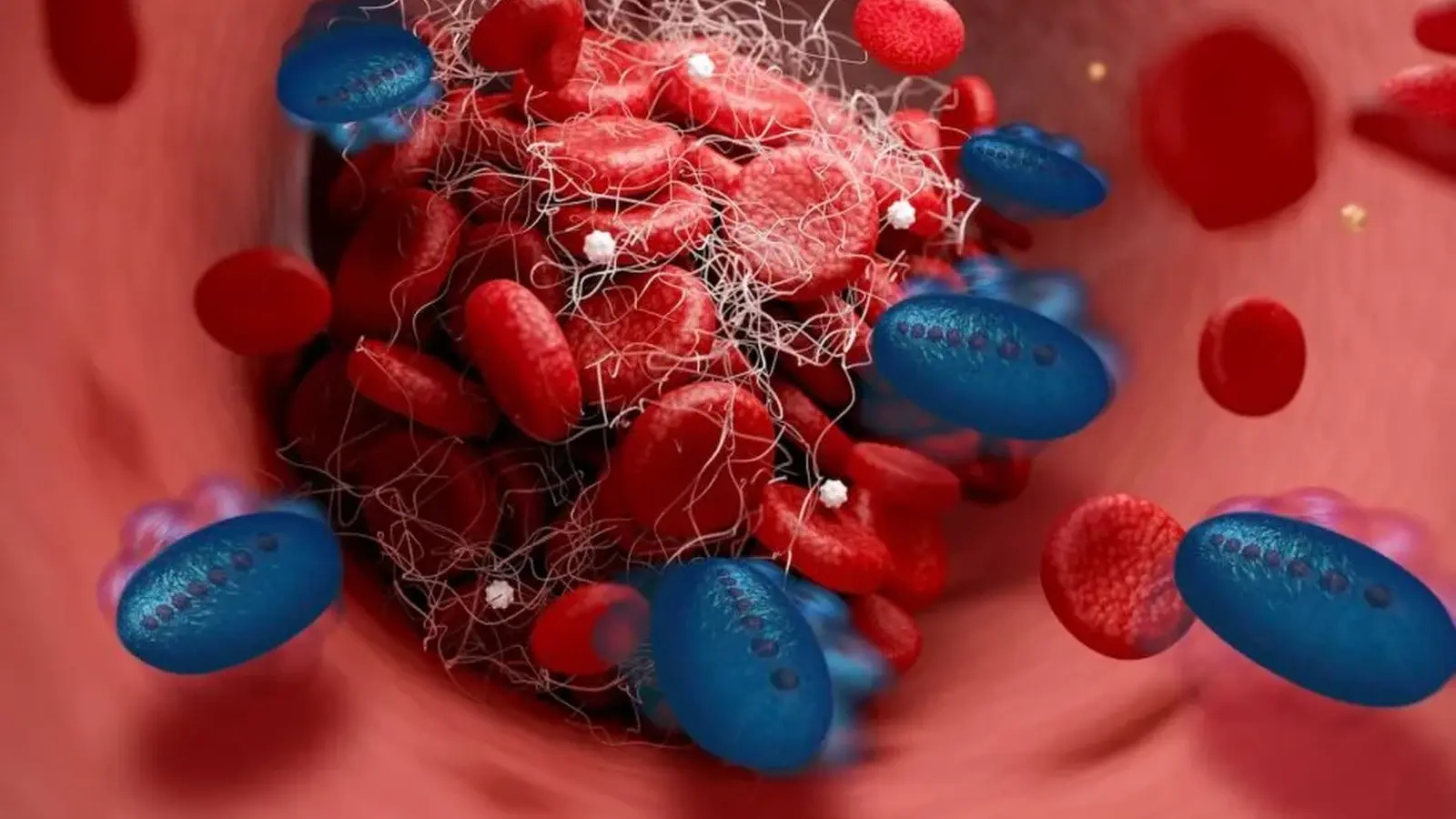
They spin like tiny gymnasts along the vessel wall, nudging dissolved drug particles into places that blood itself cannot reach.
A magnetic trick to reach blocked vessels
Clot-busting medications, known as thrombolytics, only work if they arrive at the site of a thrombus. But when a clot obstructs a vessel, the very flow that would carry the drug is reduced or diverted. Doctors can thread catheters close to the blockage, yet delivering an effective concentration of drug into the occluded region remains a stubborn hurdle.
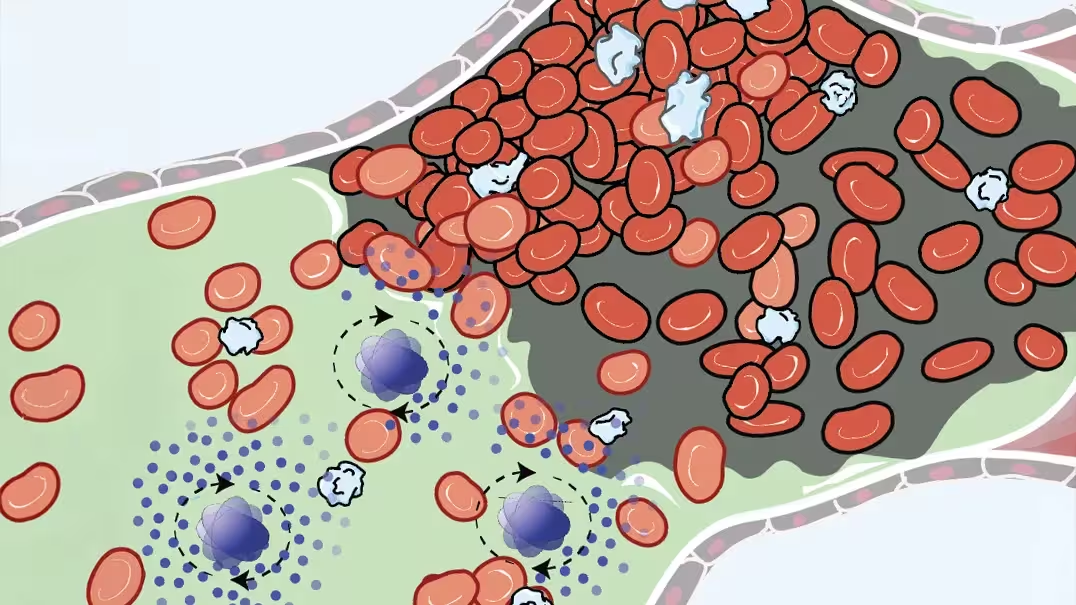
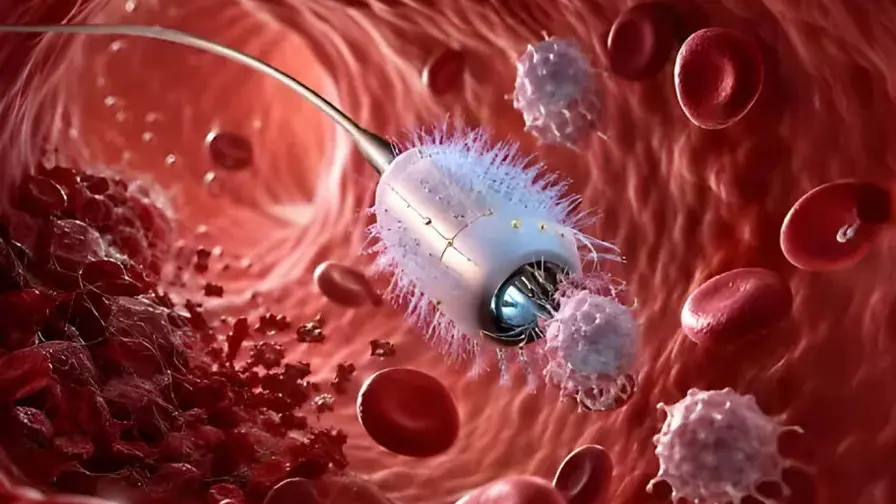
Researchers at ETH Zurich built a different solution: elongated microbots made from a biocompatible gel loaded with iron oxide nanoparticles. Each particle measures roughly 8 micrometres in length, comparable to a red blood cell. When exposed to a rotating magnetic field, the nanoparticles align along the microbot’s long axis and cause the whole structure to rotate. That rotation translates into a tumbling motion that propels the microbot forward along the vessel wall. Short bursts. Complex flows. Tiny eddies form around the tumbling body, and those microcurrents can shepherd dissolved drug molecules into the occluded pocket.
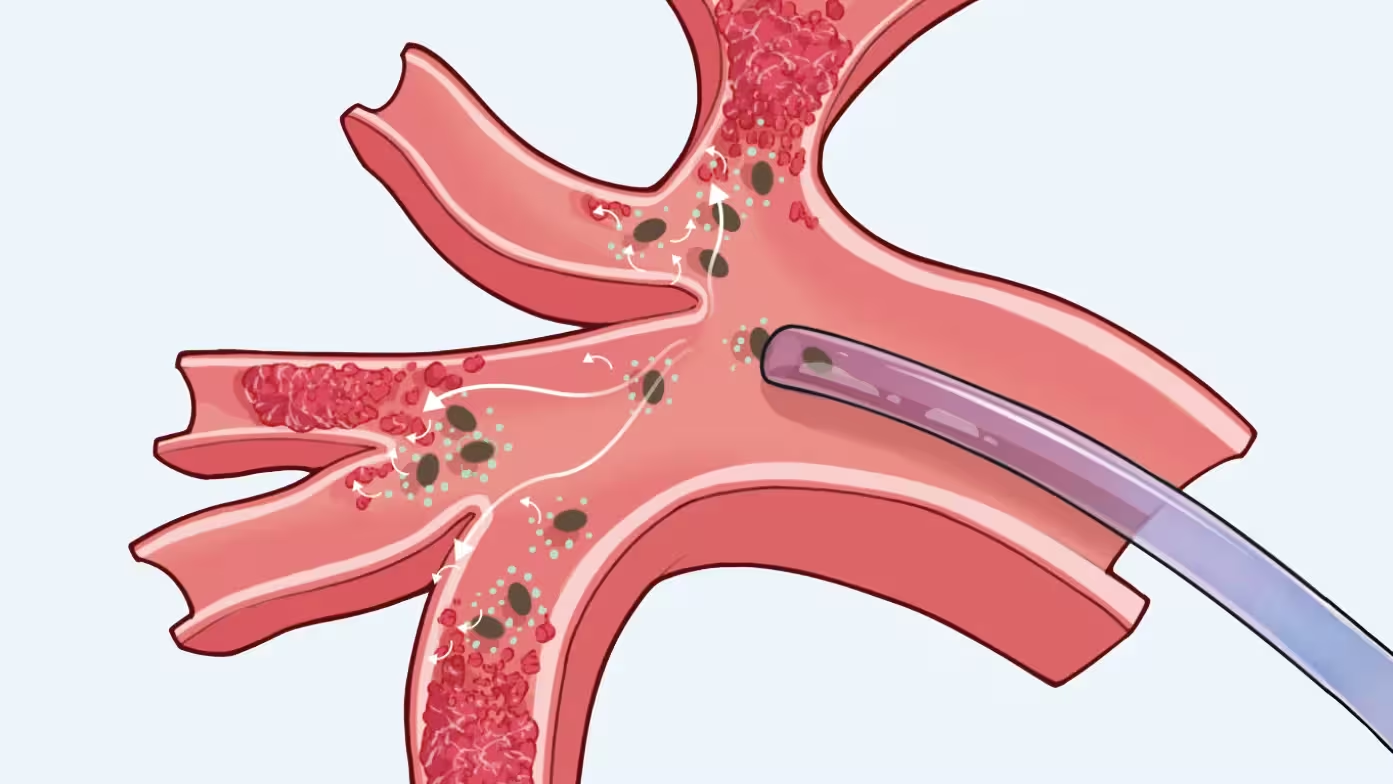
Microbots (dark green) and active drug material (light green) are delivered to the clot site via a catheter.
From lab models to living pigs: what the tests showed
Initial experiments used silicone models of blood vessels filled with pig-blood clots. With the microbots assisting, the thrombolytic reached and degraded the obstruction about six times faster than the drug alone. That dramatic acceleration persuaded the team to move into animal trials.
In collaboration with clinicians at Charité — Universitätsmedizin Berlin, the group induced arterial clots in live pigs to test how the system behaved in real physiology. After 30 minutes of combined microbot navigation and thrombolytic therapy, the area of vessel in which flow was restored doubled compared with treatment using only the drug. In short: the microbots improved local delivery and amplified the treatment’s effective range in a living circulatory system.
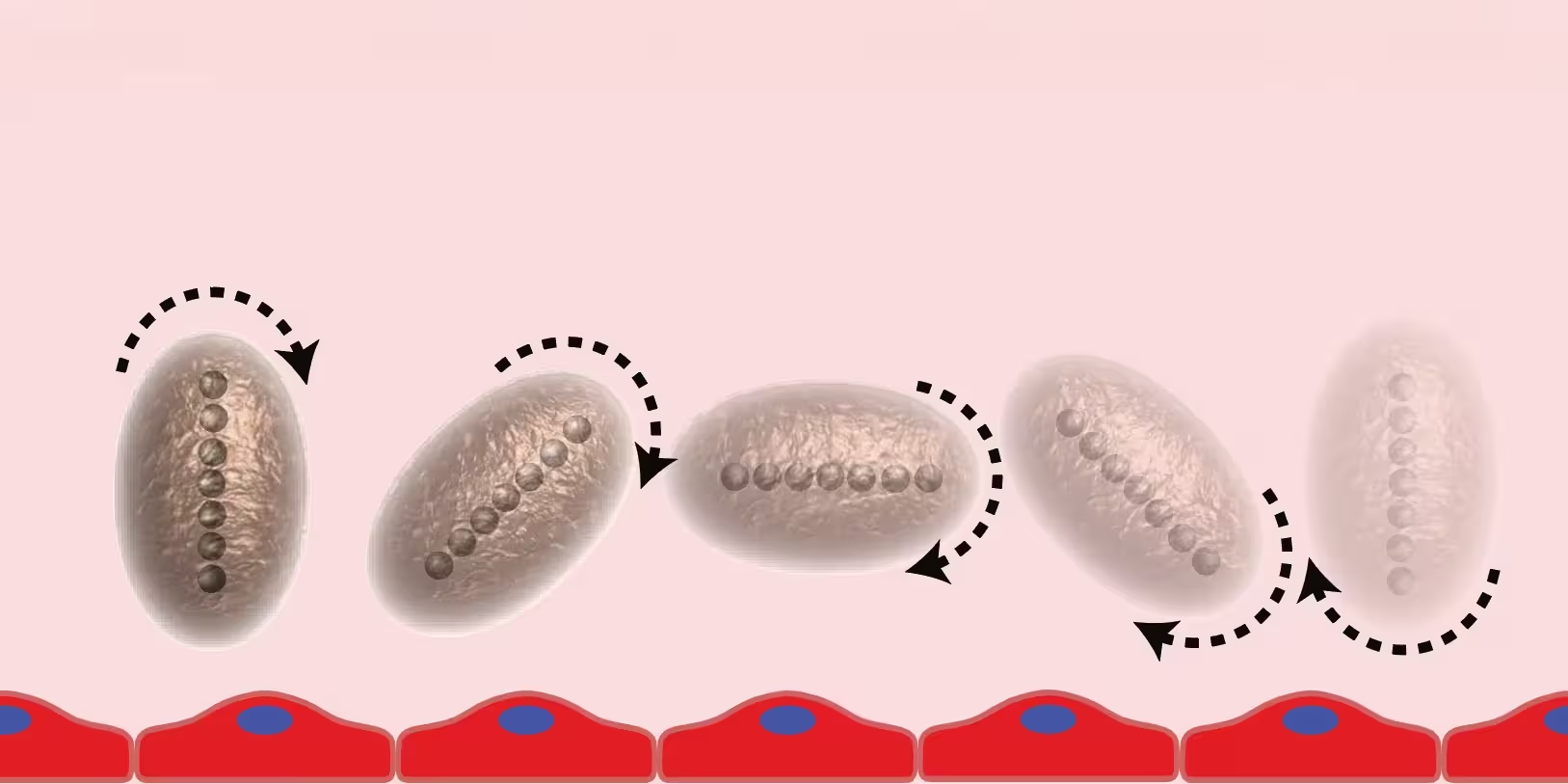
Rotating microbots (blue) move toward the blood clot (top of image).
Why this matters
Thrombolytics are lifesaving in stroke, myocardial infarction and pulmonary embolism, but systemic dosing carries risks and can be inefficient when blood supply to the occlusion is blocked. By concentrating drug action where it is needed, magnetic microbots could lower systemic exposure, shorten treatment times and improve outcomes where current approaches struggle.
The ETH team emphasizes safety. The gel coating prevents the microbots from clumping. The engineered magnetic response yields predictable rotation and motion. Still, the path from promising animal results to human use is rigorous. Larger-animal safety studies, longer observation windows and disease-specific models, such as heart-attack scenarios, remain on the agenda before clinical trials can begin.
"These experiments show that active, magnetically guided carriers can enhance thrombolytic delivery to occlusions that are otherwise poorly perfused," the researchers summarize in their report, noting that more work is needed to map risks, clearance and potential immune responses.
Next steps and future prospects
Beyond safety and efficacy studies, engineers and clinicians must refine control systems for clinical settings. That includes designing magnetic-field generators that can operate outside specialized laboratories and integrating imaging to monitor microbot position in real time. Related technologies—such as magnetically steerable catheters and targeted nanoparticles—could combine with this approach to create hybrid interventions.
If these hurdles are cleared, the benefit is clear: a medical tool that steers therapeutics into the blind spots of circulation where clots hide, offering faster reperfusion and potentially fewer side effects from systemic drug exposure.

“My work centers on sustainability, energy, and environmental science — examining how innovation can lead to a greener future.”

Discussion
Leave a Comment
Comments (2)
Sounds cool, but is magnetic control precise enough in humans? MRI interference? Also clearance, immune response, and who cleans up the bots?
Wait tiny tumbling robots doing CPR for clots? Wild. If it really halves treatment time this could change ER care, curious about long term safety tho