
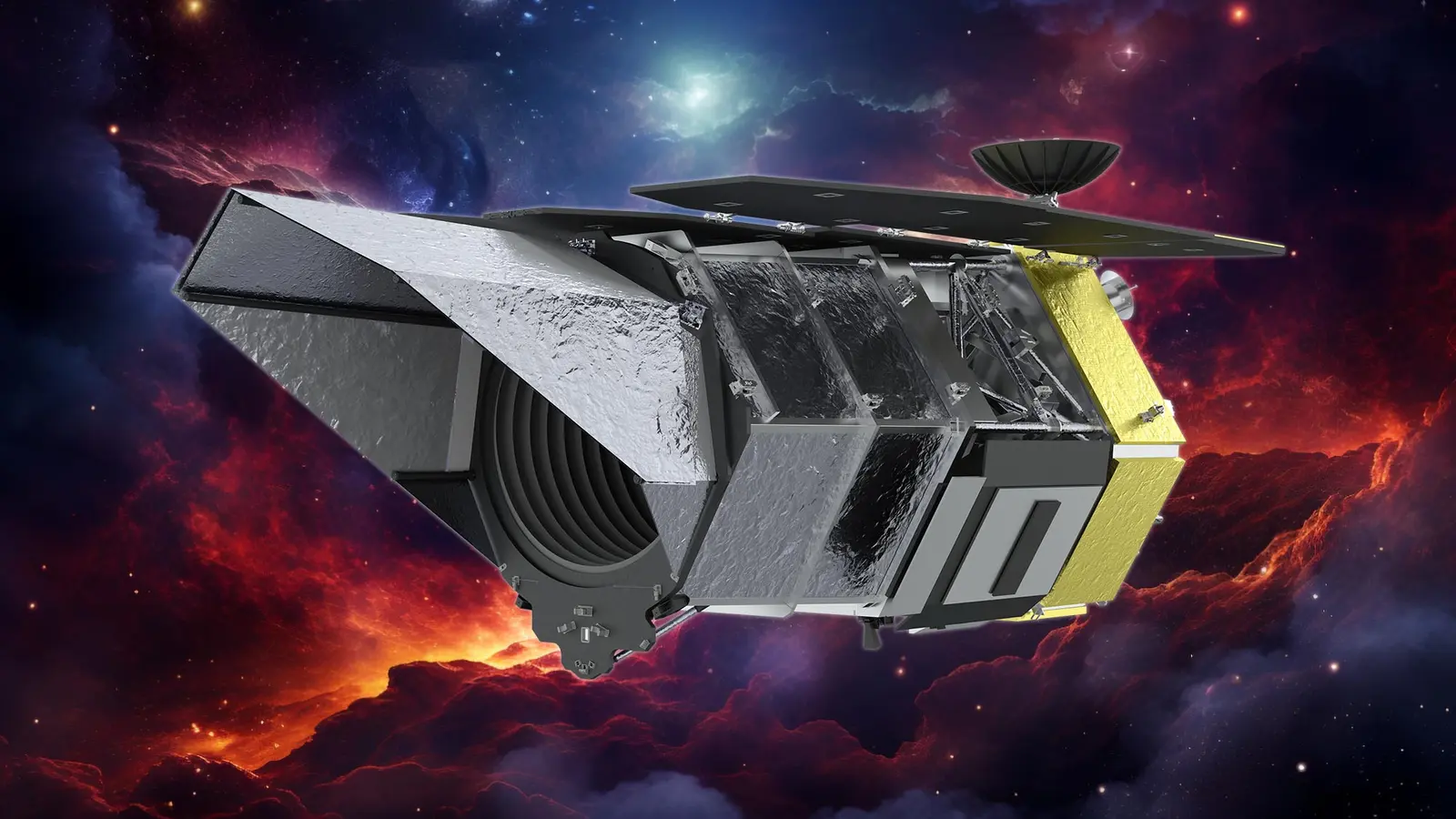
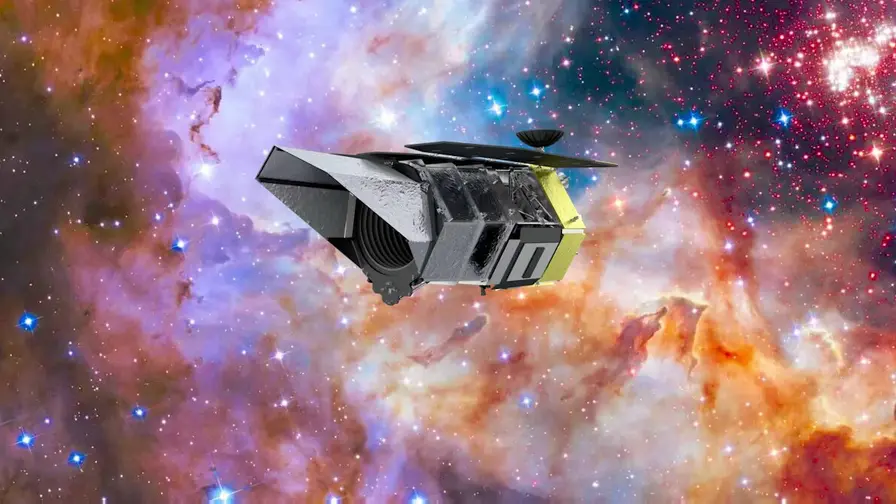
Hold your breath. Space telescopes do not simply point and stare; they hunt for whispers of light across the vacuum. This week NASA’s Nancy Grace Roman Space Telescope demonstrated the kind of steadiness that turns faint whispers into crisp signals — the fine guidance system held aim with jaw-dropping precision and the Coronagraph Instrument opened its shutter to the cosmos for the first time.
Between September 15 and 21 the Roman team ran a focused campaign to prove the observatory could remain locked on a celestial target for the durations real science demands. Then, on September 22, the Coronagraph Instrument recorded its first cosmic light. Together these milestones mark a major step toward Roman’s twin goals: mapping wide swaths of the infrared sky with unprecedented speed and demonstrating technologies to image worlds circling nearby stars.
Guiding on patterns rather than points
At the heart of Roman’s pointing success is a layered guidance approach. The Wide Field Instrument, Roman’s primary camera, carries 18 detectors. Each detector donates a small region dedicated to watching a guide star, a celestial reference with a precisely known position. The spacecraft’s attitude control system places Roman in roughly the right orientation, and then the fine guidance system watches those stars and nudges the telescope to counter tiny drifts.
Precision here is extraordinary. The team reports stability better than 1/100,000 of a degree for half an hour when the Wide Field Instrument is in use, and for up to eight hours for the Coronagraph Instrument. To visualize that: it is like holding a laser steady on a U.S. dime from roughly 240 kilometers away. Engineers expect refinements to push that equivalent distance to about 370 kilometers.
Roman will also trial a novel trick. Instead of guiding only on a star’s pinpoint image, the telescope can use spectral features — wavelength patterns the instruments already measure for science — as a reference. Spectral guiding promises a higher-fidelity lock because the telescope reads an object’s detailed fingerprint across wavelengths, not just its location. The team plans to validate this mode in the coming weeks, which could broaden how space telescopes manage ultra-stable observations.
Coronagraph finally peers into the dark
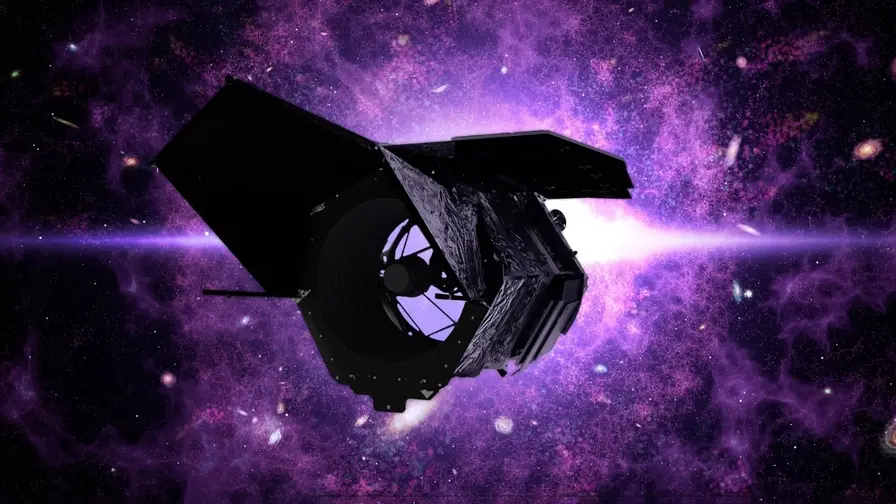
Blocking starlight is hard. A single misstep, a microscopic vibration, or a tiny pointing error can let overwhelming starlight leak into the instrument and swamp the faint glow of a planet or a dusty disk. The Coronagraph Instrument is a technology demonstrator built to show that advanced starlight suppression and wavefront control can work in space.
The coronagraph was brought online early in September and, after initial checkouts, the fine guidance system teamed with the instrument for two key tests on September 22 and 27. Those runs were intentionally cautious. The detectors were kept warmer than final operating temperatures to discourage contamination during the early commissioning phase; that choice adds noise but protects the instrument long term. The first images were, by design, imperfect. They were tests to confirm light travels correctly through the optical train and that the coronagraph can be focused.
For its first exposure the coronagraph pointed at a faint star in the Large Magellanic Cloud, a nearby satellite galaxy. A follow-up observation used cooled detectors and targeted a denser star field in the same galaxy; the team reported seeing the expected population of stars in a single frame. Those early successes let engineers begin the methodical process of tuning optics, reducing background, and preparing the instrument for the far more demanding observations that will try to isolate light from exoplanets.
Vanessa Bailey, a Coronagraph Instrument scientist at NASA’s Jet Propulsion Laboratory, described the milestone as confirmation that the instrument can form a focused image and the first step in a long, careful sequence of tests to ready the coronagraph for future science.
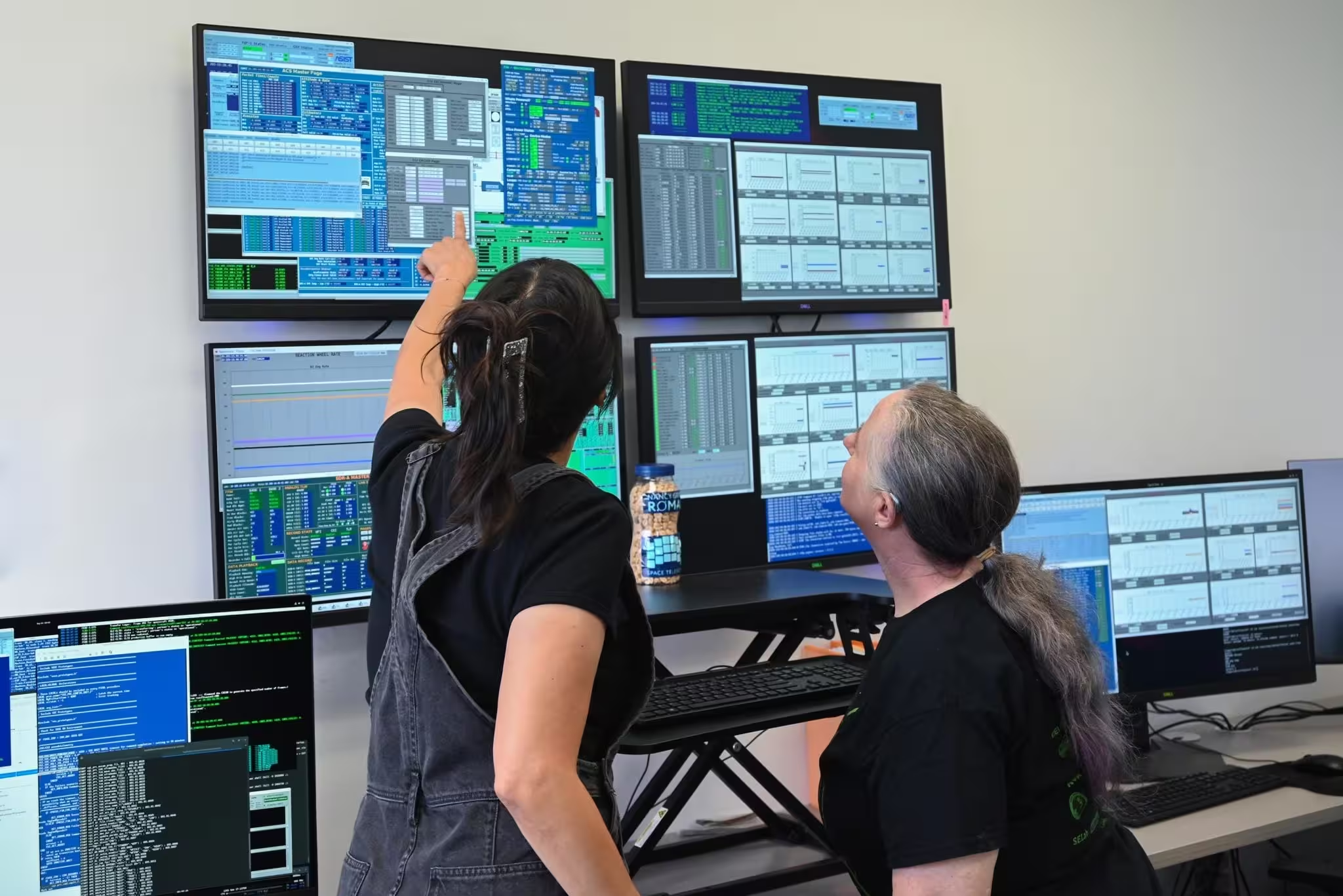
Inside the Roman Coronagraph Commanding Center at IPAC at Caltech, Amelia Nash (left) and Judy Adler (right), Coronagraph Operators, monitor telemetry and wait for the data from the first observation by the coronagraph. Team members have been preparing for this moment, in this very room, for years leading up to launch.
Why this matters for exoplanets and wide-field surveys
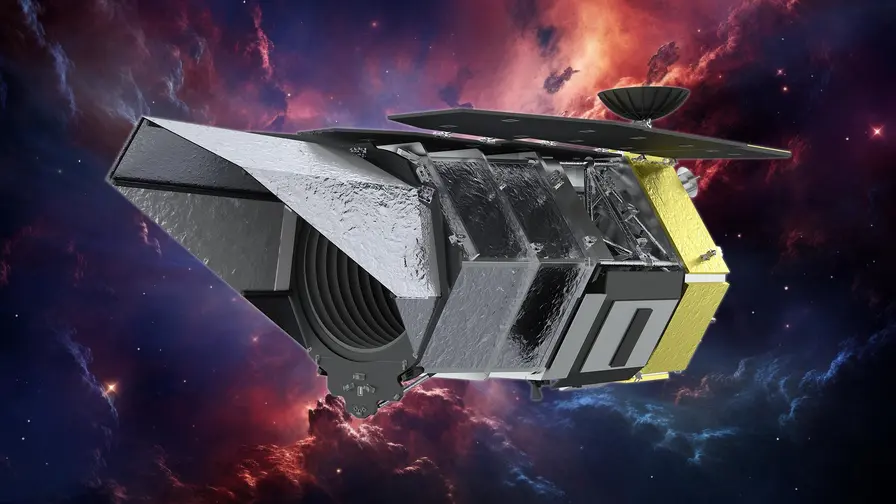
Roman carries two very different capabilities. The Wide Field Instrument will conduct wide-area infrared surveys that map galaxies, dark matter through weak lensing, and microlensing events that reveal distant planets. The Coronagraph Instrument is not primarily a survey tool; it is a pathfinder for technologies that could let future telescopes directly image exoplanets and study their atmospheres.
Direct imaging of exoplanets requires blocking a star that can be billions of times brighter than the planet itself. Success depends on three things: extreme optical stability, sophisticated wavefront sensing and control, and coronagraph masks that suppress starlight. Roman’s recent pointing demonstrations and the coronagraph’s first light together show these subsystems are beginning to work in concert.
Beyond immediate hardware checks, the tests validate operational techniques: how long the observatory can stare without drift, how the guidance loop reports and corrects errors, and how the coronagraph behaves when detectors change temperature to reduce contamination risk. Those lessons will feed both Roman’s science program and the design choices for future flagship missions aimed at imaging Earth-like planets around nearby stars.
Expert Insight
"Precision is the unsung hero of direct imaging," says Dr. Elena Márquez, an astrophysicist who studies high-contrast imaging. "You can build an exquisite coronagraph, but without sub-arcsecond stability and the ability to sense and correct the tiniest tip and tilt, the faint planet signal never emerges. Roman is demonstrating that the choreography between guidance, attitude control, and coronagraph optics can actually be executed in space. That opens practical pathways to follow-up missions that will look for atmospheric signatures on nearby worlds."
Conclusion
Roman’s recent commissioning strides do not yet deliver catalogues of new exoplanets. Rather, they buy confidence. The observatory has shown it can hold steady and that its coronagraph can see light from deep space; those are necessary preconditions for the more ambitious observations Roman will attempt. Over the next months the team will tighten calibration, validate spectral guiding, and push the coronagraph through progressively harder experiments. If those steps continue to succeed, Roman will not just survey the infrared sky — it will pave the way for future telescopes capable of imaging other worlds.

“My work centers on sustainability, energy, and environmental science — examining how innovation can lead to a greener future.”

Discussion
Leave a Comment
Comments (1)
wow, that stability number blew my mind. holding a laser on a dime from 240 km? insane. cant wait for spectral guiding, if it works