
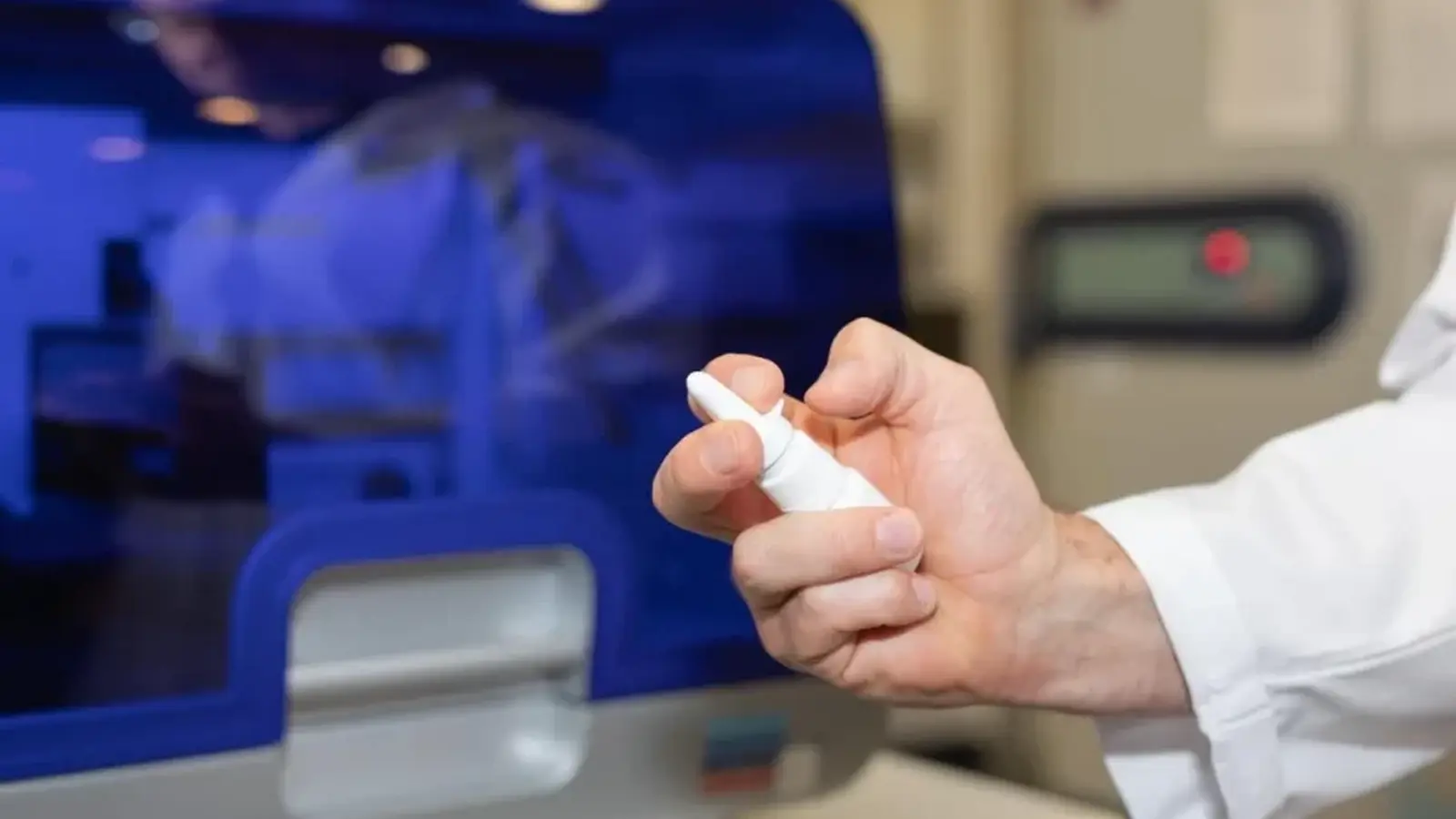
Flu meets its match—at the front door. A new nasal antibody spray, developed by researchers at the Harvard T.H. Chan School of Public Health, aims to block influenza right where the virus usually gains entry: the nasal mucosa. Simple in concept. Potentially powerful in practice.
Local immunity where it matters
Vaccines work by teaching the body to recognize and fight infection. But most antibody treatments are delivered by injection and circulate in the blood, offering limited protection on mucosal surfaces such as the nose and throat. The team behind CR9114 switched tactics. They reformulated a broadly neutralizing antibody for intranasal use so it can bind influenza immediately after inhalation, before the virus establishes an infection.
Early human and animal studies reported in Science Translational Medicine show that CR9114 adheres to the nasal lining and neutralizes both influenza A and B strains. In two small human trials involving 143 volunteers, the spray was well tolerated with no serious adverse events. Safety held across multiple doses and dosing schedules. That does not mean the product is finished. It does mean the concept has moved from laboratory curiosity toward a practical intervention.

What the trials revealed
Researchers tested the antibody spray in healthy volunteers and in macaque monkeys. Samples from volunteers’ nasal cavities contained antibody that could bind and neutralize influenza virus in vitro, indicating direct antiviral activity at the mucosal surface. In macaques, CR9114 concentrated where the virus first encounters the host—inside the nose—but began to degrade after roughly three hours. Peak protection against influenza A and B was achieved when the spray was administered twice daily.
Dosing and delivery
The twice-a-day regimen emerged from observing how quickly the antibody signal waned in the nasal mucosa. The same formulation and delivery device produced similar results across the animal model and human participants, strengthening confidence that the approach is reproducible. Importantly, the spray is designed for self-administration and rapid distribution—features that could be decisive during seasonal surges or localized outbreaks.
Study authors at Harvard emphasize that CR9114 is an experimental countermeasure. They propose it as a short-term shield: a fast, local layer of defense for high-risk groups such as healthcare workers or people in outbreak settings, complementing, not replacing, seasonal vaccines.
Implications and next steps
Influenza remains a global killer—roughly 646,000 annual deaths worldwide—and new strains continually appear. A mucosal antibody that neutralizes multiple strains would change the tactical landscape. It could blunt transmission at the source, reduce illness in vulnerable individuals, and buy time while vaccines are updated to match circulating strains.
Still, larger clinical trials are needed to show real-world effectiveness: can CR9114 prevent symptomatic infection, reduce viral shedding, or lower transmission in community settings? Manufacturing, cost, and durability of protection will also determine whether this becomes a widely available tool or a niche intervention for emergencies.
For now, CR9114 is a promising demonstration that targeting the mucosa directly is feasible. Think of it as putting a guard at the door rather than reinforcing only the rooms inside.


“My work centers on sustainability, energy, and environmental science — examining how innovation can lead to a greener future.”

Discussion
Leave a Comment
Comments (2)
Wow, putting a guard at the door! If this actually cuts transmission it'd be a game changer. hope they keep costs low tho.
wait, it degrades in ~3 hrs so twice daily? cool idea but seems impractical for everyday use, costs will matter. still - curious to see bigger trials.