
Imagine standing up from a chair and feeling the joint beneath your knee complain. Not just age. Not just wear and tear. New research suggests that the bloodstream itself can accelerate the breakdown of cartilage.
A surprising link in the bloodstream
Osteoarthritis is usually framed as a mechanical problem: cartilage thins, bones rub, pain follows. It is the main cause of disability for older adults worldwide, affecting nearly 600 million people. Now, a team led by researchers at Chonnam National University in South Korea proposes a different force at work. Their data point to hypertension, via a hormone called arginine vasopressin or AVP, as an active contributor to cartilage degeneration.
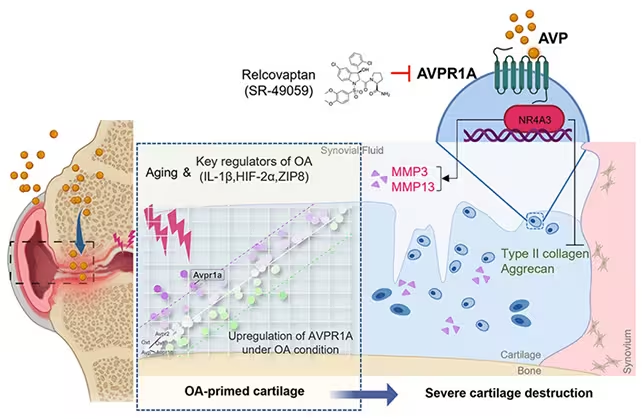
AVP is best known for controlling water balance and blood pressure. The new study connects higher AVP levels in people with hypertension to a cellular receptor named AVPR1A that is rarely seen in healthy cartilage. As joints age or sustain injury, AVPR1A becomes more common on cartilage cells. That presence makes the tissue vulnerable. When AVP binds to AVPR1A, it flips biochemical switches inside cartilage cells that promote tissue breakdown.
The team began with human health records. They analyzed data from 36,820 adults aged 45 and over and found that hypertension correlates with a higher prevalence of clinically diagnosed osteoarthritis. The association was most pronounced in women and strongest among patients with severe knee damage. Correlation alone does not prove causation, so the researchers moved into the lab to dissect mechanisms.
The researchers established the biological route through which high blood pressure damaged cartilage.
How the experiments revealed the mechanism
In mice engineered to have chronically high blood pressure, surgically induced joint injuries resulted in faster and more extensive cartilage loss than in normotensive controls. Interestingly, elevated blood pressure did not harm intact, uninjured joints. That finding suggests a two-hit model: mechanical damage or aging primes cartilage by increasing AVPR1A, then systemic AVP signaling speeds the degenerative cascade.

Support for causation came from interventions. Mice lacking the AVPR1A receptor were protected from hypertension-accelerated cartilage loss. Pharmacological blockade of the receptor produced similar preservation of joint tissue. In cell culture, cartilage cells exposed to AVP activated intracellular pathways that upregulated enzymes and inflammatory mediators known to degrade the extracellular matrix. The researchers describe this as a neuroendocrine pathway that bridges a systemic condition to a local degenerative process.
Put simply: high blood pressure raises AVP, aging or injury raises the receptor, and the interaction drives cartilage breakdown. This mechanism reframes hypertension from a comorbidity that merely accompanies osteoarthritis to a potential causal accelerator in vulnerable joints.
Therapeutic implications and next steps
The discovery points to the AVP-AVPR1A axis as a possible therapeutic target. If drugs can safely block this signaling in affected joints, they might slow or prevent the progression of osteoarthritis in patients who also have hypertension. That would be a new approach distinct from current treatments, which are largely limited to symptom management, weight loss guidance, physical therapy, and ultimately joint replacement for end-stage disease.
But caution is warranted. The bulk of mechanistic work so far comes from animal models and cell studies. Longitudinal human trials are necessary to confirm whether the molecular choreography seen in mice replicates in people. There are also broader questions about how common coexisting conditions, such as obesity, factor into the AVP-AVPR1A interaction. Obesity raises both blood pressure and mechanical load on joints, potentially amplifying the pathway.
For clinicians, the immediate takeaway is awareness. Managing hypertension may offer benefits beyond cardiovascular outcomes. For drug developers, the receptor highlighted in this work is a concrete target for molecules that could attenuate joint degeneration in select patient groups.
Expert Insight
Dr Elena Marquez, a clinical rheumatologist with two decades of experience treating joint disease, commented: 'This research gives us a plausible biological bridge between two conditions we often see together. The idea that systemic hormone signaling can be the match that lights a primed joint is compelling. If follow-up human studies confirm these findings, we could be looking at repurposed antihypertensive strategies or new receptor blockers that meaningfully change how we prevent osteoarthritis progression.'
Conclusion

The study from Chonnam National University draws a clear line from hypertension to accelerated osteoarthritis through the AVP-AVPR1A signaling axis. It shifts part of the osteoarthritis narrative away from pure mechanics and toward a hybrid model that includes systemic, hormone-driven biology. Further research in humans will determine whether this insight translates into new preventive therapies, but the path forward is now better mapped. For patients at risk, tighter blood pressure control may prove to be an additional, practical step toward preserving joint health.

“My work centers on sustainability, energy, and environmental science — examining how innovation can lead to a greener future.”

Discussion
Leave a Comment
Comments (1)
wow, didn't expect blood pressure to show up in joint breakdown... if AVP really does that, BP meds or blockers could matter. curious but need human trials, fast.