
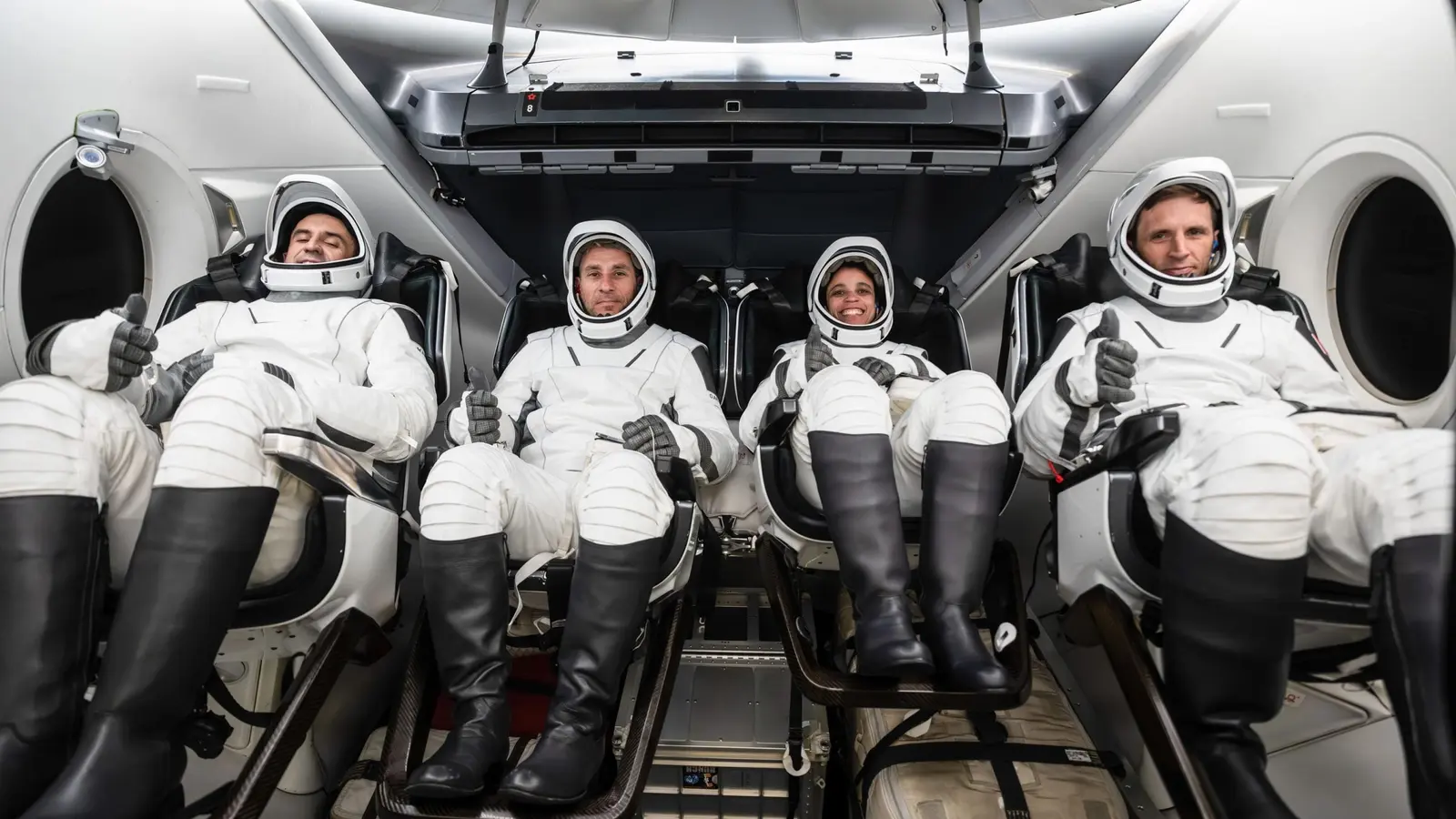
Sunrise at Cape Canaveral will be busy. Teams at NASA and SpaceX have set their sights on an 11:10 a.m. EDT liftoff on Thursday, October 1, for Crew-13, a four-person mission bound for the International Space Station that could dock in under nine hours.
How a rapid rendezvous works
Not every trip to the orbiting laboratory is the same. A fast rendezvous compresses what used to be a two-day chase into a handful of orbits. That requires precise timing: launch, separation, and a carefully timed series of engine burns to raise Dragon's orbit and align it with the station's flight path. Falcon 9 supplies the initial push, then Dragon takes over for the fine adjustments that let it close with the station.
If Crew-13 lifts off at the planned time, mission planners expect the spacecraft to arrive at the forward port of the Harmony module around 8:00 p.m. The crew will carry out the approach and docking sequence, a delicate ballet of thruster firings, attitude control, and automated systems that culminates in a hard mate to the station's docking port. Harmony is one of the ISS's primary connection nodes and serves as a gateway for visiting vehicles.
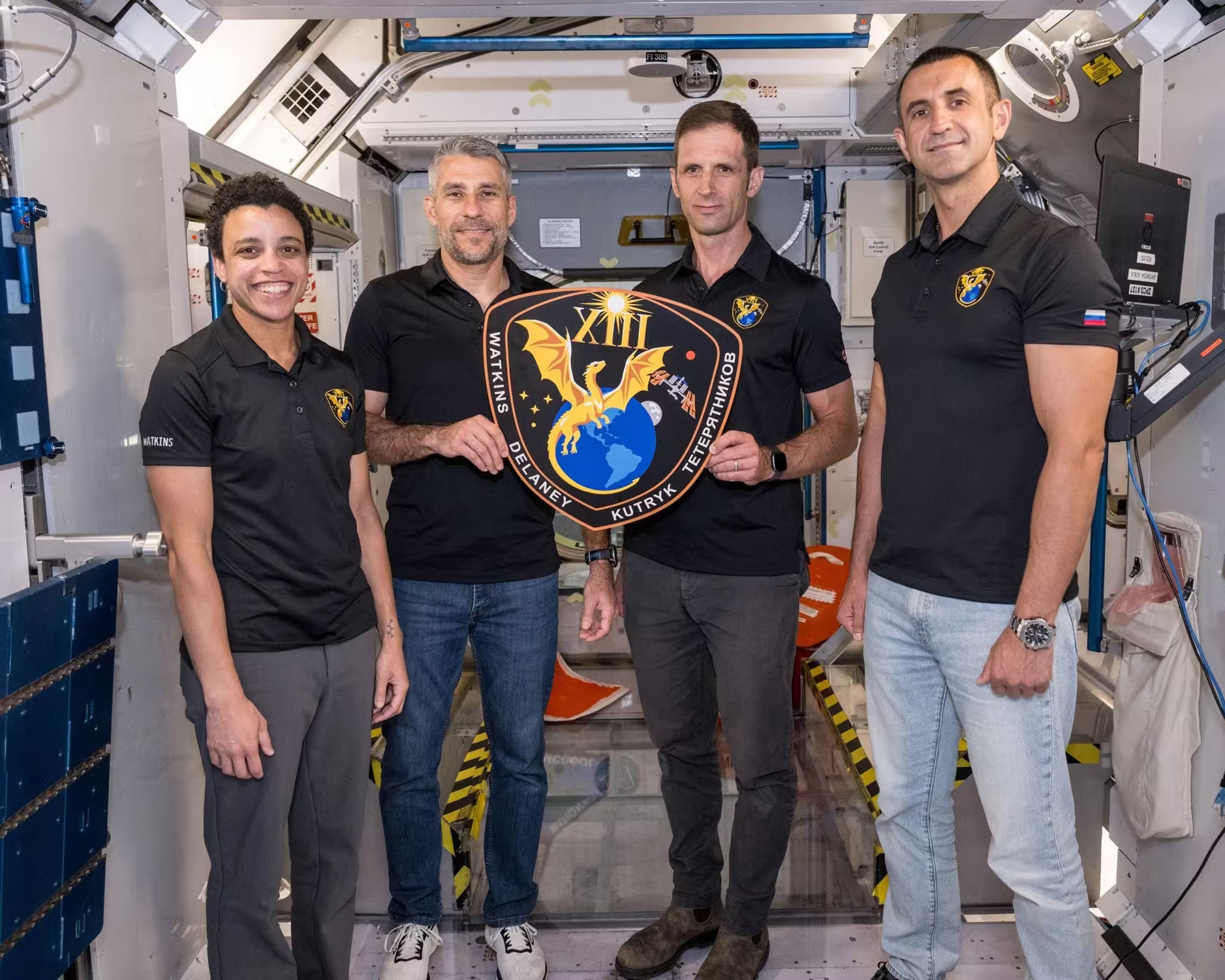
The four members of NASA’s SpaceX Crew-13 mission to the International Space Station display their mission plaque inside a training mockup of a space station module. From left are, Commander Jessica Watkins and Pilot Luke Delaney, both from NASA, and Mission Specialists Joshua Kutryk of CSA (Canadian Space Agency) and Sergey Teteryatnikov of Roscosmos.
Crew, mission role, and the science ahead
Onboard are Commander Jessica Watkins and Pilot Luke Delaney, both with NASA, joined by Joshua Kutryk of the Canadian Space Agency and Sergey Teteryatnikov of Roscosmos as mission specialists. Once docked, they will join Expedition 75 and begin long-duration operations: maintaining station systems, conducting research, and supporting experiments that span biology, materials science, and Earth observation.
Why does this matter beyond schedules? Faster rendezvous profiles reduce crew fatigue and shorten the window between launch and the start of onboard work. For experiments with time-sensitive biological samples or tight operational windows, that can be the difference between success and a compromised data set.
Final checks are under way. Crewmembers have been in quarantine at NASA’s Johnson Space Center to minimize the risk of illness before launch. They are scheduled to travel to Kennedy Space Center on Saturday, September 26, where engineers will complete processing of the Falcon 9 rocket and Dragon spacecraft and run thorough readiness reviews.
Falcon 9 will handle ascent to orbit and stage separation, after which Dragon will perform orbital insertion burns to position itself on the station's track. Automated rendezvous sensors guide the spacecraft during approach; crew and ground teams monitor the sequence and can take manual control if required.
Operational context and prospects
This mission continues the trend of commercial crew flights supplying reliable access to low Earth orbit. SpaceX's Dragon has become a regular ferry and laboratory for science in microgravity, and Crew-13 will contribute to experiments that help inform future deep-space missions and technology demonstrations.
Whether Crew-13 completes the sub-nine-hour profile will depend on precise timing and favorable conditions, but the teams involved have rehearsed the scenario extensively. If the timeline holds, the astronauts will go from launch pad to docking port in less than a day, ready to begin weeks of research and station upkeep.

“My work centers on sustainability, energy, and environmental science — examining how innovation can lead to a greener future.”

Discussion
Leave a Comment
Comments
No comments yet. Be the first.