
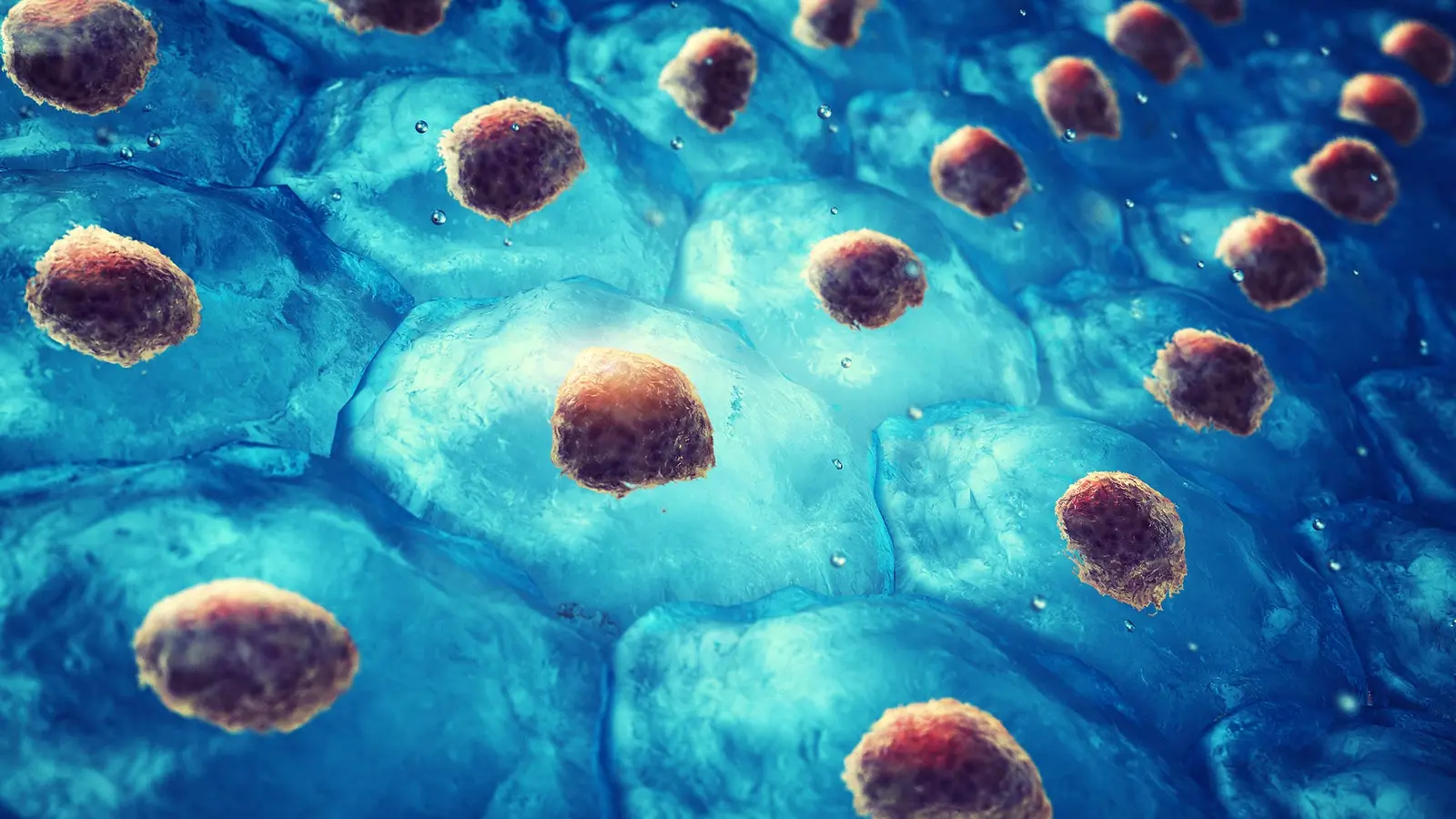
Imagine a treatment that does more than replace a missing hormone. It quiets the immune system’s vendetta against the pancreas and protects the fragile insulin-producing cells that remain after diagnosis. That is what a team at the Medical University of South Carolina reported in a mouse model of newly diagnosed Type 1 diabetes.
Researchers at the Medical University of South Carolina developed a genetically enhanced stem cell therapy that reversed new-onset Type 1 diabetes in mice by targeting the underlying immune dysfunction driving the disease.
Changing the game: from insulin delivery to immune reprogramming
For more than a century, insulin has been the lifesaving standard for people with Type 1 diabetes. Insulin manages blood glucose but does not stop the autoimmune attack that destroys insulin-producing beta cells. That distinction matters. Preserve the surviving beta cells and you preserve the body’s own capacity to regulate glucose. Destroy them and patients remain dependent on external insulin with lifelong complications.
Hongjun Wang and colleagues at MUSC set out to protect those remaining cells by altering the immune battlefield itself. Rather than replacing insulin, they retooled adult mesenchymal stem/stromal cells, often abbreviated MSCs, so the cells could withstand the inflammatory storm that typically nullifies standard MSC therapies. The modification: engineering the MSCs to produce alpha-1 antitrypsin, or AAT, a protein known to blunt inflammation.
How the modified cells work inside the immune system
MSCs can help tissue repair and modulate immune responses, but inflammation often overwhelms unmodified cells. The MUSC team’s AAT-producing MSCs, called AAT-MSCs, appear to act on two fronts at once. They shield remaining pancreatic beta cells and they nudge the immune system away from aggression.
Detailed single-cell analyses revealed a shift in immune cell populations after AAT-MSC infusion. Regulatory T cells, the immune system’s peacekeepers, increased markedly. At the same time, the population of CD8 positive cytotoxic T cells, the main agents that attack beta cells, decreased in activity and showed markers consistent with exhaustion. In plain terms, the attackers grew tired while the defenders multiplied.
The effect was durable. The modified stem cells were transient, disappearing within hours or days, yet the immune reshaping persisted. Wang and colleagues suggest that the cells release small, long-lived factors that continue to protect organs even after the engineered MSCs are gone. The result in mice: reversal of newly diagnosed Type 1 diabetes.
What was done, and what it means
The study, published in Molecular Therapy, tested the therapy in a mouse model that simulates new-onset human disease, a window when patients are more likely to retain functional beta cells. Co-first authors Hua Wei, Judong Kim, and Wenyu Gou performed much of the experimental work, while co-senior author Charlie Strange highlighted the combined protective and immunomodulatory potency of AAT-MSCs compared with standard MSCs.
“While insulin injections are lifesaving, they cannot stop immune attacks, and they do not prevent long-term complications,” Wang said in the team’s report. “This study suggests a new way to treat Type 1 diabetes by addressing the root cause, immune system dysfunction, rather than just managing blood sugar.”
The implications extend beyond a single laboratory result. If the immune system can be steered away from chronic attack, the approach might preserve organ function in other autoimmune and inflammatory conditions. The MUSC team is already exploring whether a similar immune reprogramming strategy could help diseases such as lupus and chronic pancreatitis.

The research team is pictured above.
Path toward clinical testing
Translating mouse success into safe, effective human treatments requires caution. Wang’s group is moving forward with clinical evaluation of MSC-based approaches in people newly diagnosed with Type 1 diabetes, using the safety data and prior clinical experience with MSCs to guide trial design. Past MSC trials across a range of conditions have sometimes shown effects lasting from months to a few years, consistent with the idea that transient cells can deliver durable benefit via secreted factors.
Key questions remain. What is the optimal dose and timing after diagnosis? Can AAT-MSCs be scaled and standardized for human use? Will the immunological changes observed in mice translate into clinically meaningful improvements in human beta cell survival and long-term insulin independence? Large, multicenter trials will be necessary to answer these questions.
Expert Insight
Dr. Laura Chen, an immunologist who studies autoimmune control strategies, commented: “This work leverages what we already know about MSC biology while adding a targeted anti-inflammatory element. The striking part is the durability. That suggests we are not simply suppressing cells temporarily but shifting immune set points. If that holds up in humans, it could change how we think about early treatment in Type 1 diabetes.”
Conclusion
The MUSC study represents a conceptual shift: treat the immune dysfunction that drives Type 1 diabetes rather than only replacing a missing hormone. Engineered AAT-MSCs reversed disease in mice by boosting regulatory T cells and rendering aggressive killer T cells exhausted. The cells themselves vanish quickly, yet the protective immune recalibration endures. Clinical trials in newly diagnosed patients are underway or planned, and researchers hope this approach might one day extend to long-standing disease and other autoimmune disorders. For now, the findings add a promising and biologically plausible route toward therapies that do more than manage symptoms—they aim to reprogram the disease process itself.

“My work centers on sustainability, energy, and environmental science — examining how innovation can lead to a greener future.”

Discussion
Leave a Comment
Comments (2)
Interesting idea, AAT-MSCs could shift immune set points... but how long before the effect wanes in humans? is a single infusion enough or will repeated treatments be needed
Wow, if this works in humans it could be a total game changer. but mice arent humans, hope trials nail the dosing and safety... fingers crossed