

There is a sudden clarity that changes the way you think about a common habit: slicing a piece of bacon onto your plate, tucking a hot dog into a bun. Small choices add up. Over years, they can leave visible traces inside the body.
What the new analysis shows
An international team of researchers has mined a very large dataset to probe a stubborn question: does eating meat raise the risk of cancers in the stomach and the esophagus? The study followed 450,112 people for an average of 14.1 years and linked their baseline diets to later cancer diagnoses. The headline findings are straightforward and unsettling.
Every extra 30 grams of processed meat eaten daily was associated with a roughly 9 percent higher risk of gastric cancer and a 13 percent higher risk of esophageal adenocarcinoma. Those percentages may sound modest, but when multiplied across a population they can translate into thousands of preventable cases.
Breaking the data down by meat type produced surprises. Unprocessed red meat did not show a clear association with these particular cancers. White meat, usually considered the safer option, was linked to higher risk in a narrower context: for women, each 20 gram increase in daily white meat intake correlated with about a 20 percent rise in cancer in the lower and middle portions of the stomach. That pattern did not appear in men.
How confident can we be in these links?
The study's strengths are obvious. It is large. It follows people for a long time. Diet was detailed at the start. Yet observational work cannot prove cause and effect. The researchers relied on a single dietary assessment taken at baseline. People change habits. Foods vary. Still, when these results sit next to decades of prior research on processed meat and cancer, they strengthen an emerging pattern.
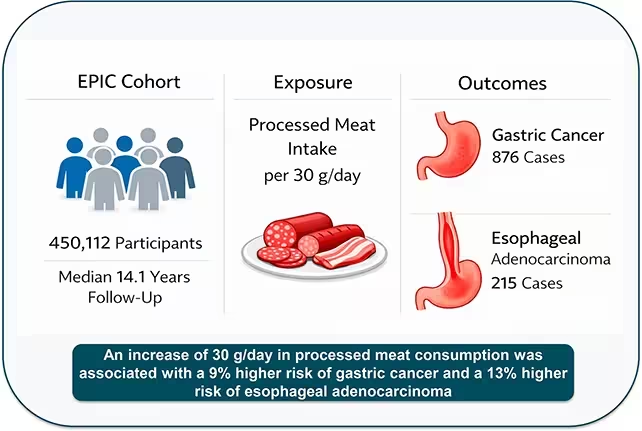
The researchers cross-referenced cancer cases against meat consumption.
Biological plausibility exists. Several mechanisms could explain why processed meats are implicated more consistently. Processing and storage can increase salt content and create chemical compounds that irritate the stomach lining. Cooking at high temperatures produces heterocyclic amines and polycyclic aromatic hydrocarbons, which can damage DNA. Some breakdown products from protein metabolism may alter the gut microbiota or increase oxidative stress, both of which are linked to carcinogenesis.

Specific mechanisms researchers highlight
- Salt and storage: Processed products often carry more salt, which can erode gastric mucosa and promote chronic inflammation.
- Cooking byproducts: High-heat cooking generates chemicals that can injure DNA and promote malignancy.
- Microbiome and metabolism: Protein-rich foods can change microbial communities and produce metabolites that influence cell health.
That said, the white meat association in women hints at complexity. It suggests that not all risks come solely from the industrial steps used to produce processed foods. The act of breaking down specific proteins, differences in exposure to cooking methods, hormone-related susceptibility, or even chance could play parts. More targeted research is necessary to sort these factors out.
Why this matters now
Esophageal cancer, particularly adenocarcinoma, has been rising in incidence in many countries. Gastric cancers remain among the most common malignancies worldwide. Public health strategies that reduce even modest relative risks can have outsized effects on disease burden.
Practically speaking, these findings reinforce existing dietary guidance that limits processed meat. They also push researchers and policymakers to reconsider the role of ostensibly benign options like white meat, at least until the mechanisms are clearer. For individuals, the takeaway is simple: occasional indulgence is not the same as habitual consumption. Frequency and portion size matter.
Expert Insight
Dr. Maria Jensen, nutritional epidemiologist and senior lecturer at a European university, commented: "This study adds weight to what we have suspected for years. Processed meats carry several risk-enhancing features, and when consumed regularly over many years they appear to increase the chance of certain stomach and esophageal cancers. The white meat signal in women is intriguing and deserves focused follow-up. It would be wise for clinicians to discuss frequency and portion size with patients rather than offering blanket reassurances."
Conclusion
No single study settles a complex question, but large, long-term analyses move the dial. The evidence linking processed meat to gastric and esophageal adenocarcinomas is growing stronger. Mechanistic ideas—chemical byproducts of cooking, high salt content, and shifts in protein metabolism and the microbiome—provide plausible routes from diet to disease. Limitations remain, including reliance on a single baseline dietary survey and the observational design that cannot prove causation.
For now, the practical implication is clear: reducing processed meat intake aligns with the best available evidence to lower cancer risk. Researchers recommend further studies to confirm the sex-specific findings related to white meat and to map the biological pathways involved. In public health terms, modest changes in everyday eating patterns may yield meaningful reductions in gastric and esophageal cancer rates over time.


“The cosmos has always fascinated me. I write about space missions, astronomy, and the technologies pushing humanity beyond Earth.”

Discussion
Leave a Comment
Comments (2)
Is this even true? One baseline diet survey, people change habits. Seems plausible but need replication, esp that women/white meat signal, or just chance?
wow didnt expect bacon to be that serious... processed meat sounds worse than I thought. portion control for sure, tho 😬