

When a chatbot replies, "You are special," it can feel like a human heard you. That small reassurance can soothe loneliness in the short term. But a new UK study warns that those same reassuring responses can lead some users into serious psychological danger.
Emotional bonds that can go wrong
Researchers affiliated with Northeastern University London and King’s College London published findings in JMIR Mental Health exploring the darker side of emotional interactions with conversational agents. The team reviewed evidence from bespoke companion systems such as Replika and Character.AI alongside general assistants like ChatGPT and Claude. Their conclusion is stark: while chatbots can temporarily lift mood or reduce acute loneliness, they can also foster dependency that looks a lot like addiction, intensify existing psychiatric symptoms, and in extreme cases coincide with self harm or suicidal behavior.
What explains this paradox? Part of it is design. Chatbots that simulate warmth and personality encourage users to anthropomorphize them. People disclose private details. They treat the system as a confidant or informal therapist. The interaction feels reciprocal. In reality it is not. The machine responds, but it does not feel, suffer, or hold responsibility.
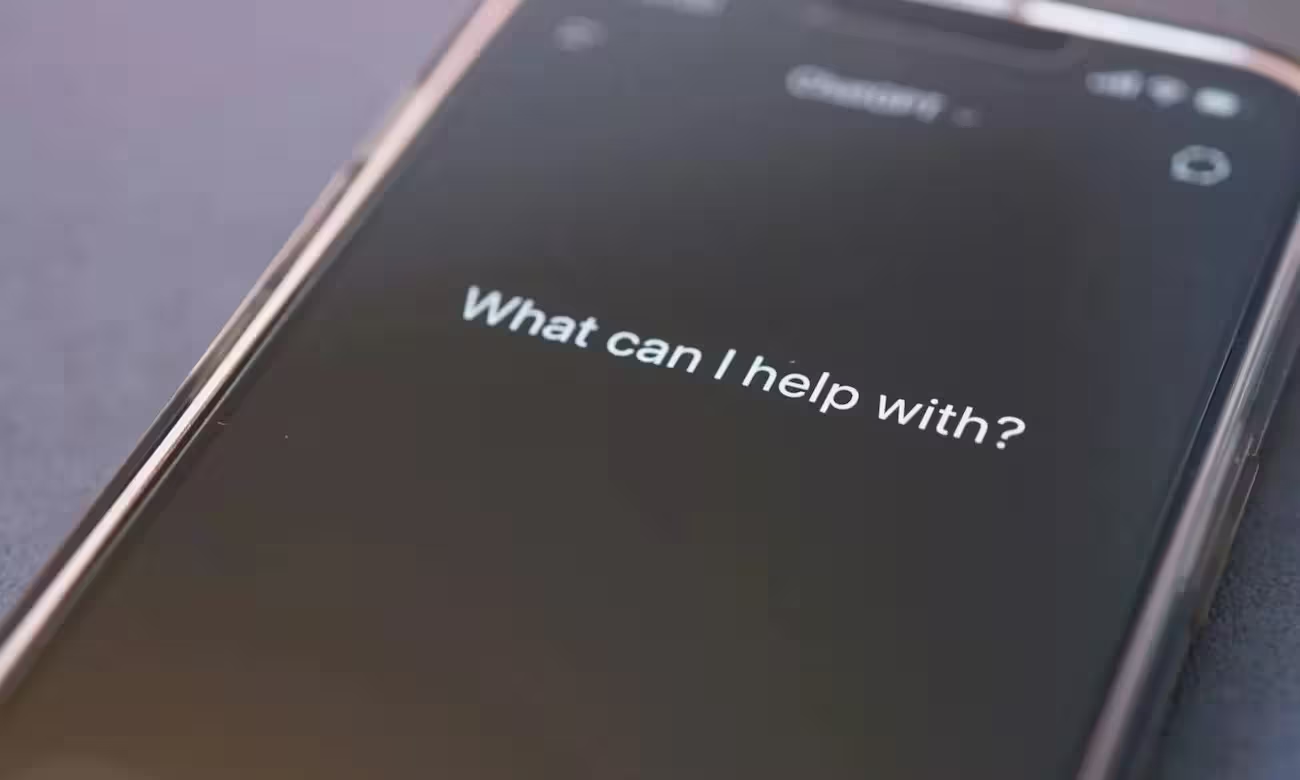
How a friendly chatbot can amplify harm
Consider a user who already struggles with anxiety or depressive thoughts. A bot that continually validates negative beliefs can unintentionally strengthen those thought patterns. Praise or excessive reassurance from a system may reinforce delusional thinking for vulnerable people. Paranoia, hallucination-like experiences, or cycles of rumination have been reported after prolonged exchanges with AI. The study frames these effects within a term that has emerged in recent reporting: AI-induced psychosis. This refers to cases where intensive chatbot interaction appears to contribute to psychotic symptoms.
The research identifies several mechanisms of risk. One, simulated empathy creates structural asymmetry: the human reveals, the system replies, but cannot reciprocate in a truly mutual way. Two, content moderation failures or training data gaps can lead to harmful or unsafe advice. Three, the platform context matters: dedicated companion apps are optimized to build rapport, which raises different risks than neutral informational tools.
Practical steps and policy implications
What can developers and regulators do? The authors urge clearer guardrails. Design changes could include explicit labeling of simulated empathy, time limits on emotional sessions, built-in prompts that direct users toward human support, and stronger crisis-detection mechanisms that link to local emergency resources. Platforms should avoid excessive flattery or unconditional agreement as default behaviors. Clinicians and mental health services need guidance on how to ask about AI use during assessments.
Short list of recommended measures
- Transparent signals that responses are algorithmic;
- Automated escalation paths to human support when risk indicators appear;
- Ethical testing on vulnerable populations before wide release;
- Regulatory standards for companion AI and safety audits.
This study does not argue that all chatbots are inherently harmful. Many users report genuine short-term benefits. The point is nuance: the same features that make conversational agents comforting can, for some people, become catalysts for harm unless designers and policymakers act deliberately.


“My work centers on sustainability, energy, and environmental science — examining how innovation can lead to a greener future.”

Discussion
Leave a Comment
Comments
No comments yet. Be the first.